How do steam railways tackle lineside fire risks?

 Peter Trimming
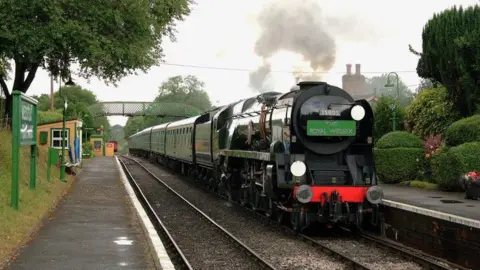
Prolonged dry weather has led to a temporary ban on steam trains on the national rail network but the rules do not apply to independent heritage lines.
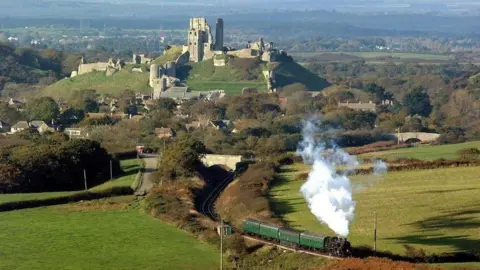
Swanage Railway in Dorset and the Watercress Line in Hampshire are among the attractions still running steam locomotives when it is deemed safe to do so.
So how do operators decide when it is safe, and how do they mitigate the risk?
Safety measures include devices that prevent embers from escaping, choosing bigger locomotives to pull the trains, and assessing the strength and direction of the wind.
 Watercress Line
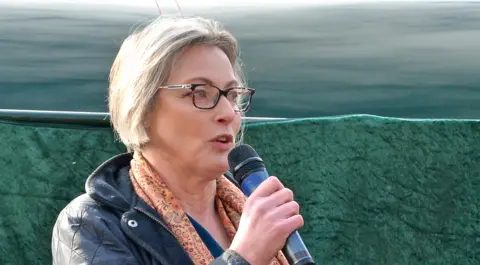
Watercress Line chief executive Rebecca Dalley said: "We do have to be very careful but there are lots of things we can do.
"There is a wonderful device called a spark arrester.
"They've got very fine mesh so almost nothing can escape, so you are only getting smoke coming out of the top and a bit of steam."
Dalley said screens were also fitted to the dampers that let the air in beneath the fire so there is "no means of escape".
"We check the condition of our ash pans that collect the embers from the firebox and we fit water sprays to dampen everything down," she said.
 Andrew PM Wright
Dalley explained the choice of locomotive was also important because smaller engines have to "puff a bit more" to pull the coaches.
"We are only using our big engine Canadian Pacific on the main journey up to Alton and Alresford, whereas the smaller engines would have to puff up the hill and that would increase the risk."
She said the journey for the bigger engine was "like a walk in the park".
On 3 July, Swanage Railway apologised after its T3 no.563 locomotive caused "a few lineside fires".
Last summer, the fire service said several similar fires had been reported.
Swanage Railway said the sea breeze was a factor in deciding whether to run steam or diesel locomotives and conditions were continuously monitored to ensure it was safe to operate.
"It's not just dry conditions that matter - it's the combination of heat, dry vegetation and offshore breezes that determines whether steam can run," it said in a Facebook post.
"Many heritage railways have safely continued steam services throughout the heatwave.
"Safety remains our top priority for our passengers, volunteers, staff, neighbours and the surrounding countryside."
The railway said it too had a "range of precautions in place to minimise the risk of lineside fires, while still delivering the much loved steam experience".
