Little terns fly 3,000 miles to start nesting

 Steve Lindsay
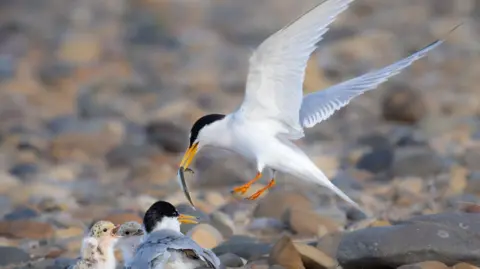
The first little terns have returned to one of the UK's most important seabird colonies.
The tiny seabirds, which weigh little more than a tennis ball, have travelled about 3,000 miles (4,828km) from West Africa to nest in Seaton Carew, near Hartlepool.
Protective fencing has been put around their nesting area since they began choosing the beach for breeding in 2019.
The Tees Valley Wildlife Trust's little tern warden, Derek Wood, said his team would be "doing everything we can to help them have a successful breeding season".
"It's always a special moment when the first little terns return and the fact they continue to choose Seaton Carew is something we're incredibly proud of," he said.
"After such a long and challenging journey, seeing them back on our shores is a delight and an important step in the success of these birds."
Wardens and volunteers will now be on the site every day, including overnight, monitoring the birds and helping visitors enjoy the spectacle.
Hartlepool Borough Council's director of communities Gemma Ptak said: "It's absolutely wonderful and such a privilege to welcome the first of these very important visitors back to Seaton Carew, especially after the massive journey they have undertaken."
Little terns, the smallest terns in the UK, typically leave Seaton Carew in mid to late August.
The species is currently classed as amber on the UK list of conservation concern.
