Girl given cadaver bone in surgery without consent

 Google
A mother said it was "sickening" to discover that a product containing bone material from a dead person was grafted into her daughter's mouth without her knowledge during NHS surgery.
The woman, from Somerset, said neither she nor her daughter had been told that cadaver bone material would be used during a cleft palate operation. They only learned what had happened months later, when the procedure had failed.
The surgery was intended to repair a cleft in the girl's mouth and had been planned as part of her NHS care.
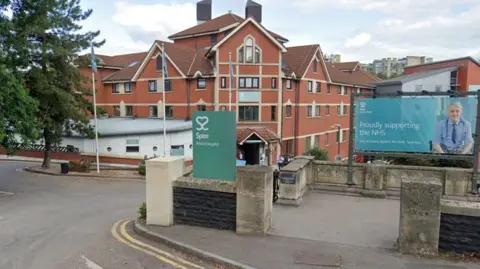
Spire Hospital has apologised, adding: "The patient's own bone was used together with a bone augment that contains demineralised bone fibre which is made from cadaveric bone."
Surgery delayed and outsourced
After a two-year wait, the girl's second operation was outsourced to Spire Bristol Hospital in December 2024, with a retired surgeon commissioned to carry out the surgery.
According to the family, the agreed plan was to take bone from the girl's knee and graft it into her mouth – a common approach in cleft palate surgery.
In addition to her bone, the surgeon used a compound containing bone fibre derived from a deceased donor, combined with a small amount of the girl's jaw bone.
The family say they were not told about the change and only became aware at a follow-up appointment at Bristol Children's Hospital, where they were also told the operation had failed.
The consent form signed by the girl's mother on the day of surgery did not mention the use of cadaver bone fibre.
The girl told the BBC: "I just wish it had worked..like he actually did what was on the plan because I was surprised when I came out of being asleep because I was meant to be having part of the bone taken out of my knee yet I could walk fine."
'Utterly shocked'
"I found the whole incident with the cadaver bone utterly shocking, really sickening," the mother said.
"When my daughter and I were in a meeting where we found out the second bone graft had also failed, the way the surgeon looked when she was looking through the medical notes was really concerning, she looked horrified.
"I had to ask what was going on, and when she told me, I was utterly shocked.
"My daughter was there so I didn't want to react too much, but I was furious, sickened, I just couldn't believe it.
"We had not given consent for this, we knew nothing about it."
She said the experience had shattered her confidence in a service she once trusted.
"From what was a fantastic service, which supported me so well from when I found out during my first pregnancy that my baby would be born with a cleft palate, there are now clearly really big problems," she said.
"It doesn't feel like it's a really specialist service any more, and you find yourself seeing medical professionals who can't answer your questions, they can't give you the level of advice you used to rely on and trust."
The mother said doctors at Bristol Children's Hospital told her that 11 other children had undergone cleft surgery with the same surgeon at Spire Hospital, raising fears the same approach may have been used in their cases.
Both Spire Healthcare and University Hospitals Bristol and Weston NHS Foundation Trust declined to comment on that figure.
The family's lawyer, Owen Lake from Slater and Gordon, said he believes other children may have been affected.
He told the BBC: "It's not UK standard practice to use cadaveric bone in this instance.
"Initial indications are to us that around 12 children were treated by this surgeon during this period whereby the case was outsourced to Spire Hospital ... and that the delays are contributing towards potential for other children to be involved in this case."
Expert evidence obtained by the family also raises concerns about delays in care and the number of different clinicians involved.
Independent experts' warning
The BBC spoke to three independent consultant experts, who all said the technique used was not the gold standard and that the patient should have been consented.
The first consultant, who did not wish to give their name, said: "As it is a revisional procedure, extra care should have been taken to ensure a successful outcome - a 'non standard' treatment with (this compound) alone was not appropriate."
The second said: "In my opinion taking from the jaw does not produce sufficient bone of good quality to give good results.
"That material, whether it is artificial bone or synthetic bone, does not achieve the same good results as bone taken from the patient."
The third expert said: "What you would not do is use something leftfield as this has failed once.
"You want good bone for your teeth to grow into."
Response from hospitals
A spokesperson for Spire Healthcare said: "We are sorry for any distress caused to this patient and an apology has been provided to the family.
"Any patients who have concerns about the South West Cleft Service (SWCS) should contact the University Hospitals Bristol and Weston NHS Foundation Trust."
The statement added: "This procedure was not a structural cadaveric bone graft.
"(This) is used as a type of filler when there are gaps that require repair.
"Its structure resembles cotton wool and is used to pack any gaps.
"It is a medical product used in many surgeries including dental surgery, neurosurgery and orthopaedic surgery."
Dr Rebecca Maxwell, medical director at University Hospitals Bristol and Weston NHS Foundation Trust, said: "We can confirm that pieces of cadaveric bone are not used in cleft palate surgery in the South West Cleft Service.
"We absolutely recognise our failure to clearly explain decisions around the surgery which were made in good faith with the best interests of this young person at heart, and we are sincerely sorry for any distress caused.
"We understand that it can be difficult for any family whose child requires hospital care and acknowledge we could have done more to support this family through this challenging time.
"We would like to reiterate our apology for the concern caused to the family and will continue to work with them through their treatment journey."
Wider scrutiny of cleft services
The case comes as the South West Cleft Service faces wider scrutiny.
An assessment of 268 patients waiting for treatment between 2020 and 2022 found that 118 had experienced some degree of harm as a result of delays.
A 2022 report cited limited theatre capacity, pressure on speech and language therapy teams and long-term staff sickness.
Cleft palate care is highly specialised, and delays or complications can have lasting consequences for a child's speech, ability to eat, and physical appearance.
For this family, the mother said trust has already been lost and the fear of another operation now hangs over her daughter's future.
What is a cleft lip or palate?
According to the NHS a cleft lip or palate is a gap in the upper lip and/or roof of the mouth that develops before birth when parts of a baby's face do not join properly.
Babies may be born with a cleft lip, a cleft palate, or both, with severity ranging from a small notch to a wide opening.
Cleft conditions can cause problems with feeding, hearing, dental development and speech.
Treatment usually involves surgery in the first year of life and ongoing support, with most children going on to live normal lives
Follow BBC Somerset on Facebook and X. Send your story ideas to us on email or via WhatsApp on 0800 313 4630.
