Octopus influx keeping deep sea dolphins inshore

 B Coulson
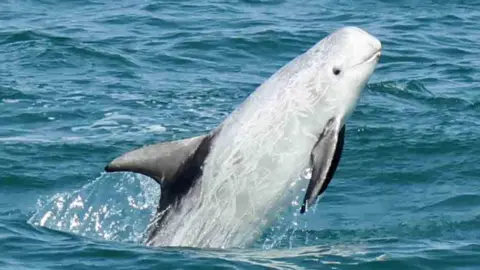
Deep sea dwelling dolphins are spending more time inshore due to the influx of octopuses in the waters around south-west England, according to a researcher.
Warmer sea temperatures contributed to a surge in the number of octopus in the waters around Devon and Cornwall in 2025.
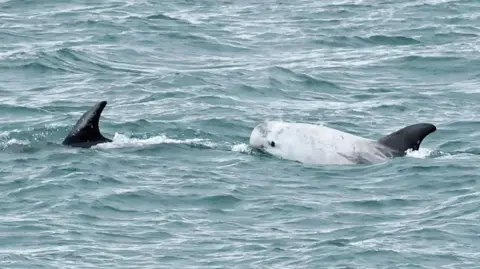
Marine biologist Josh Symes who runs the Risso's Dolphin Photo ID project for Exeter University said the amount of octopus was keeping Risso's in local water longer than usual.
He said the number of reported sightings of the dolphins had more than doubled last year due to the increase of its main food source of octopus and cuttlefish.
"Risso's dolphins like to feed on cephalopods which are squid, octopus and cuttlefish," he said.
"There's been an octopus bloom last year and cuttlefish are also increasing.
"They're coming inshore to feed on inshore spawning cuttlefish and then obviously now there's lots of octopus around, it gives them even more reason to kind of stick around."
 Billy Nason
The Risso's Dolphin Photo ID project uses citizen science to track the dolphins by asking the public to report any sighting of Risso's to the university.
Symes, who studies the species as part of his masteres degree, saidmore than 20 sightings were reported in 2025 compared to fewer than 10 in previous years.
"So there is a definite increase in awareness and an increase in Risso's dolphin presence in this area.
"Sightings are increasing anyway so this might be because more people know how to look for them but also their food is increasing," he said.
'Misreported for Orca'
Symes said more than 700 individual Risso's had been documented since 2011 across Devon, Dorset, Cornwall and the Isles of Scilly.
"They've always visited Devon, just not for very long, but already this week they've been hanging out the whole week," he said.
"I find Risso's really intriguing because for such a big dolphin, they can be really, really clever and discreet.
"Sometimes they get misreported for Orca because they are so big, bigger than most of the dolphins we get around here."
