Famine, cholera and the Belfast bap: Grim graveyard yarns for children

 BBC
BBCIt is a grim walled graveyard with a remarkable hidden history as old as Belfast itself.
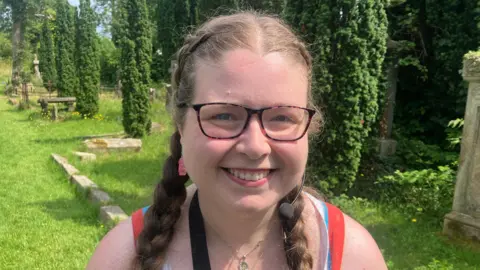
And for historian Dr Robyn Atcheson, Friar's Bush graveyard is a place of endless fascination.
It is also the last resting place of Bernard Hughes, the famous baker and creator of the Belfast Bap.
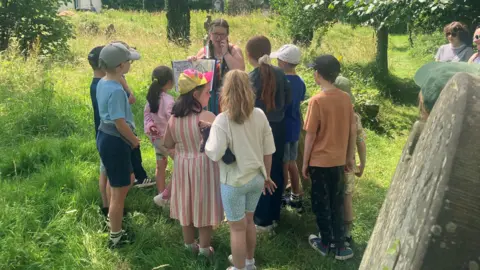
Atcheson has begun to introduce a new generation to the historic site, nestled quietly beside the Ulster Museum.
She has begun taking summer tours of Friar's Bush for junior historians aged between six and twelve.
"Friar's Bush is the history of Belfast itself," she said.
"There's so much history between these walls, it tells you everything about Belfast."
"There's been a settlement here since at least the 1500s."
The graveyard is called after its 'fairy thorn' bush, where members of Belfast's Roman Catholic community once gathered to celebrate mass.
But it was during the Victorian era in the 19th century that a wall and gate lodge were built and the graveyard was modernised.
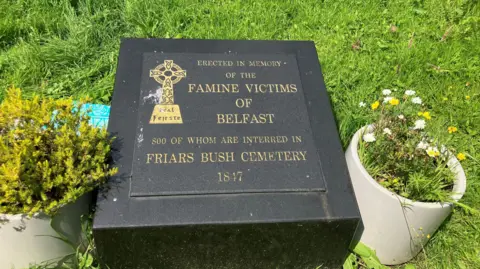
Around 800 victims of the Famine in Belfast are buried in a mass grave in Friar's Bush, as are many victims of cholera epidemics in the city.
As part of her tour, Atcheson teaches children about conditions like cholera and smallpox and how they were treated.
"As a child I loved going to graveyards and finding out the history and the stories from those places," she said.
"Yes, we have tours for grown-ups that children are welcome to come along to, but having something that's for children themselves... with activities to get them thinking, get them engaged in the world around them - I just thought it was a brilliant thing to do in the summer holidays."
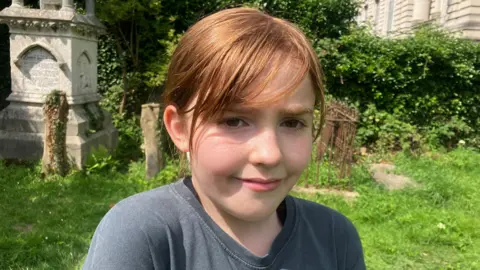
Ten-year-old Scarlett, who went on the tour, certainly agreed.
"We've learned a lot about the people that are buried and so far I've found it very interesting," she said.
"I really like learning about history.
"History is to learn all about the people and how it's changed the world."
But aren't graveyards a bit spooky?
"They're not really that spooky. But it tells you a lot about the people and their past," Scarlett said.
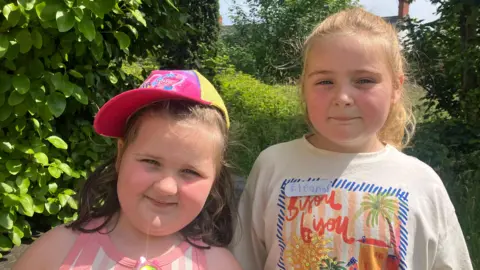
Nelle, aged five, and Eleanor, aged seven, also came to explore the graveyard.
"We're learning about the dead people," Eleanor said.
"I like learning how they died."
"I've learned how people died and how they used stuff a very long time ago when they were in the hospital," Nelle said.
"The interesting bit was when we learned about the hospitals a very long time ago."
Nelle said that history was about "interesting people."
And that was exactly the kind of enthusiasm for history that Atcheson hoped to inspire.
"I think it's so important in firing their imaginations and getting them to think about their place in the world," she said.
"I just think it's really important to get kids to think about where they're from and also to ask questions, to engage critically with something."
"It's just really about getting them excited about history, getting them excited about places like this that are on their doorstep but they might never have been to before."
