'Upsetting' that camp fire likely led to rare habitat blaze

 National Trust Images/John Miller
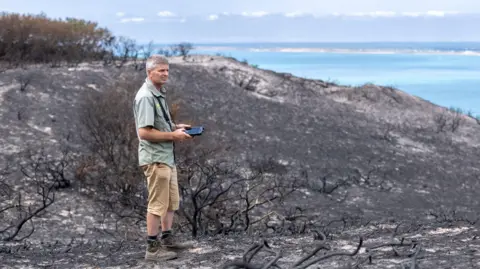
A National Trust ranger says it is "really upsetting" to think a fire that destroyed a large area of heathland on the Isle of Wight was "almost certainly started" by someone having a campfire - adding the land will take years to recover.
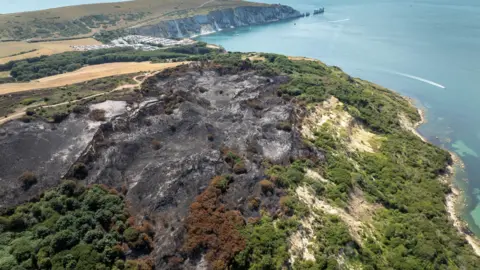
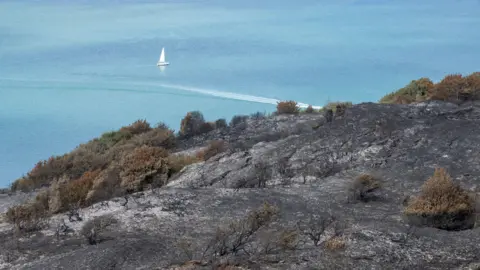
The blaze, at Headon Warren, raged for almost five days before being put out on Monday, leaving nine hectares (22.2 acres) of burnt land. The remains of a camp fire were found by fire crews..
The land was home to some of the island's rarest habitats, the trust says.
Paul Davies, countryside manager for the area, says a large number of nesting birds will have died as well as reptiles, small mammals and amphibians. He added nightjars had lost their habitat.
Davies said the now "bleak" area was "far more" than a spot with a "beautiful view" out to sea and had been home to the island's "rarest and most valuable habitats".
He explained Headon Warren, a nationally important maritime heathland and rare limestone grassland, supported a range of wildlife, including Dartford warblers, nightjars, whitethroats and stonechats.
He said it was also home to a number of rare invertebrates including "beetles and the beewolf wasp that depend on the mosaic of heathland and grassland habitats to survive".
"It is very difficult to count the cost, but it has been significant to wildlife," he added.
"While nature will recover, some areas are likely to take years to return to full health, and inevitably it will impact our long-term restoration efforts.
"This fire is a reminder that even a small spark can have an impact on wildlife and the landscapes we all cherish. By taking care when visiting the countryside, we can all help protect these special places for generations to come."
Davies added they would be looking to widen footpaths and create fire breaks going forward, but asked any future visitors to stay off the burnt area.
 National Trust Images/John Miller
 National Trust Images/John Miller
The fire's remote location, steep slopes and proximity to a cliff edge created exceptionally challenging conditions for firefighters.
But, due to its inaccessibility, away from the disturbance of walkers and dogs, it meant nature had been thriving before the fire.
Davies explained the area had ground nesting birds and the highest density of the most important species.
He added: "We observed a number of birds leaving the site but their chicks and nests would not have survived."
He believes it will take three to fours years before the vegetation recovers, adding: "It will be a long, long road and there is not a lot we can do hasten that recovery."
At its peak, 80 firefighters tackled the blaze, with Isle of Wight crews supported by firefighters and engines ferried over from the mainland.
The National Trust, working with Hampshire and Isle of Wight Fire and Rescue Service, brought in a helicopter, funded by its insurance, to carry out targeted aerial water drops on inaccessible hotspots.
About 30 hectares (about 74 acres) of Headon Warren, which is cared for by the National Trust, is farmed by Warren Farm as part of a long-term partnership with Natural England to restore rare maritime heathland and limestone grassland habitats.
'Shocking'
James Osman, at Warren Farm, said their work helped create the "conditions needed for rare wildlife and plant life to thrive".
He added: "It was very upsetting to see the impact of the wildfire on this precious heathland habitat that we have been working hard to protect over the past few years.
"Seeing the fire spread so quickly was shocking. It is a stark reminder of the dangers that wildfires pose to the countryside, especially during these prolonged dry conditions.
"Thankfully, there were no livestock on the site at the time.
"With little rain forecast, the coming weeks will be a critical time for all of us to work together as a community to help prevent further fires and protect these special landscapes."
The National Trust said there had been 13 large fires in the open on the Isle of Wight so far this year, more than the whole of 2025.
Larry Mackrell, wildfire support officer at Hampshire and Isle of Wight Fire and Rescue Service, said: "During periods of hot, dry weather, even the smallest spark can quickly spread, causing fires that put people, wildlife, and the countryside at risk.
"We are urging anyone visiting the countryside to take extra care and avoid lighting campfires or using barbecues, as they can easily start fires.
Please also dispose of cigarettes, litter, and other waste responsibly."
