Centenary of train derailment 'not a celebration'

 Working Class Movement Library
Events marking the centenary of a passenger train derailment are not a celebration but an acknowledgement of the impact on the community, one of the organisers has said.
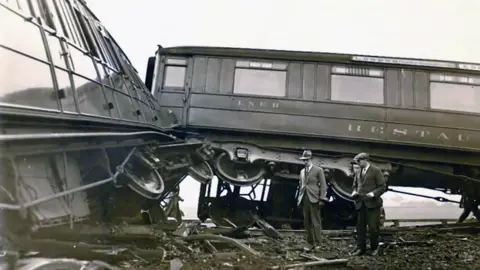
Striking miners sabotaged the London to Edinburgh mainline at Cramlington, Northumberland, hoping to prevent a coal train from reaching its destination.
But on 10 May 1926, during the General Strike, they unintentionally derailed the Flying Scotsman which was carrying 281 passengers.
Ahead of a series of commemorative walks, Maggie Martin from Cramlington Town Council said: "What we wanted to look at was how what happened to them after affected their families and everyone who lived here."
Although the train came off the tracks, the driver - who had been alerted to possible trouble ahead - was already slowing down so passengers only sustained minor injuries, mostly shock and bruises.
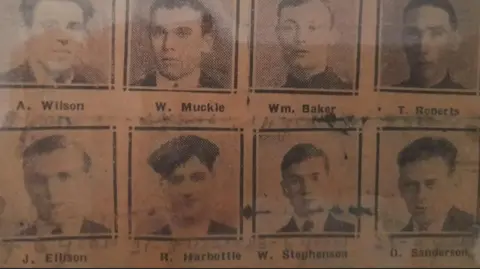
Eight Cramlington miners were ultimately sentenced to eight years in prison as a result, but were released early after pressure from the trade unions.
Cramlington Heritage Hub organised free commemorative walks during the day in Alexandra Park which, in 1926, was the site of West Cramlington Colliery.
The tours visited key historical sites, ending on a bridge overlooking the derailment site itself.
 Maggie Martin
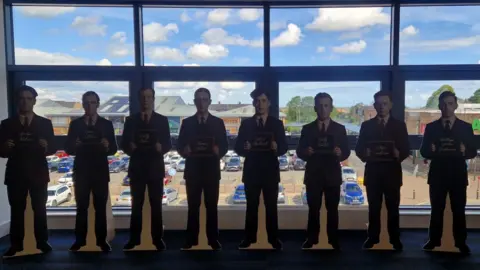
There is also an exhibition at the hub which includes life size images of those convicted alongside poems and paintings from students at Cramlington Learning Village reflecting on what happened.
Martin said there were people in the area who are descended from the imprisoned miners, or who remember meeting them later in life.
"The prisoners were sent down to Maidstone, so the families did fundraising events to raise money to visit them," she said.
"It was such a huge thing for the area, everyone in Cramlington would have been involved in some way or another."
