Nationalist residents' groups warn some parading settlements 'could unravel' over Drumcree

 Pacemaker
Almost a dozen nationalist residents' groups have warned some parading settlements "could unravel" if the Orange Order insists on marching down the Garvaghy Road in Portadown.
The order has applied for a parade on Sunday.
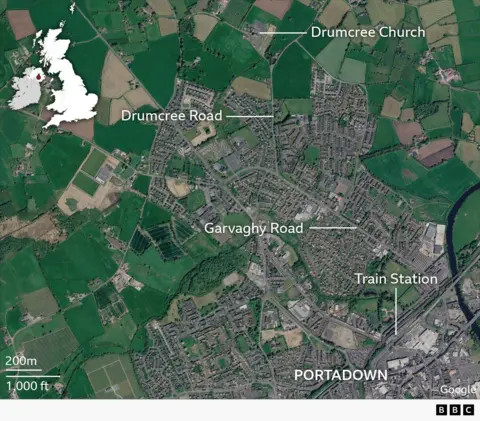
The Drumcree parade as it is known, has been banned from the mainly-nationalist Garvaghy Road since 1998.
While the Parades Commission considers the application, 11 residents' groups from across Northern Ireland have expressed solidarity with Garvaghy Road residents.
A joint statement was issued by them through a law firm.
The groups include the Bogside Residents Association in Londonderry, and the Lower Ormeau Concerned Community and Crumlin and Ardoyne Residents Association, both of which are in Belfast.
They said they had developed "accommodations" around Orange parades in their respective areas over time.
The statement added: "Our concern is that such accommodations could unravel if the Orange Order continue to insist on parading down Garvaghy Road, or indeed pursue the same demands in other Nationalist/Catholic areas.
"Local residents have demonstrated a genuine and indeed generous approach in reaching such accommodations."
The groups said that they "believe that there needs to be reciprocation in their approach from the Orange Order".
"We pledge our full support and solidarity with the residents of Garvaghy Road in their determination to be free from unwanted and intimidatory Orange Order parades through their area."
'A lasting resolution'
Democratic Unionist Party (DUP) MP Carla Lockhart accused Sinn Féin of "resorting to a failed residents' group strategy as the reality dawns that Drumcree is no longer a 'closed' or 'settled' issue".
"It's time nationalists and republicans came to the table, and engaged with the Portadown District to find a lasting resolution which balances the rights of all sections of society," she said.
"The days of 'unionism must give, and nationalism must get' are over, and the sooner that realisation dawns, the closer we will be to making real progress."

The commission is to rule later this week on an application for 60 Orange Order members to take part in a proposed Drumcree parade on 27 September.
Last month, the High Court quashed a commission decision to impose restrictions on a parade in July.
It followed a challenge brought by a member of the Orange Order.
The outcome resulted in the new application to march.
When did the Drumcree dispute begin?
In 1998, the Parades Commission ruled that the Orange Order should not march down Portadown's Garvaghy Road on the end leg of its annual march from Drumcree Church.
It was a move that sparked some of the most serious public disorder in Northern Ireland's history and led to a decades-long parading dispute.
Stand-offs continued in subsequent years as members of the Order walked to police barricades in protest at the restrictions. Protests were also held by residents living along the Garvaghy Road.
