Housing plan for former WW2 prisoner of war camp

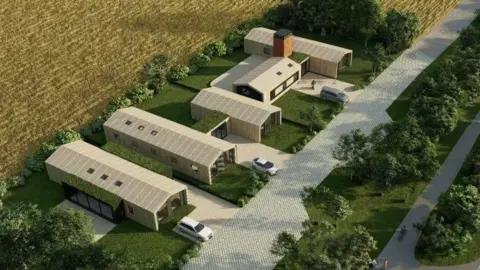 LDRS
LDRSPlans have been submitted to redevelop a World War Two prisoner of war facility.
The former Camp 53 in Kirk Deighton, near Wetherby, housed both Italian and German prisoners until 1948, when the last of the detainees were repatriated.
The plans would see the derelict buildings demolished except for the site's distinctive brick water tower, which would be retained and incorporated into the development.
Three contemporary family homes would then be built on the site, together with a new access road, landscaping and ecological improvements.
The existing buildings are described as being in a poor structural condition, with corrosion, broken cladding and asbestos roofing.
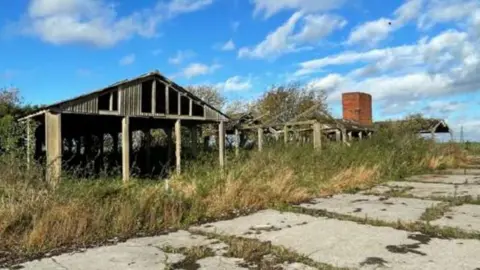 LDRS
LDRSA previous application for three homes was refused by Harrogate Borough Council in June 2024 following concerns over landscape impact, the effect on the site's non-designated heritage value and highway access.
The refusal was challenged at appeal, but the planning inspector concluded that the access plans and the cumulative landscape impact remained unacceptable.
The inspector praised several aspects of the development, finding the architectural approach to be sympathetic to the site's history, according to the Local Democracy Reporting Service.
A previous scheme for five houses on the site was turned down in 2017 and dismissed at appeal.
Supporting documents submitted with the new application to North Yorkshire Council say the proposals "seek to balance the preservation of the site's historic significance with the creation of three high-quality homes".
They say the scheme has a "considered and sensitive design" which "secures the future of this historic site".
The hostel was a satellite camp linked with the larger Scriven Hall internment centre nearby.
The hostels had less stringent security than camps for the most dangerous prisoners, and the men were allowed to leave to work on local farms.
It originally had a cookhouse, dining room, accommodation and recreation huts.
Listen to highlights from North Yorkshire on BBC Sounds, catch up with the latest episode of Look North
