Pollution tests for two river swimming spots

 BBC
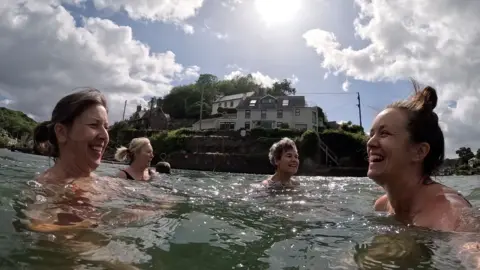
BBCTwo popular swimming spots in Devon and Cornwall have been designated bathing waters following campaigns to have them regularly checked for pollution.
Newton and Noss Creeks in Devon and the River Fowey in Lostwithiel, Cornwall, will now be tested by the Environment Agency for water quality during the bathing season from 15 May to 30 September.
The sites were designated, along with 11 others in England, with the government saying it would "protect local rivers and beaches" and help people "swim with confidence".
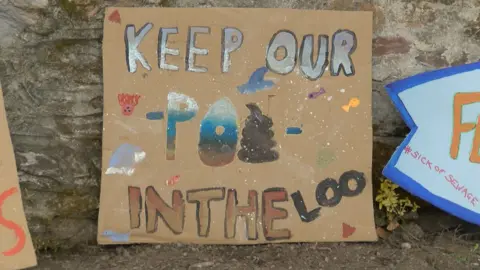
Campaign group Surfers Against Sewage said it was proud more communities were achieving bathing water status but called for further action to tackle the "scale of the sewage crisis".
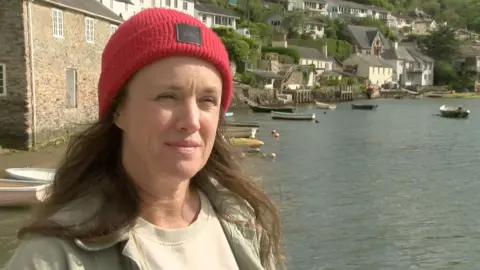
Catherine Woods from the Newton and Noss Environment Group said the designation "meant everything".
"We've got swimmers, sailors, paddleboarders and kayakers. Life here revolves around the river," she said.
"Getting bathing water status doesn't mean the water is clean but it does mean we'll know what pollution there is.
"At the end of the season we'll get a rating and then the hard work will start.
"Then it's the polluters and industry that will need to clean up their act," said Woods.
From beaches to rivers, around a third of England's designated bathing waters are in Devon and Cornwall.
The Environment Agency tests for harmful bacteria such as E. Coli and intestinal enterococci.
Bathing waters are then classed as excellent, good, sufficient and poor.
Five other sites in Devon were given designated bathing water status in 2024, on the River Dart and the River Erme.
 LEAF
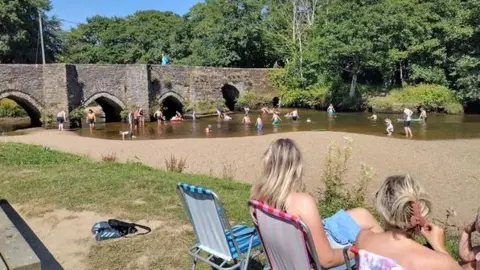
LEAF"Clean water in the river is vital to the community," said Didi Aben from Lostwithiel Environmental Action Forum.
"We have a community of adult swimmers that swim all year round, children use the river all summer long.
We were concerned about their health and maintaining what is a lovely spot for nature and wildlife," she said.
Aben said applying for bathing water status had been a "fairly lengthy process" involving various stages, including public consultation.
"We wanted to give residents confidence the water is clean and will stay clean," she said.
'Broken system'
Kirsty Davies, community water quality manager at Surfers Against Sewage said the new bathing sites were proof of the huge demand for clean, safe water.
"These communities have campaigned hard, and now we are watching closely to ensure regulators and polluters fulfil their responsibilities. Communities shouldn't have to be the clean-up crew," said Davies.
But she said the government was still not doing enough and the proposed summer testing was insufficient.
"Regulations are outdated and out of step with how people actually use the water. Sporadic summer monitoring is not enough and does not protect the year-round community of water users,."
"The government can spin its plans all it likes, but the Clean Water Bill doesn't come close to matching the scale of this crisis. It tinkers at the edges of a broken system."
Richard Price, managing director of wastewater services at South West Water, said it prioritised beaches during the bathing season as well as targeting its highest spilling sites.
"We have reduced by 50% the number of sites that spill more than 100 times per year, and our top five spilling sites have reduced spills by 50% following targeted interventions," he said
"Since last year, more than 8,300 spills have been prevented as a direct result of investment and operational improvements. This forms part of our 15-year plan, backed by around £760m of investment to 2030".
'Generational reform'
The Department for the Environment, Food and Rural Affairs (DEFRA) said the 13 new bathing water sites took the total to more than 460 bathing waters, covering nearly every coastal county in England as well as several more inland swimming spots.
Water Minister Emma Hardy said: "The introduction of these new bathing sites means better monitoring of our waterways, a boost for local tourism, and greater confidence for local swimmers.
"Following years of indifference towards bathing waters, this government has expanded the number of sites as part of our overhaul of the water sector.
"We're committed to generational reform of our water industry."
Follow BBC Devon on X, Facebook and Instagram. Send your story ideas to spotlight@bbc.co.uk.
