Met police to share more bodycam footage online

 PA/Met Police
The Metropolitan Police says it is changing its policy on releasing more body-worn video from officers "where it can improve transparency and trust in policing".
The force said the move would "back our own officers and help people understand the very challenging role they perform".
Until now, body-worn video has only typically been published after the conclusion of any criminal proceedings, meaning the public was only seeing a "partial picture" from footage shared online by others.
Civil liberties groups have long-standing concerns police can misuse body-worn cameras by switching them off during incidents or failing to disclose footage, raising questions regarding accountability.
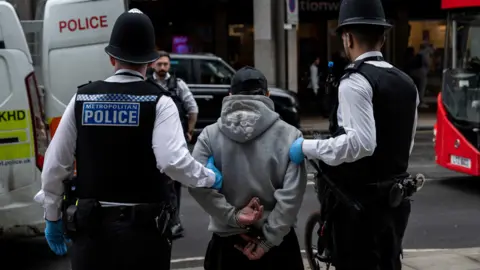
The Met said it released footage of the arrest of the suspect in the Golders Green knife attacks in April "in response to a narrative growing online which criticised the force used by officers, who were bravely apprehending an armed man".
It added: "It was put into use again following the significant public order policing operation last Saturday, where we were able to provide an insight into the abuse officers faced from protesters and the challenges involved in intervening in dense crowds to make arrests."
London's police force began an initial pilot of 500 body-worn cameras in May 2014, with a mass rollout to thousands of officers in October 2016.
Human rights advocacy group Liberty has warned that UK police forces already use earlier versions of facial recognition technology, which combine footage recorded on body-worn cameras with software to provide retrospective facial recognition searches.
A BBC investigation in 2023 also uncovered more than 150 reports of camera misuse by forces in England and Wales.
In one case, siblings faced a two-year legal battle over footage showing officers' use of force against them during a Black Lives Matter rally in London.
The Met said it had been "ramping up the body-worn video published on its social media channels, including officers saving residents from a burning building, shoplifters caught in the act and arrested and unarmed officers tackling a man with a suspected firearm".
Local policing commander Neerav Patel said: "The public only see a fraction of the incredible work that officers do each day, this new change in policy will allow them to see what we're doing to keep them safe.
"Whether that's getting weapons off the streets, pursuing suspects or policing major public order events."
 Reuters
He added that this decision to release more material would also "protect our hardworking officers".
Patel said: "We are increasingly seeing videos posted online, which are selectively edited or show a short snippet of a longer interaction. Without the full picture this undermines the work of our officers.
"We also know there will be occasions where we haven't got things right, and it's important that we continue to be transparent in these instances so we can further rebuild the trust our communities have in us."
According to Liberty, In 2023 the government's biometrics and surveillance camera commissioner Fraser Sampson said that camera on an officer walking down the street could check hundreds if not thousands of people while on duty.
He added: "The Orwellian concerns of people, the ability of the state to watch every move, is very real and that needs to be addressed in any future regulatory framework about the state's use of this technology."
Listen to the best of BBC Radio London on Sounds and follow BBC London on Facebook, X and Instagram. Send your story ideas to hello.bbclondon@bbc.co.uk
