'Dogs don't judge you': NHS trust rolls out animal therapy scheme

 BBC
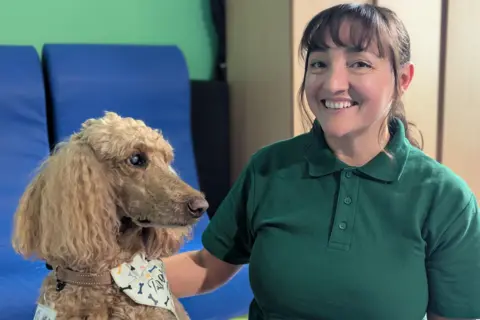
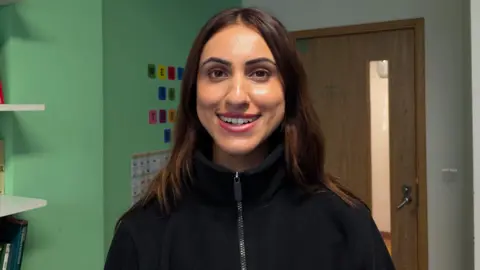
BBC"With dogs, there's no judgement so it makes it easier to open up," says Frankie.
She is among those who have benefited from animal therapy through the Central and North West London NHS Trust.
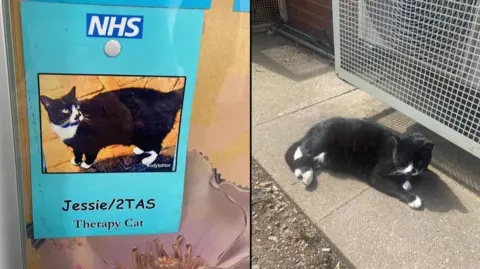
The scheme offers sessions with therapy dogs, cats and other animals to people experiencing mental health conditions.
It has run locally since 2023 but the trust is now rolling out the provision across all of its sites - 16 in total.
While some experts say much more research is needed, others say animal therapy is already making a big difference.
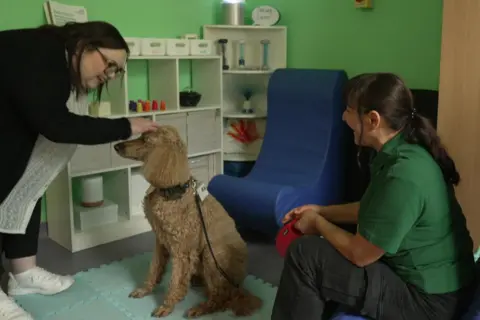
Sessions involve patients having the chance to stroke, play with, or sometimes walk the therapy dog in the presence of its handler.
"Dogs are unconditional - they love you no matter what," says Frankie.
"And they're the most calming, soothing influence."
Frankie said she could not engage with traditional talking therapies, as she found it hard to open up. But that changed with animal therapy.

"When you're having a bit of a panic, the dog will sit with you and you know you can stroke it. I also find the sensory aspect of petting animals calming," adds Frankie.
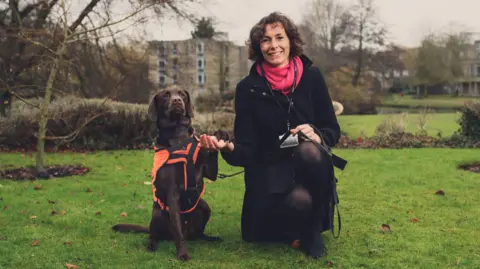
Therapy dog Ruby has had no specialist training.
Katia Stanford, who has owned her since she was five, got her assessed by the charity Canine Concern.
After Ruby showed she could handle busy environments, she started work as a therapy dog.
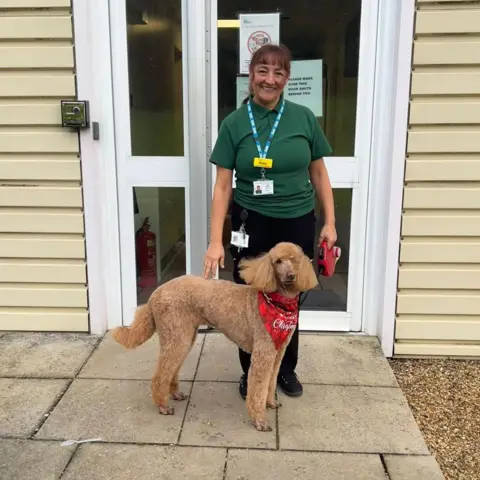 Katia Stanford
Stanford, an activity co-ordinator at the Central and North West London NHS Trust, takes Ruby on to hospital sites to work with people with various mental health needs.
The role of a therapy animal requires a particular set of skills, says Stanford.
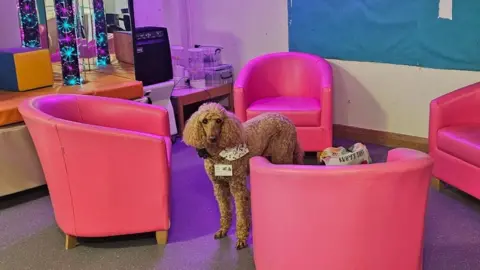
Ruby needs to cope with lots of strangers in a busy, noisy hospital setting.
"She needs to be non-reactive when being stroked by different people. No licking, no jumping up, none of the things that your pet at home would do," says Stanford.
She says it is about the dog as well as the patients.
"I know that not to have too many people in the room because it overwhelms her. I need to keep her stress levels low too."
 Katia Stanford
What makes an animal right for the role?
According to Stanford, therapy animals need the following qualities:
- Intuitive and good with strangers
- Able to handle busy, noisy environments
- Calm, even when being stroked all over by lots of people
- Able to resist jumping up and licking people
- Gentle, including when taking treats
- Hypoallergenic, ideally
How effective is animal therapy?
"A lot of research has been done into showing that pet therapy can be really beneficial for the patients," says Anika Kaul, an occupational therapist at the Central and North West London NHS Trust.
"Many of our patients haven't had the chance to explore a lot of safe and nurturing relationships.
"So having the pet there helps to foster that relationship.
"There are also a lot of sensory soothing and grounding effects from stroking or holding the animal."
 Dr Elena Ratschen
However, many experts say not enough is known about the subject.
"Animal-assisted therapy isn't currently regulated in the UK, which is a concern," says Dr Elena Ratschen, human-animal interaction and mental health research lead at the University of York.
"There is clearly a lot of potential in it and that potential has been demonstrated in proof of concept studies.
"But many studies in the field have too small a sample size. Much more rigorous research and evidence-based data is needed."
 Central and North West London NHS Trust
Dr Katie Sparks, chartered member of the British Psychological Society, adds: "Research has been done on the effects of stroking dogs or cats and how it releases oxytocin, which is the hormone to do with maternal bonding and so on.
"But animal therapy isn't one size fits all. It's got to be bespoke, looking at what fits that person."
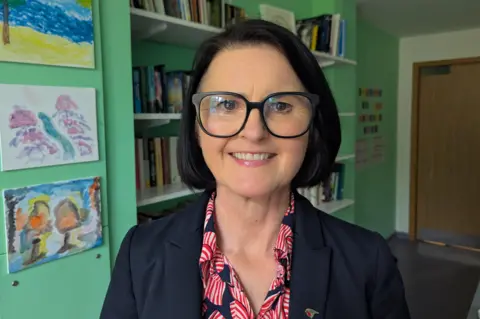
Amanda Pithouse, the Central and North West London NHS Trust's chief nurse, says the therapy has had a "great effect" on people who have been suffering from trauma in the past, those with dementia, and those diagnosed with bipolar affective disorder.
She says it will cost thousands of pounds in the long-term to roll it out fully but the benefits will far outweigh the costs.
If you have been affected by any of the issues in this story, help and support is available at BBC Action Line.
Listen to the best of BBC Radio London on Sounds and follow BBC London on Facebook, X and Instagram. Send your story ideas to hello.bbclondon@bbc.co.uk
