Site that helped city become Wool Capital for sale

 Grace Wood/BBC
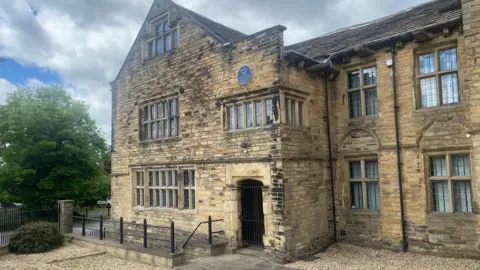
A "remarkable" Grade II listed building that was key to Bradford's reign as the nation's Wool Capital during the Industrial Revolution has gone on sale.
The Paper Hall, built in 1643, was the location of the city's first spinning jenny, a machine that transformed the textile industry by boosting productivity and shifting cloth production from homes to factories.
It was saved from demolition by Bradford Civic Society in the 1950s and restored and converted into office space in the 1990s.
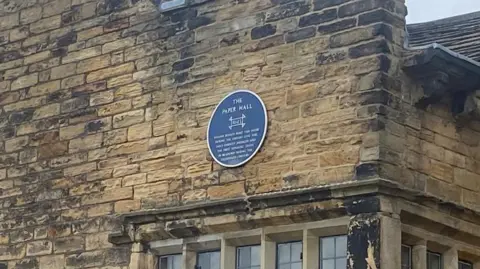
Outgoing Civic Society chair Si Cunningham said the stone building was one of Bradford's oldest heritage sites and its place in the city's history is commemorated on the property with a blue plaque.
Cunningham said: "It's remarkable because it precedes the industrial revolution in Bradford, that's a rare example of one of the more ancient Bradford buildings that's still standing to this day.
"It has been at risk of demolition before, but thankfully Bradford Civic Society had saved it for future generations."
 Grace Wood/BBC
The sandstone property was built by William Rookes as a home during the English Civil War.
In 1794 industrialist James Garnett bought the property and installed a number of spinning jennys in its loft, according to English Heritage.
The machines greatly reduced the amount of work needed to produce cloth, and increased textile production.
According to Bradford Council, by 1841 it was estimated that two-thirds of the country's wool production was processed in Bradford - and it became known as the Wool Capital.
Cunningham said he hoped the building would remain a commercial property, especially given the drop in interest for offices in the city centre.
He cited a growing interest in commercial use for buildings in the Little Germany Conservation Area as an example of its potential.
"There's people putting money into the local economy, and it adds a bit of animation to the streetscapes as well.
"There are lots of little pockets of activity happening in Little Germany now, and it would be nice to see a long-term use for this building as well," he said.
Listen to highlights from West Yorkshire on BBC Sounds, catch up with the latest episode of Look North.
