Balsam 'bashers' needed to tackle plant's spread

 Getty Images
A conservation group is urging people to lend a hand tackling one of the country's most invasive non-native plants.
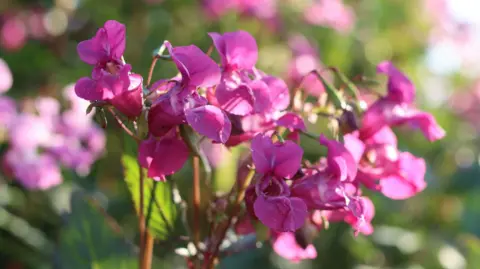
Himalayan balsam, recognisable by its pink bonnet-shaped flowers and thin stems, is a common sight along waterways.
West Cumbria Rivers Trust (WCRT) is encouraging communities to form "balsam bashing" teams to help remove it because it outcompetes native plants, reduces biodiversity and leaves riverbanks bare in winter when it dies back.
In turn, that increases the risk of soil erosion, which can harm water quality and damage habitats for fish and other wildlife, according to the organisation's Izzie Mullin.
Originating from the mountains of the Himalayas, it was introduced to the UK by the Victorians as a garden plant but spread into the countyside.
To support people taking part, WCRT is offering training sessions for volunteers and support to identify Himalayan balsam hotspots and source areas.
It recommends people start bashing in June and continue through the summer months.
'Pull it out'
Mullin, an invasive species project officer, described the scale of the removal challenge as significant.
"It's been an issue for a long, long time and it's everywhere across the country.
"But we're trying to tackle it strategically in our area, which includes the Derwent, Ellen and South Lakes catchments, with community groups working from the top of a catchment down.
"Every plant produces between 800 and 2,000 seeds, and they can pop up to six metres away and spread quite rapidly, also falling into streams and then settling across the floodplain."
Mullin says the easiest way to remove the plant is to "pull it out of the ground" and then destroy it by stamping on it, leaving the dead stems and flowers in a pile.
"It's a really short-rooted plant so it's very easy to pull out," she added.
"But it's always important to make sure you don't take it off-site, so put all the dead plants in a pile."
More information can be found on the organisation's website.
