GP services struggling to match demand, report finds

 Press Association
A report into GP services in Oxfordshire has found that practices across the county are struggling to keep up with growing demand.
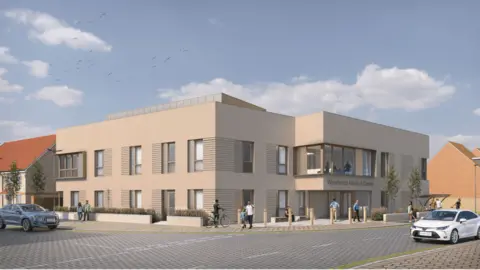
The inquiry, compiled by the Oxfordshire Joint Health Overview and Scrutiny Committee, also suggested surgeries needed to be planned and built alongside new houses, rather than after the estates have been constructed.
Councillor Jane Hanna, chair of the committee, said GP provision in the county "wasn't aligned with the population and housing growth".
In a statement, the Thames Valley Integrated Care Board (ICB) said the report "adds further weight to the need for continued investment and partnership".
Hanna said: "We want the ICB to prioritise the rural practices, because it's rural Oxfordshire that's taken the big housing growth."
"But there has to also be national reform because the barriers are actually built into the system. They do need to prioritise these inequalities of access."
 Corstorphine & Wright
Dr Rob Russ is a GP in Faringdon, and said: "The demand for appointments is higher than the space and the number of doctors we've got to to meet those."
"The population is getting bigger, slightly older, more ill and having more illnesses at the same time, requiring more support," he added.
Hanna, who is a Liberal Democrat, said this experience reflected a "national system that's not fit for purpose".
A spokesperson for the Thames Valley ICB said issues highlighted in the report "reflect issues already recognised across the NHS".
It said the findings "reinforce the direction" set out in the ICB's strategy, which "articulates the ambition to deliver more accessible, equitable and sustainable primary care services closer to home".
"Thames Valley ICB continues to assess need across all parts of our geography and will target support and investment where population growth, workforce pressures, health inequalities and infrastructure constraints indicate the greatest need."
 Press Association
The Oxfordshire-specific report comes days after the parliamentary Health and Social Care Committee warned the government that it "lacks a detailed plan" for the future of the GP estate nationwide.
Layla Moran, Lib Dem MP for Oxford West and Abingdon, is chair of the committee, and told the BBC that the GP estate was "both crumbling but also not big enough".
"We say to the government that we need a national strategy for how we're going to manage the whole of the NHS estate, but especially the GP estate," she said.
"They've got this 10-year plan, and in it, they talk a lot about shift to the community... but that will fail unless the government takes a much more joined up approach."
"It is a postcode lottery," she added.
In statement, the Department of Health and Social Care said it had employed more than 2,800 GPs in the past year and was delivering "record numbers of appointments".
"We have also invested £1.7 billion in general practice, provided £100 million to refurbish surgeries and cut unnecessary red tape so doctors can spend more time with patients," the government department said.
"We recognise there is more to do, and we'll continue working to rebuild and modernise the NHS."
