Hubs plan unveiled to support 40 new ambulances

 BBC
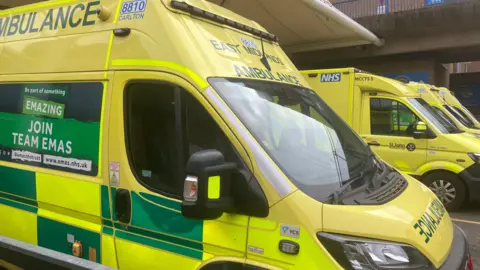
BBCEast Midlands Ambulance Service (EMAS) has announced plans to open larger hubs in a bid to meet growing demand.
EMAS - which serves Leicestershire, Nottinghamshire, Derbyshire, Lincolnshire, Northamptonshire and Rutland - said many of its buildings were "ageing" and "difficult to maintain".
It added that in the next 10 years the service would develop a small number of "larger, modern ambulance 'hubs'", while continuing to invest in existing stations.
According to EMAS, the proposals would support recruitment of "hundreds of additional staff" and 40 additional ambulances.
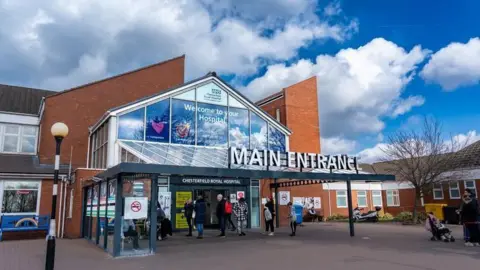
EMAS said the first hubs would be developed at a former commercial unit in Northampton, and at the Chesterfield Royal Hospital site.
It said the existing Northampton North and Mereway stations would be consolidated into the new Northamptonshire hub, with the Chesterfield, Eckington and Heath stations consolidated into the Derbyshire hub.
Subject to planning permission being granted, the Northamptonshire hub - which is expected to cost more than £4m - would be operational by September 2027.
The hub in Chesterfield - also subject to planning permission - was expected to be operational by March 2028, and is set to cost more than £11m.
The service added in the next two years 80 frontline staff would be brought to Derbyshire, and 54 frontline staff would be brought to Northamptonshire.
EMAS said there would be "no reduction" in ambulance service provision and emergency response arrangements would not change.
 CRHNHSFT
Will Legge, deputy chief executive of EMAS, said: "We are growing our frontline teams and investing in more ambulances, and we need modern facilities that give our people the space, support and working environments that allow them to focus on providing the best possible care to patients.
"Most importantly, there will be no reduction in services and how we respond to emergencies will not change.
"More than half of ambulance responses are made by crews already working in local communities, rather than setting off from an ambulance station. That will stay the same, with the nearest available ambulance continuing to be sent based on patient need and demand."
Listen to BBC Radio Derby on Sounds and follow BBC Derby on Facebook, on X, or on Instagram. Send your story ideas to eastmidsnews@bbc.co.uk or via WhatsApp on 0808 100 2210.
