Endangered crayfish offered recovery lifeline

 The Wildlife Trusts
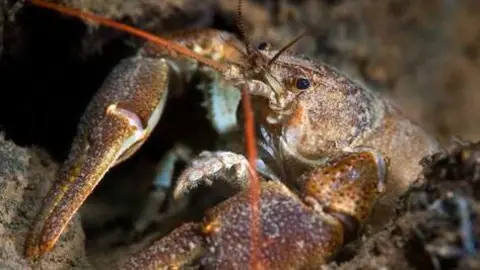
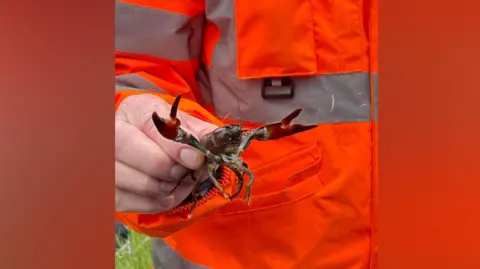
Conservations bodies across the north of England are collaborating to prevent the UK's only native freshwater crayfish disappearing from streams and rivers.
White-clawed crayfish were once common but populations have declined by an estimated 70-80% in recent decades due to pollution, habitat loss, and the spread of invasive non-native species.
The project will utilise local knowledge, practical conservation skills, and scientific expertise to identify where populations are most at risk, and long-term refuge sites that could help secure their future.
The Wildlife Trusts described the programme as a "significant milestone for white-clawed crayfish conservation".
While mostly unseen, the crayfish play an important part in the natural balance of waterways.
They help recycle dead plant and animal matter, support water quality, and provide food for other native wildlife, including herons, otters, eels, brown trout and salmon.
Northern partners involved in the national recovery project include Eden Rivers, Lune Rivers, West Cumbria Rivers, Ribble Rivers, Tees Rivers and South Cumbria Rivers trusts.
Also involved are the Wildfowl and Wetlands Trust, the Environment Agency, and Natural England.
Together, they will support vital conservation work across the region, with a focus on crayfish surveys, population monitoring and identifying potential Ark sites - safe refuge habitats where white-clawed crayfish can be protected from invasive species and crayfish plague.
Stan Smith, head of nature and species recovery at The Wildlife Trusts, said: "This programme represents a significant milestone for white-clawed crayfish conservation.
"For the first time, we have the opportunity to coordinate action at a truly national scale, bringing together the expertise of conservationists, scientists and practitioners from across England.
"Through a combination of targeted nature recovery efforts, breeding and reintroduction programmes, and innovative research, we can give this iconic native species a lifeline."
 Tyne Rivers Trust