Families hit back at NI secretary's comments on Troubles legacy bill

 BBC
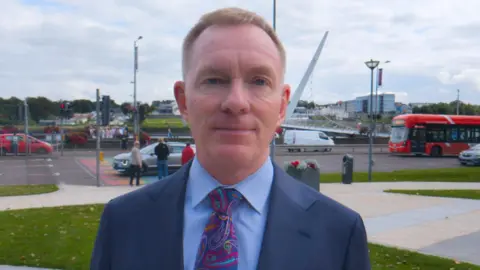
BBCSome families of people killed during the Troubles have hit back at comments by the Northern Ireland secretary that he was worried "some people have misunderstood the purpose" of the legacy bill.
Sir Chris Bryant insisted it is "full steam ahead" for the government when it comes to passing Troubles' legacy legislation through Parliament, during a visit to Dublin on Monday.
He said the bill was "about getting answers for families".
Claire Hayes, whose brother Alan Radford, was killed in the Omagh bombing, said the comments from Sir Chris were "vague" and Kate Nash, whose brother William was shot dead on Bloody Sunday in Londonderry, said there was no misunderstanding.
The government has faced criticism for delays in passing the Troubles legacy bill, which was introduced last year, following agreement on a joint framework with the Irish government.
Labour's bill seeks to replace the contentious Legacy Act, which introduced a ban on inquests and civil actions related to Troubles-era incidents.
Claire Hayes' brother Alan Radford was just 16-years-old when he was killed in the Omagh bombing.
Twenty-nine people, including a woman who was pregnant with twins, were murdered in the Real IRA attack on 15 August 1998.
Hayes said on BBC Radio Ulster's Good Morning Ulster on Tuesday that the response from Sir Chris was "quite vague for anybody to be able to grasp".
She added that he was being "very optimistic in the fact that he is going to rely on the Irish government to work lockstep with the British government".
"That is never going to happen for a start," she said.
"He is putting so much emphasis that they are going to do that, I can categorically tell you now that will never happen.
"There has been no justice and that is where we need to put the focus on, the fact that there was a failing of justice in all of these cases, the majority of them to see the least, it should have started in the courts with criminal convictions to start off with."
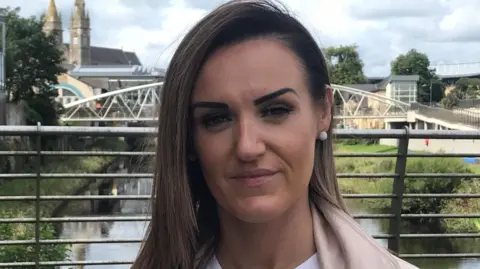
Kate Nash's 19-year-old brother William, was shot dead on Bloody Sunday.
Her father, Alexander, was seriously injured.
Thirteen people were shot dead and at least 15 others were injured when members of the Army's Parachute Regiment opened fire on civil rights demonstrators in the Bogside - a predominantly Catholic part of the city - on Sunday 30 January 1972.
A fourteenth person died later.
Nash said: "I think we don't misunderstand at all, I think in my own case after 54 years of misunderstanding we do understand exactly.
"There has always been immunity there for soldiers, and the like and they have always had that protection even on the Saville Inquiry.
"They have had 54 years to get this right and they haven't still, what they need to do is use the justice system honestly that's what they failed to do."
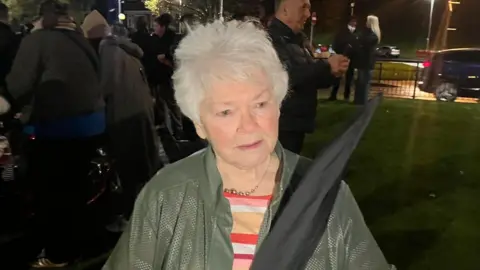
Responding to the comments during a visit to Derry on Tuesday, Sir Chris said: "The most important thing about the Troubles Bill is that we get answers for people.
"I have met families over the last few weeks who are feeling anger, resentment and pain, and are still grieving because they have never had the answers that they really, really deserve.
"Of course, that requires candour on behalf of our government, and I would argue the government in Dublin.
"Some people have said: 'You are drawing a moral equivalence between the deliberate acts of terrorism committed by some and the lawful actions of people trying to preserve the peace.' I am not making that moral equation at all, so we need to provide amendments in the Bill which make that kind of thing clear.
"Actually, a lot of veterans and their families are victims themselves, so these are the kind of things I think we need to do a better job of explaining."
What do MPs say?
The new plan proposes a Legacy Commission to investigate Troubles-related killings, a separate information recovery body and a dedicated legacy unit within An Garda Síochána. The UK government has also proposed protections for veterans.
But some MPs, including Northern Ireland MPs, say the measures do not go far enough and want stronger protections written into the Bill.
Sinn Féin MP John Finucane said: "The concerns that [families] have are real, they are substantive. The answer isn't to explain the legislation better, it is to make the legislation better."
He added: "Legacy is far too important to get wrong again" and said the legislation must ensure "equality before the law", with nobody receiving "preferential treatment because of who they are, or who they served with".
DUP MLA Phillip Brett said there were "concerns right across the board" and that legislation must address the needs of victims and survivors, who have seen the legacy process "be corrupted" over the years.
"We are determined to deliver legislation that ensures that all people in Northern Ireland, all victims in Northern Ireland are able to get truth and justice," he said.
