Concerns for peregrines on tower due for demolition

 Jenna Beech
Residents have raised concerns over the fate of protected birds at an old water tower that is set to be demolished.
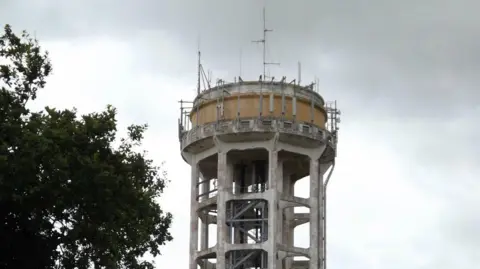
The 210ft (64m) tower at Trimley St Mary, Suffolk, has reached "the end of its economic life" and needs to be decommissioned, according to a demolition application by owner Propland Estates.
It stated it would like to start work in August, but residents have asked that no work begins until two peregrine falcons and their hatchling have left the site.
East Suffolk Council said it had received a demolition notification and was "under way with considerations, which include the effects on any protected species". The BBC has been unable to reach Propland Estates for comment.
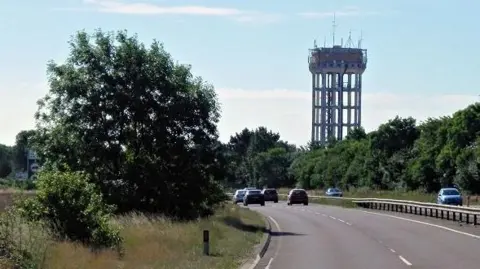
The water tower, built in 1934 and a landmark on the A14, could once hold up to 150,000 gallons (682,000 litres) of water.
It was later drained and most recently used as a telecommunications mast.
After demolition, the site would be left in a "levelled state in preparation for its future use", which was yet to be determined, said Propland Estates in its application.
 Geograph
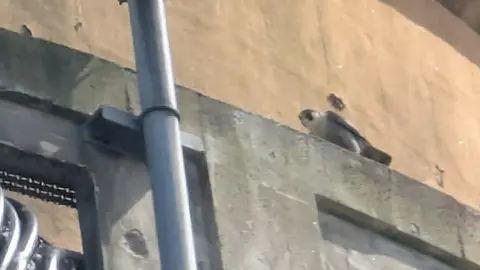
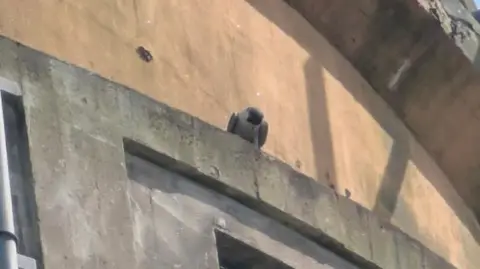
Jenna Beech, who lives close to the tower, said peregrine falcons had nested on top of the building for years.
The large and powerful birds of prey are classified as a Schedule 1 listed species under the Wildlife and Countryside Act 1981, meaning they are protected from disturbance.
Their breeding season runs from March to September.
Beech said she was worried where the birds might go.
"Me and my husband love having the falcons there and listening to them in the garden," she said.
"They are an extremely protected species and they cannot be disturbed – so the demolition and any investigation will have to wait until they have left the site."
 Jenna Beech
Jon Huckle, who runs an ecological consultancy on the Suffolk-Norfolk border, said any works "would need to be delayed" until the birds had finished nesting.
Due to their protected status, he said it would also need to be established that their young were no longer dependent on the nest, before the project started.
"Some birds leave the nest quickly, but others such as peregrines are more dependent on that nest site, and so the nest may be used for several weeks after the young falcons have first flown, staying near the nest to be fed by the parents," he said.
"It doesn't necessarily mean they will need to stop the demolition, but they will have to have proof that the nest had been abandoned before starting work."
 David Dixon/Geograph
Huckle added that peregrines were "quite site-faithful", meaning they liked to return to the same nesting site each year.
After demolition, they would simply "have to just go and find somewhere else", he said.
East Suffolk Council said in a statement: "The council has received a notification of demolition and is under way with considerations, which include the effects on any protected species and the methods of demolition."
Do you have a story suggestion for Suffolk? Contact us below.
Follow Suffolk news on BBC Sounds, Facebook, Instagram and X.
