Roman 1,600-year-old 'guardian spirit' discovered

 Vindolanda Charitable Trust
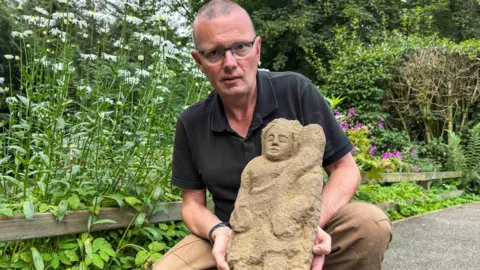
A "beautifully preserved" Roman sculpture depicting a protective guardian spirit has been dug up at an archaeological site.
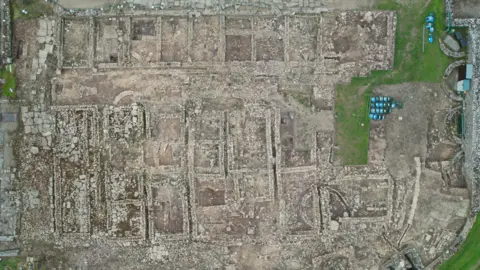
The sculpture was discovered at Vindolanda in Northumberland - a former Roman fortress from the 4th Century - and archaeologists believe it has been lying beneath a military building's floor for more than 1,600 years.
The sculpture is now undergoing conservation and a detailed study, before going on public display in the on-site museum near Hexham.
Director of excavations Dr Andrew Birley said: "As archaeologists, moments like these are incredibly rare, and we feel privileged to have uncovered and preserved such an important part of the site's story."
Dr Birley said he initially did not know who or what the sculpture was, but Hadrian's Wall scholars identified it as a protective spirit called a Genius by the Romans.
In one hand, it is holding a cornucopia - a motif of a horn overflowing with food - symbolising abundance and prosperity, according to the Vindolanda Charitable Trust.
In the other hand, it is holding a patera - the shallow dish used in ritual offerings.
 Vindolanda Charitable Trust
Archaeologists believe it was carved locally, either by a mason working at Vindolanda or a sculptor from a regional carving workshop, such as the nearby Roman fort of Lanchester in County Durham.
Surviving carved stone objects like this are "comparatively rare", the Trust said, and it offered "fresh insight" into the religious beliefs of the soldiers and families who lived at the fortress during the final centuries of Roman Britain.
Dr Birley added: "It was almost as though Vindolanda itself had reached out to the team and quietly said: 'We approve of what you are doing'."
