'Caring is hard - my wife threatened me with knives'

 Supplied
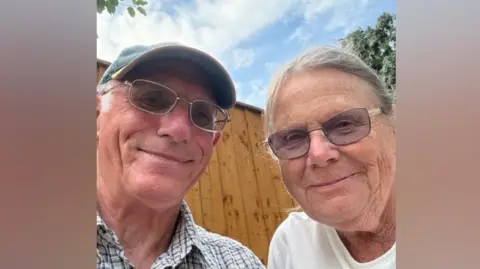
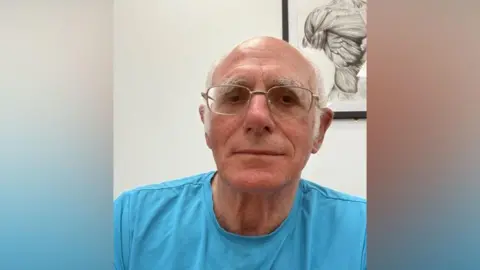
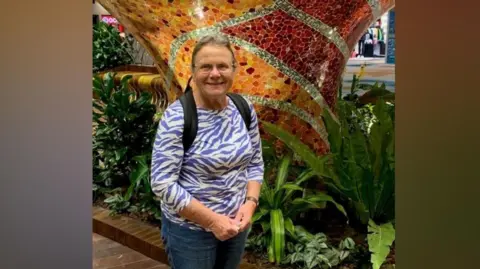
For three-and-a-half years John Hill did his best to look after his 76-year-old wife Susan, who had been diagnosed with Alzheimer's in early 2023.
The 77-year-old, who lives in Melton near Woodbridge, Suffolk, was an unpaid carer up until Susan moved into The Chantry care home, in Ipswich, in January.
Despite "feeling odd" about living apart from his wife for the first time in 56 years, John told the BBC that he "couldn't possibly manage any more".
"I've had support, don't get me wrong, but caring is really hard and I was just going under and becoming ill," he said.
"It takes everything out of you when you are with a person 24 hours a day, seven days a week, 365 days a year, and every day when you wake up is a trial.
"You have someone you love, someone you've been married to for 56 years, and it ends up like this with her in a care home," he said.
 Supplied
John is one of about 80,000 unpaid carers in Suffolk, many of who described every day as tiring as it was rewarding, and as mundane and regimented as it was unpredictable.
John said getting Susan ready for bed could take five minutes one night and half an hour the next, as he tried to persuade her to brush her teeth or go to the toilet.
On other occasions, she would become "very angry" and aggressive towards him, so much so he would have to call the police so officers could come in and restrain her.
"I've had the police to the house three times," he said.
"Once, she got out the front door and managed to walk down the A12 and in mid-2025 she was banging doors and trying to get out the window and then bit me.
"The third time the police came was when she got a couple of knives and was threatening me with knives."
 Supplied
A government spokesperson said Universal Credit and Pension Credit provide an additional £2,500 a year to 1.1m unpaid carers.
Downing Street has also raised the Carer's Allowance earnings limit by more than £2,750 in two years, so some can now earn £10,000 a year and still receive the benefit.
"One-to-one caring costs around £22,000... so that's the kind of value you put on yourself," added John.
"You are doing all these things that the carers are getting paid for and you are doing it for free."
One of those carers who does get paid for looking after others is Claire Hales, from Thwaite, Suffolk.
She started her career working in a care home, but for the past five years has been self-employed, providing care for six people in the village.
She said being entrusted to look after someone was "such a privilege and honour", but she would like there to be more wider support for those in need of care.
"Some of my clients have got dementia or Parkinson's, or some are in wheelchairs, so I can't just say I am going to have a day off and then walk away," she said.
"If I want a day off or time off, I have to wait until something is in place or someone to cover me. But it got to seven months without a day off and I couldn't do it anymore," she added.
'No help for anyone'
"These people who look after a spouse… how they do it 24/7 I really don't know because it was hard enough for me to not have a day off and come home," Hales added.
"So, knowing how hard it is for me, my hat goes off to anybody that is doing that because I can walk out of the house, but these people can't.
"These are unpaid family carers and they're stuck with it. There's just no help out there for anyone."
John and Claire spoke to the BBC for Carers Week, an annual campaign to raise awareness of caring, recognise carers' contributions and highlight challenges.
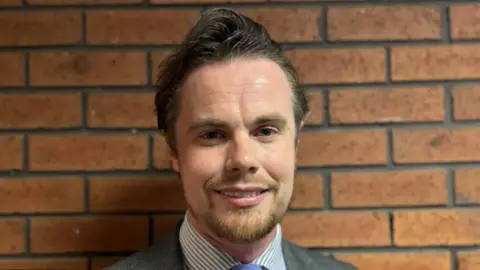
Demi Smith, a project manager for Suffolk Family Carers, said more needs to be done to build genuine carer-friendly communities.
"What we can do to support unpaid carers is really just being aware of who unpaid carers are and being mindful of them," she said.
"Something as simple as making a cup of tea uninterrupted might not be a luxury for some - so we're here have these conversations and advise family carers.
"We're really championing family carers, and we want to make sure that they're visible and that they're heard."
 George King/BBC
The need to celebrate carers was echoed by Philip Faircloth-Mutton, Suffolk County Council deputy leader and its cabinet member for adult social care.
"They help people stay safe, independent and living well – often without recognition, and alongside their own work and family responsibilities," he said.
"I want to say a heartfelt thank you for everything you do. Let's work together to build communities that recognise, value and support unpaid carers."
 Matthew Horwood/BBC
The government said it would be delivering an Unpaid Carers Action Plan later this year, which will seek to improve the recognition of the 4.7 million unpaid carers across the UK.
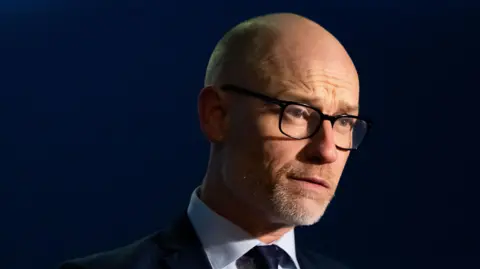
Stephen Kinnock, the minister of state for care, said we owed carers "a debt of gratitude for all they do".
"Unpaid carers provide an invaluable service in our communities, caring for loved ones, often putting the needs of others before their own," he said.
"But for too long, many carers have felt invisible, overwhelmed or unable to access the support they need.
"To all unpaid carers and young carers across the country - this government values your contribution and is committed to building a system that recognises and supports you."
Do you have a story suggestion for Suffolk? Contact us below.
Follow Suffolk news on BBC Sounds, Facebook, Instagram and X.
