Squirrelpox warning after sick red squirrels spotted

 Sarah MacDonald-Smart
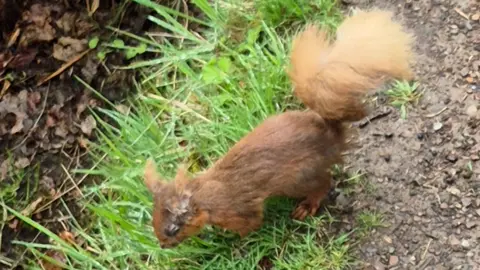
Wildlife charities have warned of potential cases of squirrelpox after receiving multiple reports of sick red squirrels in Dollar, Clackmannanshire.
The highly contagious virus is often carried by grey squirrels, but is deadly only to reds.
Symptoms include ulcers, scabs and weeping lesions on the face, paws and genitalia, all of which can prevent reds from eating, drinking or moving.
Post mortem results are the only way to confirm squirrelpox. It is usually fatal within two weeks.
Infected squirrels could appear quite lethargic, possibly remaining stationary for long periods of time and be easy to approach.
Experts at Saving Scotland's Red Squirrels and the Eastern Lowlands Red Squirrel Group said it was "highly likely" the sick red squirrels had the disease, based on video evidence.
People have been urged to take down any wildlife feeders in their gardens for the next two weeks and send any dead red squirrels found to the Royal (Dick) School of Veterinary Studies in Edinburgh.
The first known squirrelpox outbreak in Scotland occurred in 2007 near Lockerbie and since then the disease has arisen in various red squirrel populations across the south of the country.
There has only been one confirmed positive case of squirrelpox north of the central belt - in Dunfermline in 2024.
Eastern Lowlands Red Squirrel Group are working in the area to contain the spread of the potential virus, and are calling for local residents to get in touch if they can host a live trap in their garden.
Red squirrels are Scotland's only native squirrel species.
They were once widespread throughout the country but populations have seriously declined, with only an estimated 220,000 remaining in Scotland today.
Their greatest threat is the invasive non-native grey squirrel.
Greys are larger, more robust, and easily out-compete red squirrels for food and living space.
