'Not what we were promised' - Sandwell speaks 10 years on from Brexit vote

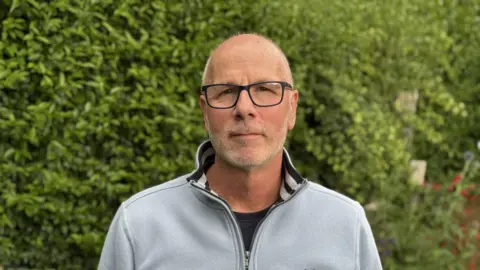 BBC
BBCTen years after the UK voted to leave the European Union, I have returned to Sandwell - where nearly 70% voted Leave - to see how people feel now.
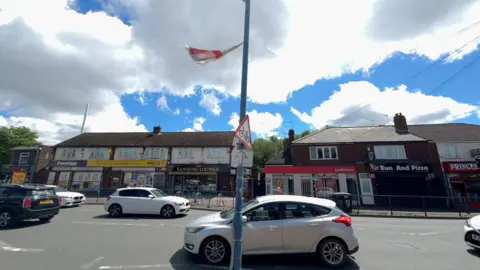
I was in Princes End, Tipton, on the morning after the vote in June 2016. What struck me then was a deep sense among many people that they had been overlooked for years - that decisions taken in Westminster or Brussels had not really touched their day-to-day lives.
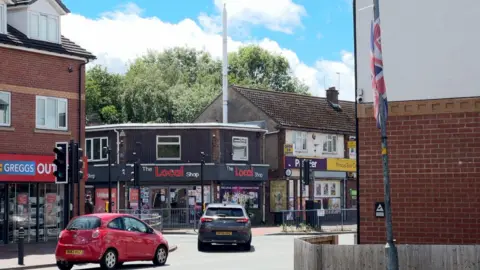
You could see it too. Boarded-up shops along the high street in Princes End and nearby Wednesbury, the remnants of independent businesses that had opened and closed over time.
People talked about the cost of living, insecure work and a sense that their communities had missed out on wider economic growth.
For many, Brexit was not about Europe - it was about change and fairness. The hope that things might feel different locally: more jobs, more opportunity, a better chance for people who had grown up there.
Immigration came up repeatedly - often tied to concerns that local jobs, from labouring to logistics and manufacturing, were going to others.
Back in 2016, that message was being amplified loudly in this part of the West Midlands.
Nigel Farage - one of the most prominent voices for Leave - toured Dudley on a battle bus of sorts, clutching a passport and pointing out that it read "European Union" rather than "British", as he argued for greater control. He drew large crowds.
One short exchange I had around that time stood out. A young mother pushing a pram did not hesitate when I asked her about Brexit.
"It was the best day of my life." Her certainty, her conviction, said a lot about the mood here at the time.
A decade on, that clarity is harder to find.
The UK formally left the EU in 2020, and the economic picture since then is complex. Official data has shown UK exports were worth about £930bn in 2025, with the EU still accounting for roughly four in 10 exports.
But the detail beneath those figures told a more mixed story: goods exports to the EU remain below pre-Brexit levels, while services exported have grown more strongly.
Some in manufacturing say the end of free movement has also tightened the labour market, with fewer available workers in some sectors contributing to higher wages and a greater sense of control over immigration policy.
Places like Tipton and Wednesbury sit right at the heart of that story. The Black Country is one of Britain's historic industrial centres - built on coal, iron and manufacturing - and it still plays a significant role today.
Across the wider West Midlands, manufacturing supports about 300,000 jobs, making it one of the UK's most important industrial regions.
'It's just not smooth anymore'
At Strut Direct in Wednesbury, managing director Steve Richards said trading with Europe had changed in ways his business felt every day.
"Every time we send anything, it's getting pulled or stopped - it's very slow now. It's full of paperwork and the whole process just isn't smooth anymore.
"We've had to take on more staff to deal with it - that's a direct cost. There's more admin, more labelling, more things to check. And the smaller customers in Europe? A lot of them have just stopped buying altogether.
"What used to take a couple of days can take 10 or 12 now. Even Northern Ireland - that used to be next day. Now you're talking three or four days.
"It hasn't improved - it's still not fluid. And if you ask most businesses, they'd welcome something closer with Europe just to make things easier again."
A spokesperson for the Department for Business and Trade said: "We live in a post-Brexit world, and it is time we focus on building a closer, forward-looking relationship with Europe that works for the British people."
"At the upcoming UK-EU Summit on 22 July, we will deliver an ambitious package of deals to boost trade, cut red tape and create opportunities for young people."
'You just got on with it'
A few miles away in Wednesbury, the experience has been different for Phil Danckert, a florist who ran shops in the Black Country for years before retiring in the past 12 months and moving to Worcestershire.
We first filmed with him in 2019, as he visited a wholesaler to collect deliveries of flowers that had travelled overnight from the Netherlands in refrigerated lorries - a supply chain that, at the time, ran quickly and predictably.
Looking back, he says the day-to-day impact was manageable but the bigger promises never came through.
"At first there was a bit of a bump in prices, because most of the flowers were coming from Holland. But after that, day to day, you just got on with it. If prices crept up, you adjusted - that's what you do in a small business.
"I think the real hassle was for the people bringing it in - the drivers, the suppliers, all the extra paperwork they had to deal with. We didn't see that side so much, but you knew it was there.
"But overall, it was sold on promises that never really happened. A lot of people voted thinking it would sort immigration - and it hasn't."
'We thought things would change'
Back in Princes End, many people say what they expected simply hasn't materialised.
Shop worker Elliott Smith was blunt. He said: "From my honest opinion, it's screwed the country up more than anything - it's ruined us. We were promised less red tape and more money for things like the NHS, but I've seen the opposite."
Others say they were hoping for change in immigration, housing and public services, but add they haven't seen it.
Shop owner Rob Evans said: "I thought it would make a difference - immigration, housing, hospital waiting lists. But it just feels like it's got worse if anything. People feel left behind and nothing really changes."
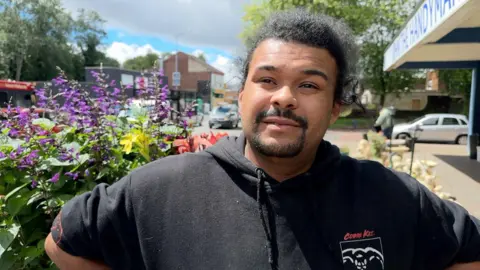
For Stephanie Butler, immigration was still a concern, she said: "That was one of the reasons for leaving, but everything is still happening as it was.
"If anything it's probably worse, because when you visit other countries now, we don't get the discounts on things like beer."
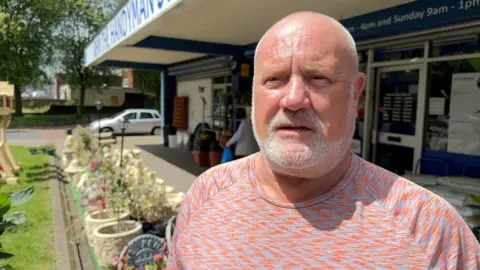
On the days we filmed in Tipton and Wednesbury, strongly pro-Brexit voices were harder to find. Most people wanted to talk about how life had or had not shifted in the years since.
Some also feel the political direction may be shifting again. A number of people told me they thought the current government was edging towards closer ties with the EU, raising questions about whether Brexit could be softened in the future.
For some, that would be welcome. For others, it raises a different concern of whether the original vote would ultimately be respected.
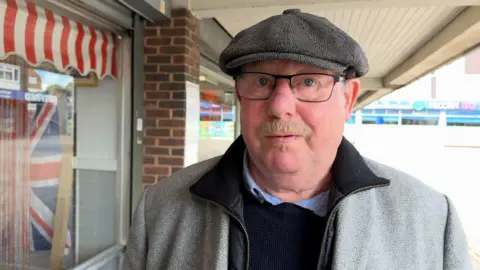
Pensioner David Slim reflected that tension: "I don't think it's worked because we haven't come out of the EU properly. But if we go back in, I'll never vote in a referendum again because it would mean nothing."
Follow BBC Birmingham on BBC Sounds, Facebook, X and Instagram.
