'Cost of giving crisis' closes women's homeless service

 BBC
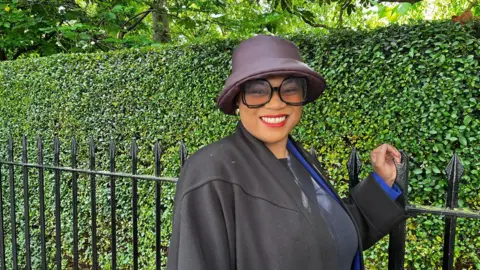
BBC"The first night I came here, I was numb, I was distraught, and I didn't know what to expect. I was so angry with myself, thinking, how did my life get to this point? But, as I entered the building, the staff here were amazing."
On a busy main road in central London, Latoya Gabbidon is coming back to one of the only places she felt safe as a homeless woman.
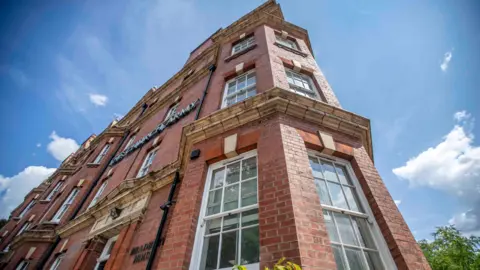
Despite the need being greater than ever, the Marylebone Project, London's longest-running service for homeless women, is closing in September.
Run by the Church Army, it offered 112 residential beds, a night shelter, and a safe environment in which women at their lowest point could rebuild their lives.
In 2024, after a period of sickness led to unemployment, then 44-year-old Gabbidon was unable to pay her rent and her landlord told her she had to leave.
Homelessness had never been on her radar before and she had no idea where to go.
"My first instinct was to Google the nearest night shelter, and it was the Marylebone Project that came up, so that's where I headed. I arrived at 23:00 that night and they opened the doors to me."
Gabbidon remembers the light and bright environment. She was welcomed by staff, who, in the middle of the night, walked her through the registration process and told her about other services in the area that could help her.
She used the night shelter at the Marylebone Project for two months, when she could. Several times she was turned away because it was at full capacity. With nowhere else to go, she headed to Victoria Coach Station.
"The first night I was numb, I didn't know what to expect. I was thinking, 'how did I end up in a station, sleeping on a bench?'"
 Kirsty Edmonds Photography
On her second night at the station, Gabbidon realised how much more vulnerable she was sleeping rough as a woman.
"I was so tired and I just remember nodding off and when I woke up a man was there, leaning on my shoulder. It was so scary, because I didn't know how he got there.
"He didn't try to do anything to me, but what if? That's how vulnerable women are sleeping in these public spaces with so many men around."
As well as the physical danger, Gabbidon felt the growing emotional and mental toll of her sudden spiral into homelessness.
She said: "I kept questioning myself, how did I get here? How did I get here? It was so shameful. I was so disappointed in myself."
The help she received from staff at the Marylebone Project and other homelessness services encouraged her to reject these feelings of shame.
"I began to see myself in a positive light, and I began to realise that homelessness does not define us, it can happen to anyone."
'Rebuilding from the lowest point'
Karen Walker has been an ambassador for the Marylebone Project for six years, volunteering both inside the refuge and raising awareness around the country.
"We take a woman from her lowest point and we give her the tools to rebuild her life and become a contributing member of society again," she said.
"These women have been through the most traumatic situations. Rape, abuse, trafficking - you name it we've seen it. Unfortunately, it's not unusual, it's the tip of the iceberg."
The news of the closure was "devastating" for Walker, who said: "At one point we were talking to Westminster Council about the possibility of saving it, but unfortunately now the buildings are being sold to developers and that's heart-rending."
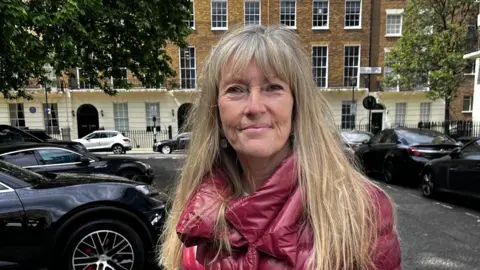
Explaining the decision to close the Marylebone Project, Church Army chief executive Matt Barlow describes the near impossible climate in which it was operating.
"The cost of living crisis has caused a 'cost of giving crisis'," Barlow said, explaining how as both businesses and people's pockets were squeezed, donation revenue plummeted.
He said this had been compounded by rising national insurance rates, the increase in minimum wage, the soaring price of energy and an increasing dependency on agency staff.
The money the Marylebone Project received from housing benefits and council contracts simply was not enough to fill the gaps.
It made £2m in losses over the last four years. It is no longer sustainable and the Church Army is selling their prime-location London buildings to a private company.
The resettlement team has been working to rehome the 93 residents. So far, just over a third have found new accommodation.
"We've got a really good partnership with Westminster City Council who are working with us to really fulfil their duty and obligation," said Barlow.
Like all local authorities, Westminster City Council is legally obliged to house its homeless residents.
A Westminster City Council spokesperson said: "We recognise the vital role this service has played and the uncertainty this closure creates for residents," adding they are working with the Church Army to find suitable accommodation and support for the women, while managing the wider impact of the closure.
'Male-skewed image'
Lucy Campbell, from the Single Homeless Project, said the closure of the Marylebone Project highlighted the particular vulnerability of services for women.
In difficult commissioning environments, and with local authorities struggling with funding, services for perceived minorities "were always the first to go".
"There's a worry that the growth in women's services will either stall or they'll start to lose funding and be decommissioned like the Marylebone Project," she said.
The government's rough sleeping snapshot consistently claims women only make up 15% of rough sleepers, but Campbell said this data neglected the experiences of women as it was gathered by counting the number of people lying down in the street at night.
"Women are much more likely to walk the streets all night, or spend time in public toilets, A&E waiting rooms, or 24 hour McDonald's, just to try and keep themselves safe."
By contrast, the Women's Rough Sleeping Census, conducted by Single Homeless Project and Solace Women's Aid, counts homeless women in a more gender-informed way.
This year, the Census identified 1,149 women who had been sleeping rough across 16 London boroughs - more than eight times higher than government estimates.
As a consequence of women being underrepresented in government data, there are far fewer services targeted towards them.
The vast majority of homeless women need to be in a single gender environment to feel safe, according to Campbell, who has seen women opt to walk the streets all night over staying in mixed-gender accommodation because it felt so dangerous.
"Once they get there, it's full of men and it's full of men who are shouting at them, cat calling them at the door. I've literally seen women get to the doors, take one look inside and say, 'I'm not staying here."
Gabbidon agreed that round-the-clock women-only services are critical.
"Not every woman wants to be amongst a mixed-gender environment because of their past traumas, and being in a mixed environment can be so triggering," she said.
The male-skewed image of homelessness also means women lose out on temporary accommodation, explained Campbell.
Currently in London, in order to be verified as homeless and access services and support, individuals need to be seen by an outreach worker, bedded down on the street.
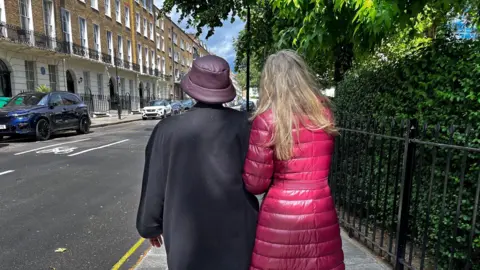
Gabbidon now sits on advisory boards for the Greater London Authority and Westminster Council, using her experience to highlight what needs to be done to end homelessness in London.
Last year, in a real victory for those who have been campaigning for years, the mayor of London's rough sleeping plan pledged to move away from the male-centric verification process by 2028.
But Gabbidon said more needs to be done.
"Funding should be poured into the services that work, and the Marylebone Project is one of those services that works."
Gabbidon is now back in employment, has regained financial stability, and is living in privately rented accommodation. She's done a TED Talk about her experience, and is determined to continue to create change.
"I've come a long way. The Latoya that was homeless then is a different woman from who I am today. I've achieved so much because of the help and the support I was given."
For Walker, helping women like Gabbidon get back on their feet is her proudest achievement.
"But if you don't have services like the Marylebone Project to pick people up when they are at that very, very low point, then what happens?
"That's the point in the chain that we all seem to be missing."
Listen to the best of BBC Radio London on Sounds and follow BBC London on Facebook, X and Instagram. Send your story ideas to hello.bbclondon@bbc.co.uk
