How has climate change reshaped drought?
It's a little on the nose for nature to give us another drought 50 years after the one we had in 1976 but here we are.
It illustrates the impact of climate change, population growth and the way we use water today.
Half a century of climate change has given us the "flash drought", which although not a proper metereological term, nicely points out, as a description of the 2026 dry spell, how much the climate has changed.
In 1976 we had a dry winter, spring and then summer leading up to the drought itself. This year we have full reservoirs from a winter of endless rain but then sometime in the spring, that just stopped.
As if a switch is being flipped, there's no more rain and we enter a drought with a speed we've not really seen before, hence the term "flash".
I usually shorthand the impact of climate change in the West Midlands as "wetter winters and hotter, drier summers" and 2026 is the perfect illustration of this.

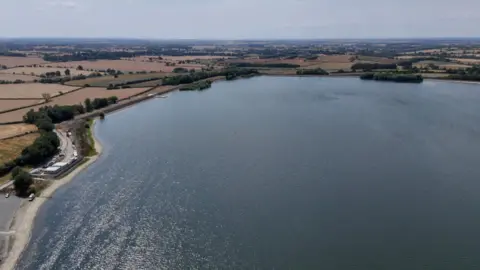
Walking round Draycote Water, a reservoir in Dunchurch, Warwickshire run by Severn Trent, you can see the changes.
The 240-hectare reservoir and country park draws its water from River Leam and supplies drinking water to Rugby and Coventry,
Fifty years ago in the drought of 1976, this reservoir was just 43% full after a very dry end to the previous year, followed by a dry spring.
Today in the drought of 2026, Draycote is 80% full but surrounded by parched, fried fields.
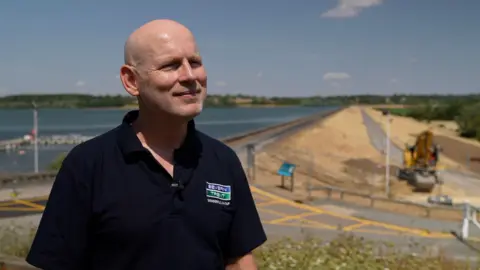
There I met Doug Clarke, the water resources planning lead for Severn Trent who kindly dipped into the archive to look up those 1976 water levels for me.
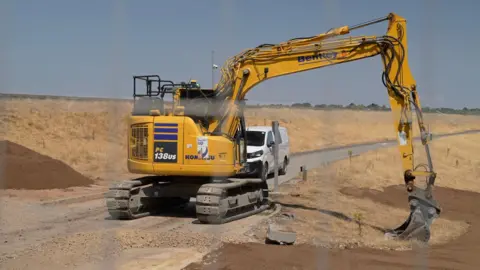
And not only is there more water in the reservoir today, there's going to be even more in the future.
"We're increasing the height of the reservoir" he said.
"By about 60cm and that will increase the amount of water we can store in here."
There was a hosepipe ban in 1976, but for the last 30 years Severn Trent hasn't had one.
They've got new water storage, better ability to move water around and they would say they've made good progress in reducing leaks, but Doug admits a drought was still a big deal.
"What we're seeing is about 400 million litres extra a day, a 25% uplift, on the amount that's going out on these really hot days," he explains.
One of the most compelling bits of evidence for climate change since 1975 is actually the Central England Temperature Record, taken in Pershore, Worcestershire, among other places.
On the graph below, you can see the red bar of the hot summer of 1976 and then, since about 1990, it's just a forest of red bars as climate change pushes up average temperatures in the Midlands.
There may not be a hosepipe ban but the advice is we still need to take care of our water, because half a century on from 1976, what was once extraordinary when it comes to hot weather, is now the new normal.
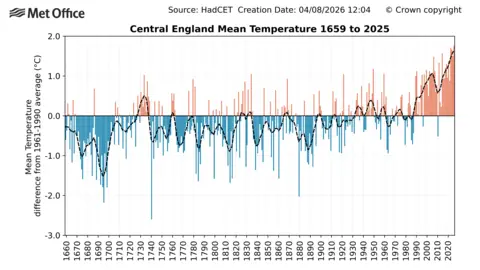 Met Office
Follow BBC Coventry & Warwickshire on BBC Sounds, Facebook, X and Instagram.
