Homelessness charity helps men live independently

 Martin Giles/BBC
A homelessness service has launched a new programme to provide five men with the practical skills to help them live independently and return to work.
The Men's Move-on House project by charity Emmaus will provide accommodation for the men in a house at All Hallows Convent in Ditchingham, Norfolk, and sessions to develop skills, such as DIY, budgeting and cooking.
The seven-month pilot will provide a next step for the five men who are already residents, who Emmaus refers to as companions, within the charity's community.
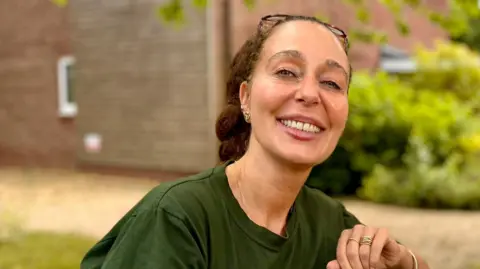
Cecile Roberts, the chief executive of the charity' Norfolk and Waveney branch, said she was "really pleased" to be able to add this to the charity's range of services.
Emmaus gives people who have experienced homelessness, housing insecurity or who are living in unsafe situations, a stable home within their community at the convent.
The programme will also offer the men therapy and the opportunity to learn about tenancy sustainment, problem solving and help them prepare for employment.
Roberts added: "The landscape out there is so difficult and challenging, we really need to make sure the people leaving our service - in what is actually a safe bubble - are ready to tackle that landscape."
'Fear of failure'
The project follows the Emmaus's success with its women's-only project, which helped nine women aged between 23 and 60.
The charity received the Community Group Award at the BBC Make a Difference awards hosted by BBC Radio Norfolk last year.
Roberts said: "We carried out all these small group consultations and what came out, loud and clear, is many of the men in the community wanted to leave but felt really worried about making that big step from a community setting where they felt really safe to living independently outside the community."
She said people who had previously moved out of the community, which Roberts describes as a "safe bubble", ended up feeling isolated.
Roberts added: "One of the key things when people come to us is their self-esteem is really low. They feel like they've failed and they have quite often been through really bad trauma, mental health issues.
"The barriers in terms of going back to living independently is the fear you are going to fail again.
"My hope is more and more people will be able to move through our services and leave at the end and come back to us and we will be able to see they have been able to manage sustainable futures."
Do you have a story suggestion for Norfolk? Contact us below.
Follow Norfolk news on BBC Sounds, Facebook, Instagram and X.
