Report calls for stronger national park powers

 PA Media
National parks should be given greater powers, funding certainty and a more prominent role in restoring nature, according to recommendations aimed at shaping their future.
An independent report commissioned by four national parks, including the Peak District, said parks should be "prioritised and resourced to lead landscape restoration and nature recovery" across the country.
It calls for joined-up policy making and for ministers to set out multi-year funding settlements.
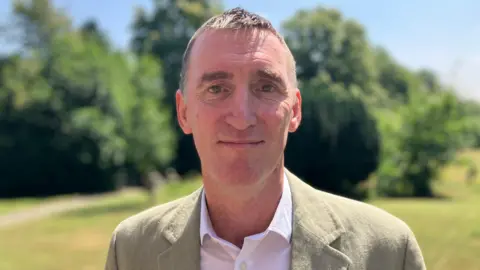
Phil Mulligan, Peak District National Park CEO, said: "We've got funding challenges that everyone else has but we've got a huge opportunity because it's a really well-loved place delivering critical services for the nation."
As well as the Peak District, the report was commissioned by Dartmoor, Eryri (Snowdonia) and the Lake District, and was authored by Andrew McCloy, former chair of the Peak District National Park and National Parks England.
 EPA
EPAThe report highlighted tourism as a major focus and gave its support for "tighter restrictions" on holiday accommodation and second homes in areas facing housing pressures.
It said a congestion charge or similar would generate "significant revenue to fund public transport", adding that active travel alternatives are likely to have an impact on traffic levels.
The report added any income brought in from such a scheme, either from a regional mayor or national government, "must benefit the national park affected".
It also calls on government to provide multi-year funding settlements for national parks and support efforts to diversify income.
Local authorities are urged to actively support park objectives through existing legal duties covering protected landscapes.
The recommendations argue national parks need greater recognition, funding and powers if they are to meet public expectations and maximise their contribution to nature recovery, public access and wellbeing.
The report also highlights a lack of "consistent and joined-up policy making", particularly in England, where responsibility for national parks spans multiple government departments.
It added strategic support had often been fragmented, with national park authorities having faced significant financial pressures, with the average value of their core government grant falling by 40% in real terms over recent years.
The report warns the cuts have inevitably affected service delivery. While additional capital funding and new income streams are welcome, it states long-term financial certainty is essential if national parks are to fulfil their growing environmental, social and economic responsibilities.
Mulligan said 20 million people lived within one hour of the Peak District National Park and added that came with challenges and opportunities.
"We do face a lot of visitor pressure, we face a changing climate as the rest of the country does, we've got wildfires raging," he said.
"But as the temperature warms up people are going to want to come and visit here more... we need to focus on restoration work in the moorlands and we've got an upland agricultural system that needs support.
"We've got funding challenges that everyone else has but we've got a huge opportunity as well because it's a really loved place that is delivering critical services for the nation."
On finances, Mulligan said the Peak District National Park received £6.1m from the Department for Environment Food and Rural Affairs (Defra) but that had been "declining over four years each year" by at least the rate of inflation.
He added over the last 10 years, its grant had dropped by about "50% in real terms".
He said: "What we always want with funding is as long-term a settlement as possible.
"I'm not going to spend the anniversary, our 75th celebration, complaining about a lack of government funding, but what I'm going to say is keep investing in us because we've seen over 75 years what we deliver for the nation."
The report also noted climate change will become a further "emerging threat" and one of the biggest challenges facing the UK's national parks.
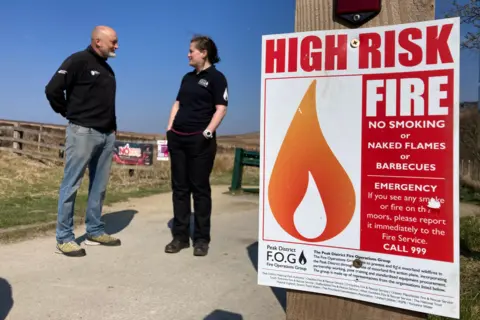
The Peak District National Park alone has suffered from a number of wildfires in recent years, including one at Tintwistle Moor, which was declared a major incident on Tuesday.
Hotter, drier summers, warmer and wetter winters and more frequent extreme weather events are likely to drive habitat loss, alter species distributions and increase the spread of invasive species and diseases, the report added.
Despite these challenges, the report argues national parks will become increasingly important for public health and wellbeing as demand for access to nature grows.
It added thriving national parks could provide "essential public benefits" which included clean air, water, food production, carbon storage and nature recovery, making them "vital to the UK's future security, prosperity and resilience".
Mary Creagh, minister for nature, who has national parks in her portfolio, told the BBC the government is investing in their future.
"These are living landscapes and it's absolutely vital that they have that secure funding which is why we've announced an increase to the national parks and landscapes of £37m a year for each of the next three years," she said.
"But there are also incredibly important habitats so we've announced an extra £30m for them to protect and create new habitats to protect the iconic species.
"We've made a promise that we will protect species from extinction by 2030 and we're going to start to restore it after that time."
Correction 16 July 2026: A previous version of this story said the report had been published by National Parks England. This has now been updated to make it clear it was commissioned by four national parks.
Listen to BBC Radio Derby on Sounds and follow BBC Derby on Facebook, on X, or on Instagram. Send your story ideas to eastmidsnews@bbc.co.uk or via WhatsApp on 0808 100 2210.
