Young people 'urged to attack police' in west Belfast disorder

 BBC
BBC"Criminal elements" encouraged young people to engage in disorder in west Belfast, a community meeting has heard.
A police officer was assaulted, 11 police vehicles were damaged and a man attacked with iron bars after a crowd of about 100 people gathered on the Stewartstown Road on Saturday night.
Bins were set on fire and masonry was thrown at police in scenes a community worker has described as "absolute chaos".
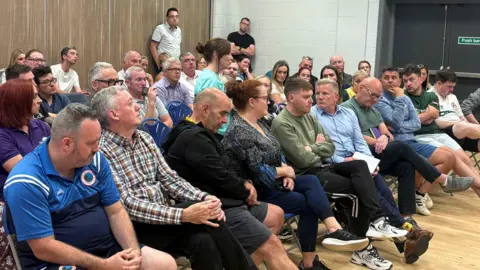
Youth and community workers came together on Wednesday to condemn the ongoing anti-social behaviour in the Colin area which escalated on Saturday night and to discuss how to move forward
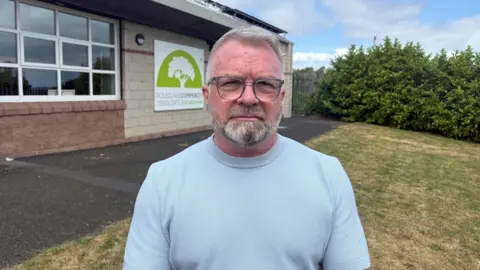
Jim Donnelly, from the West Belfast Partnership Board, said youth workers who had been trying to help young people during the disorder had since received threats.
Many of the people involved were teenagers, but youth workers who were on the ground said they were being encouraged by adults or watched by adults as the violence unfolded.
A number of arrests have been made and a 27-year-old man has been charged with disorderly behaviour.
"The activities they were involved in on Saturday and were being encouraged to do will have a lasting effect on them," Donnelly told a public meeting about the disorder.
He said he wanted to see young people from the Colin area flourish, but warned that involved in disorder would "impact on them getting jobs and they could end up in prison, which we don't want to see".
"There's lots of different people involved in it, there's criminal elements, there's elements who want to exploit them to attack the police," he said.
Donnelly told BBC News NI that he did not know if the disorder was politically motivated but said "what we're sure of is that there were people there directing young people to attack the police".
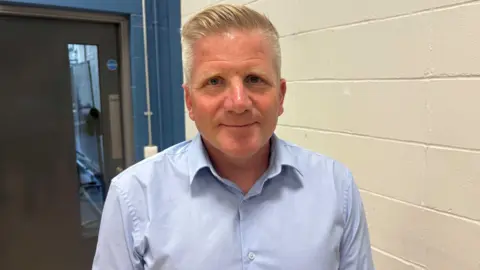
Children's Commissioner Chris Quinn said children growing up in areas of poverty and inequality were at a disadvantage.
"We know gangs are operating under our noses, sometimes in plain sight and they are exploiting vulnerable children and young people," he said.
Quinn said the solution was not to "lock them up".
"I'm calling for a social welfare response where police are engaged, social services are engaged, and in extreme circumstances young people may be denied of their liberties but only in extreme circumstances," he said.
"We need not to criminalise young people, we need to support them because once you're in the criminal justice system it's very hard to get out."
Saturday night was not the first time there had been disorder in the Colin area in recent months.
In May emergency crews were attacked when responding to reports that large crowds had gathered and there have been ongoing issues with the use of e-bikes being driven dangerously.
It is understood both gatherings were organised to commemorate two young men who had died.
Vicky Moore from Active Communities Network said more needed to be done for young people to find a way to process their grief.
"That has been a mass worry for community workers," she said.
"There's almost this crisis intervention.
"Some don't have the support at home, so we're seeing that anger, frustration and sadness that allows them to be exploited."
Some people who spoke at the meeting said there was a "drugs pandemic" affecting many young people, while others said many parents "don't know where to turn to".
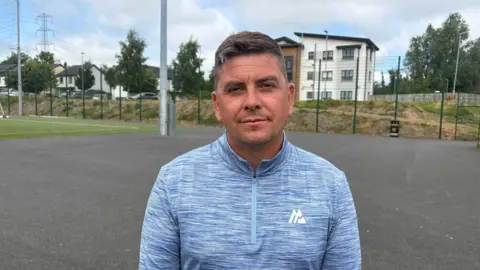
"As a community this needs to be a reset for us all to look at why [it happened]" Sinn Féin assembly member Danny Baker said.
"There are other elements telling our community there's a failure in this community, planting seeds that it's ok to attack youth workers and they are going to steal the futures of these young people."
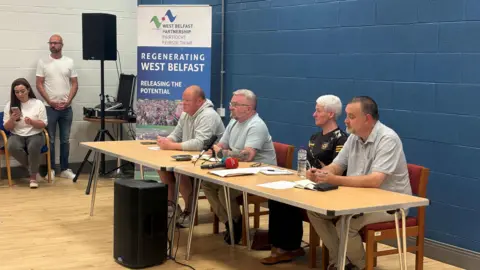
Sinn Féin MP Paul Maskey hailed the meeting as "a positive story" from the area.
"The unfortunate reality is that some young people will be brought to justice," he said.
"There are criminal elements out there ensuring that young people fall into a trap and shame on them.
"We want to ensure our communities flourish. The Colin area is a good area."
