'An implacable civil war' - when Sunday fun split a town

 Leicester Museums & Galleries
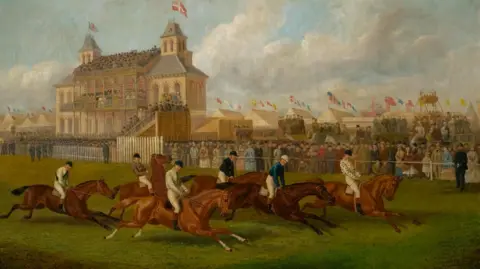
Moral outrage, political turmoil, the threat of public disorder and some dodgy legal manoeuvres - were all part of one Victorian afternoon in the park.
A hugely popular performance by a band on open ground to the south of Leicester city centre might seem innocent enough, but in 1856 it was part of a decades - some would say centuries - long religious battle.
But this performance was on a Sunday - and it came at a time when the argument over what should be allowed on the Christian sabbath had reached both the highest tiers of government and spilled onto the streets.
But would those calling for Sunday to remain a day of prayer win out against a movement which attracted tens of thousands?
 Getty Images
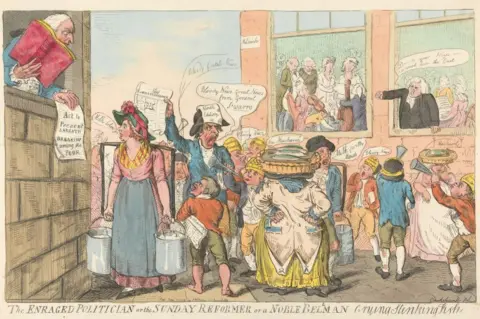
Arguments over how society should observe the sabbath had circulated since the days of Oliver Cromwell and the puritans.
But with the industrial revolution leading to the growth of cities and an urban working class looking for entertainment, a theological debate became a social crisis.
The Lord's Day Observance Society was founded in 1831 and it became the most powerful "sabbatarian" organisation, with the ability to pressure the government.
It pointed to the Fourth Commandment, to observe the sabbath so "that God may be worshipped, man instructed, nations benefited, and families devoted to the service of God".
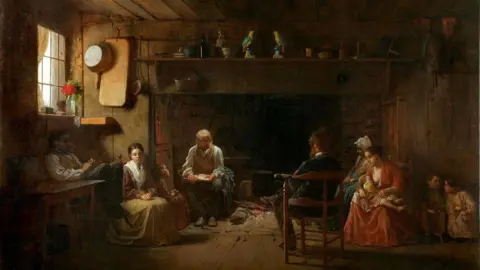
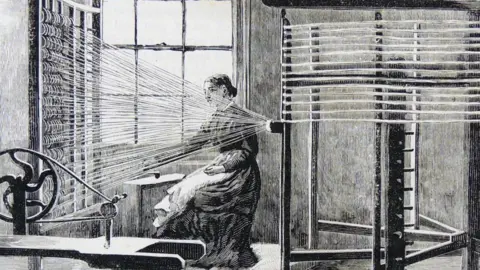
Against this was an appreciation that many workers - who endured six day weeks - would look for distractions on their day off and "improving" entertainments were a better option than pubs and gin palaces.
 Getty Images
Mary Heimann, professor of modern history at Cardiff University, said: "Victorian England was a society where religion was considered important by just about everybody who had influence.
"The Leicester incident was not isolated but part of a wider dispute - there had been decades of to-ing and fro-ing over what could be permitted on a Sunday.
"Should trains run, should shops trade, parks open, museums open, mail be delivered?"
The simmering row threatened to boil over in the late spring of 1856 via the seemingly unlikely route of public music concerts.
 Getty Images
Reformist minded Benjamin Hall MP had become London's first commissioner for public works in 1855 and used his position to, among many other things, open the capital's parks on a Sunday.
But the situation came to a head in May 1856 with the introduction of public performances by bands.
Prof Heimann said: "The issue of public music performances became the touchstone, symbolic of an argument about what sort of Christianity held sway and how much the government could interfere in church affairs.
"It was a clash between an evangelical type of Christianity - a more Puritanical sort, which took a stricter view of how Sundays should be observed - and the less intense Anglicanism favoured by the Whig government.
"There were fears of riots as an estimated quarter of a million people turned out, provoking a backlash by those seeking to protect Sundays - Lambeth Palace boarded up its windows."
This controversy came to Leicester in July.
 Getty Images
An area of open ground used as a race track had previously hosted performances by a local band but these had been held on weekday afternoons, when many were working.
Ned Newitt, from Leicester Secular Society, said: "Leicester was a growing economy with people coming in from the countryside.
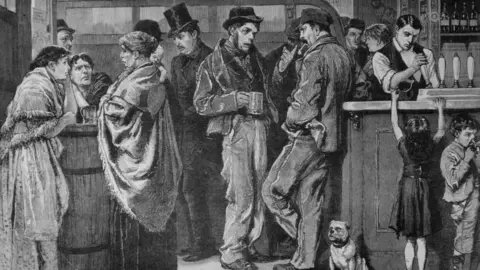
"It was argued that the only other place they could go to on a Sunday was the pub.
"So a lot of reformers felt these people required an education and therefore it was better to go to the museum than the pub.
"Others argued it was a matter of civil liberties, that people had the right to choose to do other things on a Sunday and not be circumscribed by some religious tract."
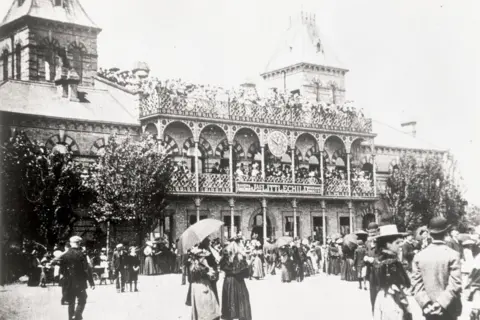
The concert attracted an estimated 14,000 people but it also attracted opposition from the authorities.
 Leicester Museums & Galleries
Newitt said: "Their problem was that there wasn't actually a law against it, so they came up with a legal workaround.
"The land was owned by the town council, who leased it to the racecourse, who subleased it to the owner of a nearby pub.
"The case which came to court was based on the fact that the town council had given permission for music on three days, and the Sunday performance was a fourth day.
"Therefore the band was technically trespassing and Thomas Coltman, who had organised the concert, was fined £1."
While the fine was relatively small, the impact of the row continued.
 Getty Images
The concerts did not return to the racecourse and attempts to hold them elsewhere failed.
Local MP Joshua Walmsley, who supported workers rights and wider reform found his election the following year came down to the issue of Sunday observance.
The local newspaper The Leicester Mercury reported: "For a fortnight, the town was divided against itself by an election contest approaching in bitterness and violence to an implacable civil war."
Placards on walls denounced Sir Joshua as an infidel and as his core supporters - the working class - did not yet have the vote, he lost his seat.
It was not until the 1932 Sunday Entertainment Act that the British public got to visit museums, zoos, and picture galleries on Sundays.
And they had to wait for 1972's Sunday Theatre Act, to have the option to enjoy a stage show, and only in 1994 were all shops allowed to trade in all goods - albeit with restricted hours which remain with us still.
Listen to BBC Radio Leicester on Sounds and follow BBC Leicester on Facebook, on X, or on Instagram. Send your story ideas to eastmidsnews@bbc.co.uk or via WhatsApp on 0808 100 2210.
