Was Charlie Chaplin born in a Midlands Gypsy camp?

 Getty Images
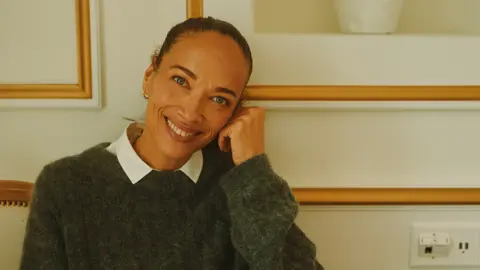
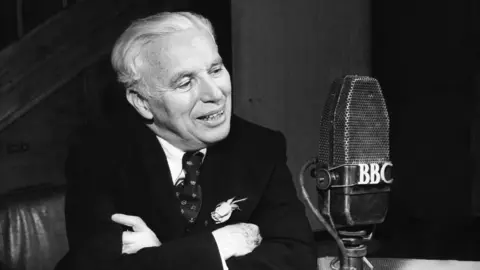
"It's definitely something that meant a lot to Charlie, this possibility", said Carmen Chaplin, granddaughter of the silent movie star, and director of the documentary, Chaplin: The Spirit of the Tramp.
The film poses a fascinating question: Was Chaplin, once the world's most famous celebrity, born on a Romany Gypsy camp known as the Black Patch in Smethwick, near Birmingham?
Officially, Chaplin was born into poverty in London in 1889.
But a mysterious letter found locked inside the silent movie star's bedside table after he died, suggested otherwise.
The letter was sent by Jack Hill, himself a Romany Gypsy, following the publication of Chaplin's autobiography in 1964, which detailed the official account of his birth and childhood.
"You're a little liar," it reads. "But you can be forgiven, because you don't know where you were born.
"You were born in a caravan; it was a good one, it belonged to the Gypsy Queen, who was my auntie."
Hill continued: "I think I'm the only one alive who can tell you what you've been wondering for so many years."
 Anoush Abrar
The startling revelation and Chaplin's son Michael's journey to explore the family's Romany heritage is the subject of the documentary, which will receive its UK premiere at Birmingham's Flatpack Film Festival on Friday 8 May.
The film is "about the significance it had to him, these Romany roots, and this romantic notion that he could have been born in this caravan", Carmen Chaplin said.
The documentary suggests Chaplin had known about his Black Country beginnings from a young age.
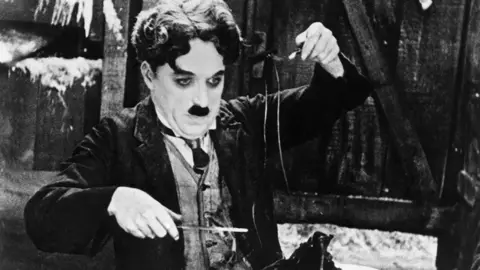
He had become known as The Tramp, after his 1915 film of the same name.
Carmen Chaplin added: "[His mother] had Romany roots on her side which she revealed to him when he was already a big movie star.
"We know that he had Romany roots on his father's side as well.
"For Charlie, his poverty had something noble and romantic about it."
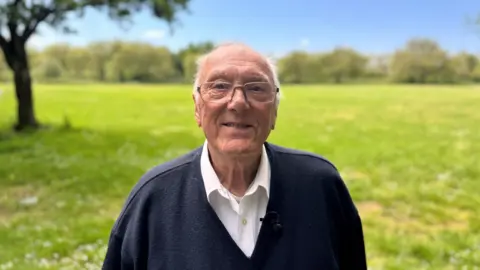
Jack Hill's grandson, Gerry Cannell, said Chaplin had been born in the same caravan as Hill about two-and-a-half years before him.
"The Black Patch story holds more sway [than London]", he said, adding that his on-screen persona was informed by his start in life.
"The Romany Gypsy comes out in The Tramp. Look at the way they were dressed, the way they behaved. This is definitely where it started," he said.
Many myths abound about Charlie Chaplin's upbringing. His mother Hannah is described in the documentary as a "wild woman" - a musicals singer who met Charlie's father, Charles senior, on the music circuit, before falling into poverty and living in a school for orphans.
Black Patch Park has been home to members of the Gypsy, Romany and Traveller community since the mid 19th Century, living in caravans and tents.
The community was officially evicted in 1909, their presence now commemorated with a plaque unveiled in 2015.
Carmen Chaplin said it was "very important" to screen the film in Birmingham, close to the Black Patch.
The director added: "For my father this movie was very much about honouring my grandfather's Romany heritage and he really wanted to say that Charlie was part of the Romany culture."
Without a birth certificate, no one will ever know the truth.
But the story of the Black Patch, the Spirit of the Tramp, and a mysterious letter locked in a bedside table, romanticises even more the man who made his humble beginnings and rebellious spirit the calling cards of his worldwide fame.
As he said in his 1952 film Limelight, as he reflected on his career: "It's the tramp in me, I suppose."
Follow BBC Birmingham on BBC Sounds, Facebook, X and Instagram.
