XL bully ban means others like my loving rescue dog are mistreated

 BBC
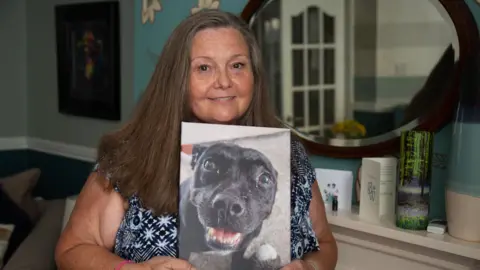
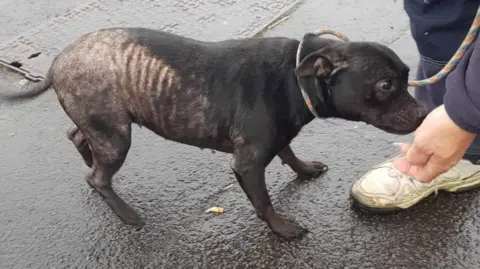
BBCStaffordshire bull terrier Duchess was abandoned, and only survived because of the goodwill of a neighbour, who fed her through a letterbox.
When she was eventually rescued, she had lost lots of fur because of a severe flea infestation and was underweight.
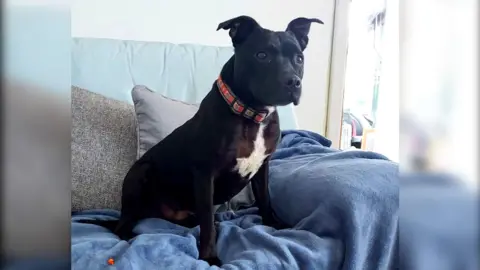
Duchess found a loving, "forever home" with Fiona Rees-Davies in Llanelli, Carmarthenshire, but tragically, a cancerous tumour meant their happiness was short-lived.
Her treatment is not uncommon - cruelty to dogs in Wales has risen by 19% according to the latest RSPCA figures for 2024 and 2025, and by 55% over the last five years.
The figures show Staffordshire bull terriers and bulldog type dogs make up almost a quarter (23%) of deliberate cruelty cases.
Some experts believe the XL bully ban and "alpha-style dog training" is encouraging mistreatment of related types.
The ban was brought in after the UK government said the breed had been "disproportionately involved" in deaths recorded since 2021.
But teaching assistant Fiona thinks there is now also a stigma around other "muscular" dogs - including Staffordshire bull terriers.
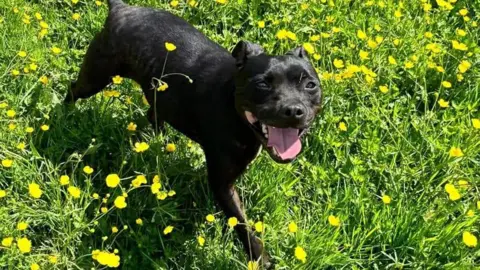
"Often when we were walking, she was wagging her tail, happy to see other dogs, but people would tend to cross the road," Fiona said.
"Duchess would turn back and look at me as if to say, 'what have I done wrong?' because she just wanted to say hello.
"People would think, 'oh, she's a nasty dog'.
"And of course she wasn't - and they [Staffordshire bull terriers] aren't."
 Fiona Rees-Davies
Fiona's happy times with Duchess are tinged with sadness.
She describes the dog's life before being rescued, saying: "There was no love, no contact, [she was] just being discarded."
Duchess won over her new owner's family with her "loving nature" and was described as "just a bundle of fun - she loved everybody".
But soon after, she was diagnosed with a cancerous tumour.
After six months the discomfort became too much for the eight-year-old dog, and Fiona made the difficult decision to have Duchess put down.
"I think about her every day," said Fiona.
"I just miss her so much - she deserved her happily ever after."
Fiona admits Duchess' presence sometimes unsettled other dog owners, but is adamant the breed's muscular appearance, as well as media portrayals, are causing a harmful stigma.
"We've got the Dangerous Dogs Act - it should be a 'dangerous human act'," she added.
"Just because a dog is big and muscular doesn't mean it's nasty."
 West Wales Poundies Dog Rescue
What is the XL bully ban?
Strict rules about owning XL bully dogs were introduced across the UK in March 2025.
They are described as large dogs "with a muscular body and blocky head, suggesting great strength and power".
In 2021, 10-year-old Jack Lis from Caerphilly was mauled to death by an XL bully called "Beast" and suffered "unsurvivable" injuries to his head and neck.
In another case, an 11-year-old girl was attacked by an XL bully crossed with a Staffordshire bull terrier, which broke free from its owner in Birmingham.
 West Wales Poundies Dog Rescue
"I know from previous customers, [that] lots of dogs have been used for dog fighting because of the monetary value that they can hold," said David Brice, who runs a Staffordshire bull terrier training company.
"Also, being the stature of dog that they are, you will often find they are dealt with a lot more robustly and with rough discipline, rather than other dogs, to get that aggressive nature out of them - that is where physical force will be used.
"There is a massive misconception with this breed that they are tough, muscular, hearty dogs."
While he said they could be, David also described Staffordshire bull terriers as "the most loving breed you could probably have".
The dog trainer said they are often people-orientated and want to please, so there is no need to use any excessive force or underhand training methods.
He described positivity as the key.
David said the dog's excitable temperament can be hard to manage without adequate training knowledge, while their strong bite can attract "the wrong type of people".
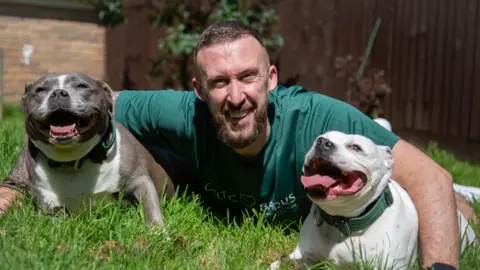
"We're definitely getting an increase of deliberate cruelty across the board, but the main spike at the moment is dogs," said RSPCA rescue officer Ethan Griffin.
Since 2021, the animal welfare charity has recorded 4,746 incidents of intentional harm in Wales, with 3,560 of those involving dogs.
Vanessa Waddon from Hope Rescue in Llanharan, Rhondda Cynon Taf, has seen a 30% increase of breeds such as Staffordshire bull terriers being brought to her shelter.
The charity boss said there had also been a 4,500% increase in larger dogs associated with the XL bully - such as the Cane Corso and Presa Canario.
"When you've got the government telling you that dangerous dogs are only a certain type of breed, it does worry the public," she added.
"What we should be doing is educating people on responsible ownership of all dogs, all breeds."
She urged people searching for a new pet to look at things such as its skin, eyes, to make sure it is healthy and that importantly, their mother and father are seen before purchase.
A spokesperson for the UK government's Department for Environment, Food and Rural Affairs (Defra) said: "Any form of animal abuse is completely unacceptable and is an offence under the Animal Welfare Act.
"We continue to work with the police, local authorities and animal welfare groups to encourage responsible dog ownership across all breeds and ensure the current dog control rules are sufficient to protect communities."
The Welsh government said it supported the Dangerous Dogs Act 1991 and recognised the important role it plays in protecting the public.
"Any dog, regardless of breed, type or size, can show aggression and cause harm," a spokesperson added.
"We encourage all owners to ensure their dogs are properly trained, controlled and safe around others.
"Animal cruelty is unacceptable and should be reported to the relevant enforcement authority or the police."
