Camden Council at 'sharp end of the housing crisis'

 Andrew Goss
Hundreds of affordable homes originally promised for major Camden developments have been lost or are at risk after developers sought reductions to housing quotas, citing worsening economic conditions.
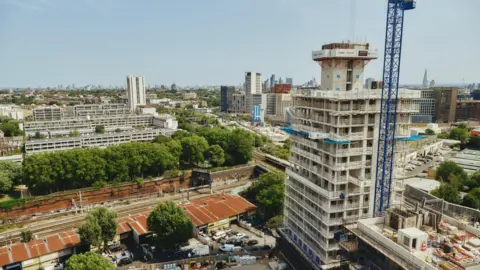
In an eight-acre development named Camden Goods Yard, a revised plan successful on appeal saw affordable homes slashed from 203 to 83 in May.
On Thursday the council approved revised plans to cut affordable housing at the O2 Centre site from 570 homes to 330 on their 1,800-home development.
The changes come as businesses and residents affected by regeneration projects describe financial hardship, displacement and a growing sense that the planning system is failing local communities.
Affordable housing commitments on two of Camden's biggest regeneration schemes have been reduced or are under review, as developers argue rising costs have made projects less viable.
One resident, Mark, who lives in social housing, said that his health had suffered from the cement dust he has breathed during the delayed construction work at nearby Camden Goods Yard, on Chalk Farm Road.
The 56-year-old said that the relationship between Camden Council and its residents was one of "a broken social contract," as "projects mutate for developer benefits."
According to a Camden Council report, the local authority is in a "unique crisis of affordability."
It is the third most expensive place to buy a home in the country and the borough has a chronic shortage of housing.
There were 8,380 people on the waiting list for social housing in 2025 and just 84 affordable homes started in 2025-26, among the lowest in London.
Schemes to deliver more affordable housing have been hampered, with Camden Council locked in disputes with developers who are seeking to reduce the affordable and social housing quota on their regeneration sites.
Landsec, behind the O2 Centre, asked to reduce its housing quota from 570 affordable homes, to 330.
A Landsec spokesperson said that "the economic reality" had shifted since its plans were first approved.
It said: "Higher interest rates, increased construction costs and more complex regulations mean that housebuilding across the capital is currently 90% below target.
"The updates we've made are designed to respond to these wider changes and enable delivery."
It said that the plan would still "create homes for Camden, provide open green space and protect the long-term benefits that the scheme can deliver".
Despite being a key scheme in the delivery of Camden's planned 11,550 new homes in the next 15 years, a council report about the site noted "viability challenges" for many schemes in the capital due to "economic challenges facing the housebuilding industry in London".
In May this year, a Whitehall planning inspector ruled in favour of developer Berkeley St George, allowing it to reduce the number of affordable homes from 32% to 13% at the company's 636-home flagship Camden Goods Yard Project - a net loss of 120 affordable homes.
A Berkeley spokesperson said: "Following an in-depth review of this project, the government's own Planning Inspector confirmed that Berkeley is delivering 'a greater level of affordable housing' at Camden Goods Yard than the scheme's financial returns support.
"It's also important to understand that the council is charging this project £31m through its Community Infrastructure Levy, which is funding that could otherwise be used to increase the number of affordable homes. Essentially the council has chosen to prioritise raising revenue from the site over affordable housing delivery.
"This project will also create 1,000 permanent jobs, three acres of new public space, a community centre and affordable workspace for small businesses, all delivered on a sustainable town centre site."
Farrell Monk, a Liberal Democrat councillor for Fortune Green ward, which neighbours the O2 development, said: "It's developers exploiting the system, and its residents on the housing register who pay for it."
On 16 July, in an effort to stimulate house building across the capital, Mayor of London Sir Sadiq Khan replaced the current city-wide affordable housing threshold with borough-specific goals.
City Hall said the measures would "maximise the number of affordable homes being built during this difficult period."
Under City Hall's new draft plan, Camden Council's affordable housing threshold increased from the previous quota of 20% affordable housing to 35%.
Businesses make way for homes
Camley Street in Camden is one area that developers have set their sights on for regeneration.
Nasrine Djemai, cabinet member for new homes and community investment, said: "Camden is at the sharp end of the housing crisis and the regeneration of Camley Street is a key part of our response to this challenge."
Its development will be a partnership between Camden Council, property investment company Lateral, and developer Ballymore.
Djemai said: "The development will deliver 401 new homes where there were previously none, of which nearly half will be genuinely affordable."
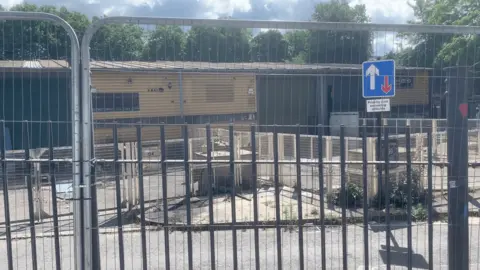
However, aspirations for a dynamic new neighbourhood have pushed out long-standing businesses who leased the land from Camden.
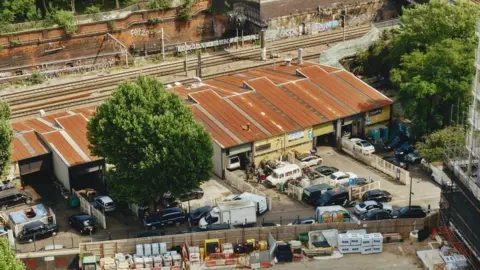
Trish Thomas ran Transauto, a vehicle repair shop in Camley Street with her father, Cuthbert Thomas.
Transauto had operated in Camley Street for over 40 years but was forced to leave in January to make way for the regeneration scheme.
 Andrew Goss
Trish said: "The costs are pretty severe. There was no assistance relocating us whatsoever. They just wanted us out, there wasn't any sort of plan afterwards."
She added: "They could have supported us and relocated us somewhere else within the borough, but no thought was given to the businesses that have been there that long."
Camden Council said that it had given "each business tailored support".
Paolo and his father Adolfo ran BMW Auto Services in Camley Street for 40 years.
They were also forced out in January during what he described as "the busiest business period we've ever had."
 Andrew Goss
Paolo said the personal cost of being made to leave the site was "at least £100,000".
He said: "I made my mechanic redundant so I had to pay him off, and my Dad and I are both unemployed for now, just using savings.
"I'm going to have to try and get a loan."
Nearly six months after the businesses vacated the site, no work has begun in Camley Street.
Paolo said: "They haven't done anything. It's a joke.
"They were like: 'We've got the diggers ready.' We could have been there another six months. I don't know what their excuse is. They said they needed us out by February, March."
Camden Council said it was in contract with a demolition contractor and site surveys and other preparatory works would take place ahead of demolition.
 Kris Jalowiecki
A spokesperson for Camden Council said they recognise the contribution of Camley Street's former businesses and would "continue to engage with and support businesses wherever possible".
They said the businesses had been given financial compensation, rent-free periods for the garages, extended timelines to vacate and a commitment from the council "to securing long-term solutions where possible".
They added that the council would "consider evidence-based requests for additional assistance on a case-by-case basis".
'Once they're built, that's when the problem starts'
Mark, 56, is a social housing resident in the Henson Building in Camden, and is a founding member of the Tenants, Residents and Associations in Camden Town (TRACT) network.
He said his experience of living in social housing with a service charge managed by a private firm demonstrated how "problems intensify".
"The community needs a strict governance role in choosing the post-occupancy management provider, so private agents can't price social tenants out via service charge," he said.
Mark said his service charge increase had left him with "just £12 a week."
He said: "Sixteen months in and I've been forced to live on just £48 a month after paying electricity and water. That's £12 a week for food and everything since last April."
"Once they're built, that's when the problem starts," he added.
'The economics of development have disappeared'
The Greater London Authority (GLA) is currently falling short of achieving both affordable housing targets and wider housebuilding goals set by the government across the capital.
Tim Craine, director of residential development research agency Molior, described London's housing market as "a closing down sale", and added that development in London would be "at a halt by the end of next year".
He described a mistrust between politicians and developers.
"The developers have done themselves no favours by seeking to reduce affordable housing provision," he said, but he added that there were many examples where "reduction [of the affordable housing quota] is encouraged because it keeps homes being built."
Craine argued that although the GLA had "brought power back to the public sector", this had resulted in "depressing land value" through more affordable housing.
"That's happened at exactly the time that the economics of development have disappeared, buyers have disappeared, and profit has disappeared," he said.
 Andrew Goss
One senior architect working on a site in Camden, who wished to remain anonymous, said they had experienced planning permission strategies where developers had secured a site and later reduced the affordable housing quota.
"Every architect gets dragged through this," they said.
"Developers and planning consultants develop planning approval strategies where they apply for a use change to a more lucrative rent like a commercial office, or a reduction in affordable housing.
"It happened to us recently. We didn't know this was the developer's plan until they told us after we got the original planning permission," they added.
Monk said: "There's a clear pattern to how Camden's housing crisis is being managed: developers promise affordable homes to win planning permission, then come back years later saying the numbers no longer work, while those same developers keep posting hundreds of millions in profit."
Monk called Landsec's revised affordable housing plan for the O2 development "a stitch-up", adding: "Camden needs new homes, but outsourcing that need to volume housebuilders isn't working. Camden Council needs to get tougher with developers."
James Slater, Camden's cabinet member for planning, said the council had a "robust planning system".
He said it was "deeply disappointing" when a planning inspector overturned the council's refusal to reduce the number of affordable homes at Camden Goods Yard.
He added: "At the O2 Centre, we have carefully scrutinised the developer's proposals and sought to secure the maximum possible number of genuinely affordable homes."
Ballymore, the developer behind the Camley Street project, was asked if it planned to decrease the number of homes at the site. It declined to comment.
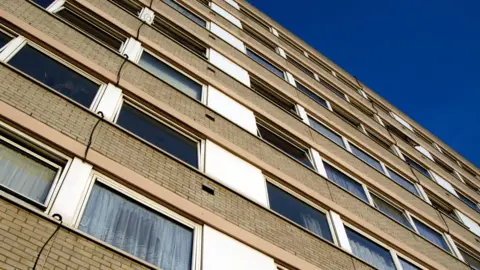
Resident Mark said he was "deeply worried about the human costs" of councils relying on private developers to build affordable homes.
He argued that a Section 106 agreement was "not enough" to ensure Ballymore delivered its stated 78 affordable homes at Camley Street.
"The council needs to enforce aggressive, transparent, viable review mechanisms so quotas can be clawed back later," Mark said, adding: "A quota that's delivered on paper means nothing if the system allows private managing agents and housing associations to weaponise service charges later."
Camden Council said that affordable homes at Camley Street had been "secured through legally enforceable Section 106 planning obligations" and unstated "additional contractual protections".
Listen to the best of BBC Radio London on Sounds and follow BBC London on Facebook, X and Instagram. Send your story ideas to hello.bbclondon@bbc.co.uk
