'Wonderful' letters by Wilberforce to be auctioned

 Hawleys Auctioneers
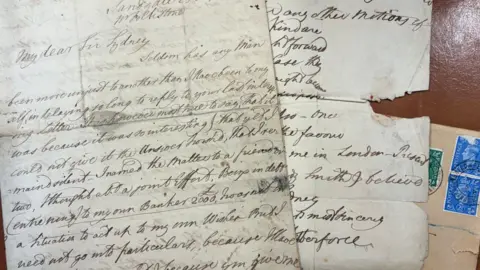
Two letters written by the anti-slavery campaigner William Wilberforce are to be sold at auction.
The Hull MP, who died in 1833, wrote the six-page letters to close friends towards the end of his career and life.
Auctioneer Caroline Hawley said the letters were owned by a family member and offered "fascinating insights into Wilberforce's personality and passions".
She said there had been interest in them from around the world and they were "almost impossible to price", with a conservative estimate of £400 to £600 each.
"The letters have sparked a lot of interest. They are wonderful historical documents but I love the personal insights they reveal," Hawley added.
 Culture Club/Getty Images
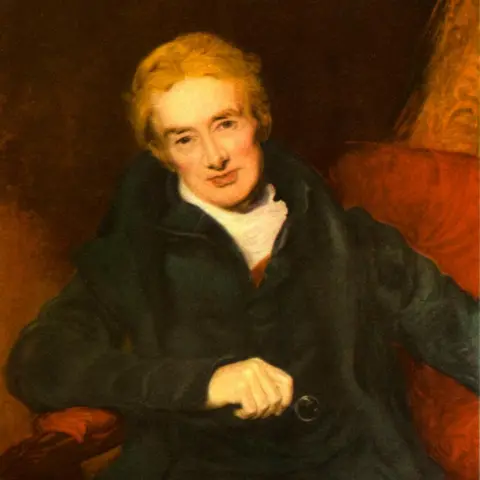
Wilberforce spent decades as a leader in the movement to abolish the Atlantic slave trade.
The first letter dates from 1814 and is addressed to Admiral Sir Sidney Smith, asking him to pass a message on to Napoleon Bonaparte's chief diplomat during the Congress of Vienna – a series of meetings held to draw up a peace agreement for Europe following more than 20 years of wars.
It shows Wilberforce seeking support from other countries in his fight against slavery.
The second letter, from 1831, is addressed to the Marquess of Wellesley, the elder brother of the Duke of Wellington.
Hawley said this letter, written two years before Wilberforce's death, was a "personal reflection on his life".
 Hull City Council
The auction is due to take place at the Hawleys Antique and Fine Art Auction in Brough on Saturday.
Wilberforce was born in 1759 and was driven by his religious faith to campaign against slavery.
A law to abolish the trade was passed in 1807, but slavery was allowed to continue.
On 26 July 1833, as he lay on his deathbed, he was told Parliament had passed the Slavery Abolition Bill, which granted freedom to all slaves within the British Empire. He died three days later.
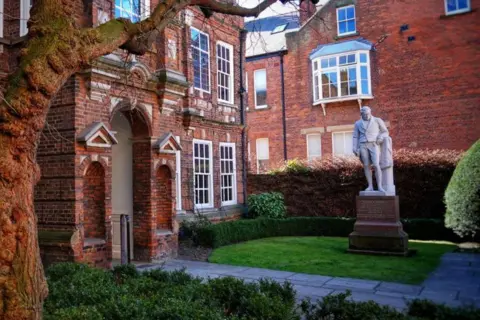
His former home on Hull's High Street was opened as a museum documenting the slave trade in 1903.
Listen to highlights fromHull and East Yorkshire on BBC Sounds, and watch the latest episode of Look Northor tell us about a story you think we should be coveringhere.
Listen to highlights fromHull and East Yorkshire on BBC Sounds, and watch the latest episode of Look Northor tell us about a story you think we should be coveringhere.
