War in Iran 'has put up our fuel bill by £100,000'

 BBC
BBCA family haulage firm has calculated the US war with Iran has increased their fuel bill by £100,000.
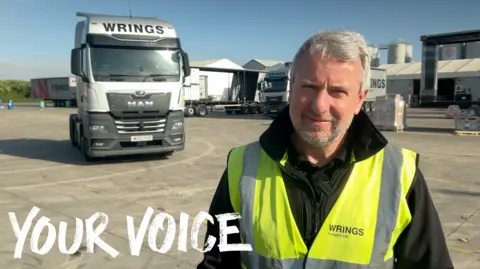
Stuart Wring, who runs Wrings Transport at Avonmouth in Bristol, says the price hikes have been "crazy".
Like most hauliers, Wring "has to pass all these increases on to our customers", which means the price of everything transported by road is rising.
This has pushed inflation up to 3.3% in the latest figures for March. Grant Fitzner, chief economist at the Office for National Statistics, said fuel price hikes were the biggest factor.
Fuel prices "saw their largest increase for over three years", he says.
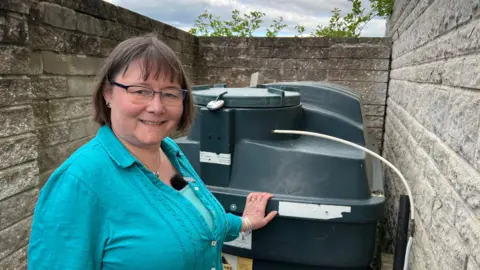
But some, like carers, cannot pass on the rising cost of fuel. Margaret Smith from Somerset says her extra petrol costs were just "effectively a wage cut."
Meanwhile the price of home heating oil has doubled, leaving some families deciding to switch off their boilers altogether, using blankets to stay warm.
As the ripples of the oil price spike spread across the UK, many people have contacted the BBC's Your Voice to tell us how the rising price of oil has affected them.
The price of petrol and diesel is the most visible impact of war in the Middle East. Latest figures from the RAC show petrol up by 24.7p and diesel by 47.8p a litre since Feb 28.
Filling a typical family car with diesel now costs around £27 more.
But trucks have huge tanks. Stuart Wring shows me his brand new lorry at his yard. It takes 450 litres to fill it, and Stuart has 67 trucks on the road.
The moment the war started, his business felt the impact.
"March was £45,000 over budget," he says. "And April's already going through the roof, it will be £60,000 over easily".
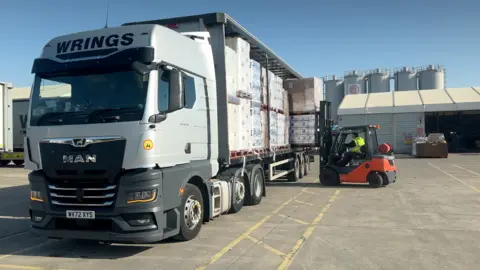
But crucially for his business, he already had a so-called fuel surcharge mechanism in place. This is common in the haulage industry, and allows bosses like Wring to be transparent with their customers.
Every month he calculates how much his fuel bills have gone up (or down), and a surcharge is added to next month's prices. This stops hauliers imposing opaque price increases with a vague link to fuel bills.
Wring says his customers all accept it, and "if we don't pass it on, we'd be very foolish".
"It will hurt us," he adds.
But it also means that every penny on the price of diesel is passed on to supermarkets, retailers and anyone else sending goods across the country.
Eventually, that will put prices up on the shelves.
Karen Betts, chief executive of the Food and Drink Federation recently predicted that "food inflation will reach at least 9% by December".

Of course, many people have less power in their market. Carers, for instance.
Margaret Smith tells me that she, and all the other carers she knows, are getting no help at all with rising fuel bills.
She explains: "We are having to carry the extra costs ourselves, cutting our wages effectively, to pay the extra costs of fuel."
Like all carers, she visits people at home to help with vital tasks like washing and dressing themselves, and drives her own car from one client to the next.
The agency pays them a flat rate of 32p a mile, which should cover fuel and the cost of keeping a car on the road. It has not risen for several years, and certainly not since the war started.
Mrs Smith says it was not surprising "given the dire straits of social care financially".
But covering 50 miles most days she is now paying a lot more to fill her car.
She adds: "We need this money due to rising costs in everything else we have to pay. It is very distressing to say the least."
Some people felt the impact of oil price rises immediately.
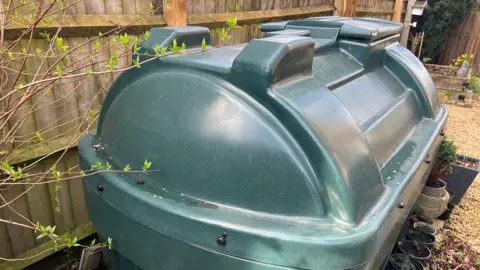
Across the UK, 1.5m homes are heated by oil, usually a kind of kerosene burned in a boiler to heat water for radiators and hot water.
Since the war started the price has doubled, from around 60p a litre to more than £1.20 per litre.
On the Somerset levels, 60% of homes are on oil, and not just old houses.
Emma Gwynn and her family of five live in Somerton, and got in touch with us to complain about the "totally unregulated" oil market.
"We used to pay around £500 to refill our oil tank," she explains.
"Now it will be £1,200 minimum, and the fear is it is going to go even higher as this war continues."
They decided they could not afford the increase, so as spring came, they switched the oil boiler off. Now the family use a small immersion heater for hot water, which usually is enough for a couple of showers.
"I was last this morning," the mother-of-three smiles, "so I had the cold shower."
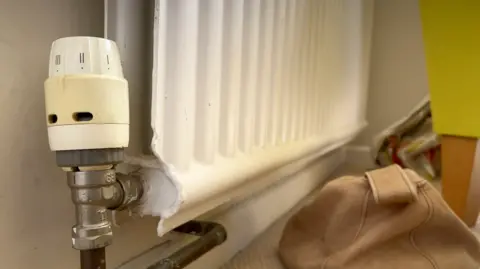
The government did announce help for some heating oil users, in a £53m scheme. But to qualify, you have to be on benefits like Universal Credit or Pension Credit.
Mrs Gwynn's family, like many others we heard from, get no help.
She says: "Many people don't qualify for help, there are working people, people on a small pension, and they are really being stretched by the rising cost of heating oil, and transport, and everything. It's really difficult."
John Harrison is another who contacted us about this. The 79-year-old lives in Alvington, on the edge of the Forest of Dean in Gloucestershire.
He says people are already just turning the heating off and going to bed early to keep warm.
"With the increase in pensions barely keeping pace with inflation, this will be a very considerable worry towards the winter."
Mrs Gwynn always watches the news, but now find she literally has a personal interest in it. If the Strait of Hormuz opens again for good, and tankers start steaming through, she might be able to have a hot shower.
Follow BBC Bristol on Facebook, X and Instagram. Send your story ideas to us on email or via WhatsApp on 0800 313 4630.
