Hero train manager hurt in crash helped others

 BAV MEDIA/GEOFF ROBINSON PHOTOGRAPHY
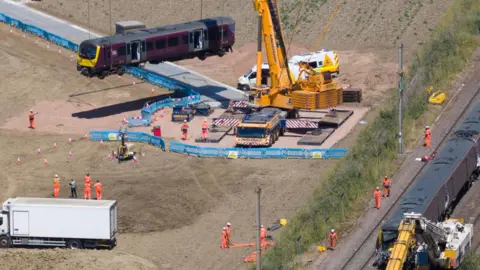
A train manager who helped injured passengers after a fatal crash between two trains near Bedford has been described as a hero.
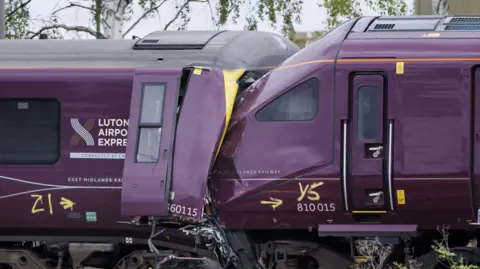
Shaun Burton, the train's driver, was killed and about 100 people were injured when two East Midlands Railway (EMR) services to London St Pancras collided at about 17:15 BST on Friday.
Praising the train manager's actions, passenger Mareks Grabovskis said: "I could see he was in pain himself, but he was telling someone on the radio to close the lines, and checking if everyone else was OK."
Disruption between London and Bedford is expected to last a week. The MP for Mid Bedfordshire, Blake Stephenson, said 600m (1,968ft) of track would need replacing.
John Watson, regional organiser of the RMT union, said the train manager had also helped to avert further disaster on Friday.
"He looked out and could see one of the vehicles had become derailed, and would potentially block the other line.
"If a train had come the other way, it may have been too close and hit it."
Watson said the manager carried out emergency action, despite being injured.
"He got out and put circuit clips down, which puts all the signals back to 'danger', and contacted the signaller to stop all the trains."
Watson said he knew all six staff members who were working across the two EMR trains that crashed, including the driver of the service from Corby, who died.
He said the incident had been "an absolute shock" to the rail industry, who were still coming to terms with the loss of their colleague.
 EPA/Shutterstock
Sarah Conboy, leader of Huntingdonshire District Council, said she "was deeply saddened to hear of the tragic passing of Shaun Burton", who had been a former councillor at her local authority.
"His loss is profoundly felt, both by his family and across the local community he served," she added.
She said Burton had been an Independent councillor for the Stukeleys ward from 2018 to 2022.
Grabovskis, who had been on the 16:40 Corby train, said: "I was about to board the first carriage, but there were too many people because the train only had four carriages, so at the last second I moved to the last carriage."
He said he had gone flying when the collision happened, passed out and woke up on the floor to see people "covered in blood" and screaming.
"It was one of the most terrifying moments of my life, and I know how fortunate I am to be here today," he added.
Stephenson said the crash site was "quite difficult to get to".
He said: "The overhead wires need to be removed, a crane needs access to remove train carriageways and there's been so much damage to the rails that about 600m of track needs to be replaced before the overhead wires can be replaced and then the track can reopen.
"The teams will work at pace but there's an awful lot of work to do."
A doctor, who sustained multiple fractures in the collision, remained on the train to care for some of the most seriously injured passengers.
The GP, from Bedford, stayed at the scene until they were taken to hospital.
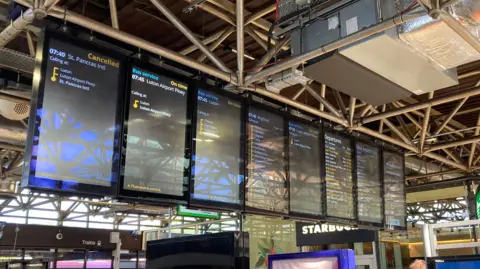
Commuters arriving at Bedford railway station on Monday said staff had been doing their best to offer support.
Network Rail said the line was expected to remain closed between Bedford and Luton for the rest of the week, until 28 June.
There will be no GTR services north of Luton and no EMR services south of Bedford, with a limited rail replacement bus service in operation between the two towns.
 Alex Pope/BBC
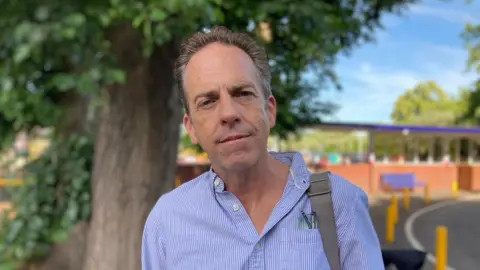
Bernie Casey usually travels from Bedford to London for work, but has been unable to travel due to delays.
He said: "I was up at 06:00 BST looking to attempt the journey, but it's not going to happen. It's a sad set of circumstances."
Casey said his journey on Friday had also been affected and it had taken nearly five hours to get back to Bedford.
"I mean, my heart goes out to the people who were affected in the crash," he said.
"In fairness to people at the station, as soon as I arrived people were here to give advice and assistance in relation to how long my journey might take and that's informed my decision not to travel."
 Alex Pope/BBC
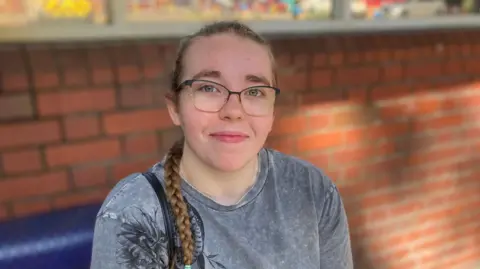
Megan Hughes travels from Flitwick to Bedford for work, a journey that usually takes 10-15 minutes.
With the rail replacement services she said it had taken 45 minutes, meaning she would be late for work.
She praised the teams at Flitwick for offering advice to stressed passengers and she had felt "better knowing there were people around to let me know where I was going".
 Alex Pope/BBC
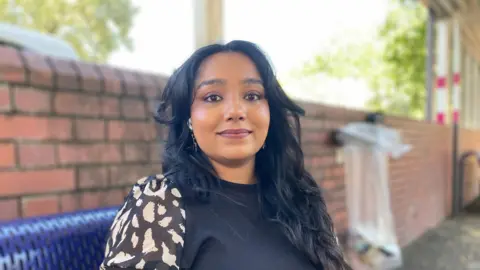
Feby Thomas, from Wellingborough in Northamptonshire, was still able to get a train, but had to change her shift at work.
It had taken her about two hours longer to get home on Friday, she said, but she had no idea why until later.
"We didn't know what happened. When we got home and saw the news, it was terrible," she added.
Thomas said the delays she had faced had been unimportant, given the seriousness of the collision.
 Alex Pope/BBC
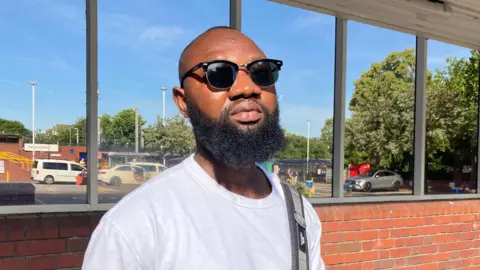
Nana Adjho normally travels from his home in Stevenage to Luton, where he gets the train to Bedford.
Adjho said the replacement bus services needed "to be improved" and he had not been given much information about the delays.
He said the whole journey had taken 90 minutes longer than normal, meaning he would be late for work.
 Alex Pope/BBC
Do you have a story suggestion for Beds, Herts or Bucks? Contact us below.
Follow Beds, Herts and Bucks news on BBC Sounds, Facebook, Instagram and X.
