Council 'dragging heels' over Glass Centre

 BBC/Jim Scott
A council that was urged to intervene in the planned demolition of the National Glass Centre has been accused by campaigners of "dragging its heels".
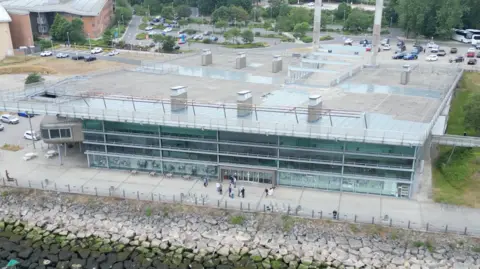
The building permanently closed on 31 July as the owner, Sunderland University, said it could not afford to repair or continue running it.
Those fighting the closure said the local authority had been asked to implement an Article 4 direction, which would halt plans to bulldoze the site, but Sunderland Council said due process was being followed and it was "not appropriate" to "pre-judge the outcome".
The university said it continued to follow planning rules and guidelines ahead of demolition.
Staff were seen inside the building on Friday, clearing parts of the site as contractors assessed exterior signage.
 BBC/Jon Coates
"At the moment the university can demolish a public asset and there's very little protection in law," said Carolyn Basing, chair of the campaign group Save the National Glass Centre.
"They don't even have to have full planning permission."
In March the council agreed to look into an Article 4 direction under which permitted development rights could be removed meaning the university would need to apply for full permission before demolition.
"The public would [then] get their opportunity to have their say," Basing said.
 BBC/Jim Scott
Wearside Liberal Democrat leader Paul Edgeworth said: "Months ago, every single party on the council said we want to stop this building being demolished, so we can come up with a plan to save it and have it here in the future under some kind of new ownership.
"The council have been dragging their heels ever since."
In response, Sunderland Council said due process needed to be followed and the Article 4 direction required "formal statutory and evidence-based processes".
Sunderland University said that, "despite a range of conversations" with interested groups, "not a single proposal" demonstrated how the repair costs or annual subsidy would be funded.
It said it had "made clear throughout the process" that nearly 90% of its income comes from student fees and its "overriding priority" was supporting teaching and research.
It said it had made clear "it was unable and unwilling to bear" the "continuing, and significant, financial liabilities".
