Are first-time voters excited for the local elections?

 Claire Hamilton/BBC
For some people, voting for the first time is a milestone as significant as a first driving lesson or that first legal visit to the pub.
But for most young people who spoke to the BBC as part of a local election special programme in Bootle on Merseyside, the mood was distinctly mixed.
They said it was hard to find information about local campaigns and candidates. while the prospect of heading to the polling booth to elect a local councillor was "less exciting" than voting in a general election.
We spoke to a range of first-time voters ahead of Thursday's poll - with all 66 seats on Sefton Council being contested.
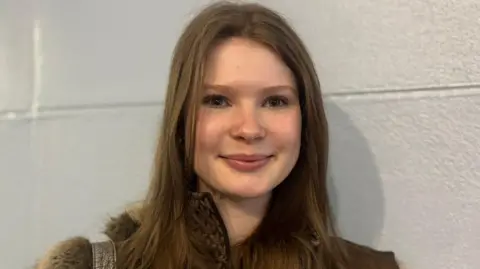
A-level student Rachael Murphy said there should be "more focus" on local politics in the national media.
She said: "People don't actually realise what local councils do, but that's what affects them most on a personal level, so it's more important that those issues are tackled because for a lot of people, things like potholes and bins being collected is fundamental to their lives".
However, she and her fellow students at Hugh Baird College agreed that information on local election campaigns was hard to find.
 Claire Hamilton/BBC
Decades ago, it would be the leaflets through letter boxes where voters could see the smiling face of their local candidate. Now, that's more likely to be online.
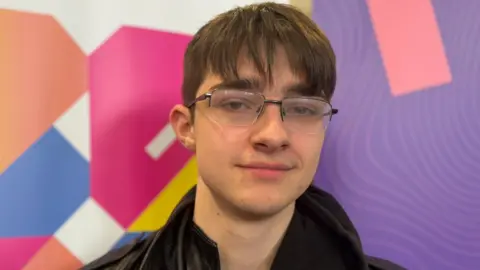
Roman, who is studying IT, said YouTube was his main source of political news.
He said he liked to watch "people summarising what is being debated in Congress or what is being said by the Prime Minister", but he added those were topics a long way away from Bootle, and he took a lot of what he saw with a "grain of salt, because there's a lot of truths and lies being told there".
Dr Ros Southern, senior lecturer in political communication at the University of Liverpool said just because young people are using social media as a source of news, it did not mean what they were seeing wasn't legitimate.
She said: "For young people 24 and under, social media is their primary source of news, but that doesn't mean it's dodgy.
"If you dig a little deeper, it can tend to be that they're engaging with the social media feeds of the BBC and other traditional news organisations".
She added that the comments on social media posts can "be a good place for debate and people do debunk arguments and post other links" to help young voters make their minds up.
All the students said they had not been taught enough about the way England's elections work.
Citizenship is part of the national curriculum, but according to recent research by the electoral commission, just 30% of under-18s said they had learnt about politics at school.
 Claire Hamilton/BBC
Rachael said that a lot of candidates in local elections appeared to be older, so more young people were needed.
She added: "Politics isn't really taught thoroughly enough from an early age in school. If that changes it may allow young people to be more aware from a young age and then and they'll have more appetite to be involved because they've been taught about it."
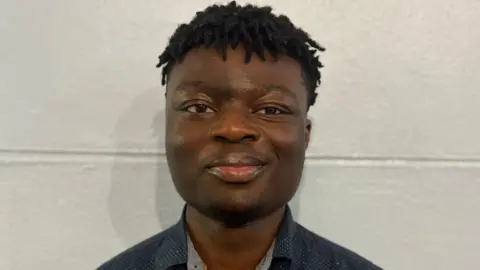
Rex Odeh is studying politics A level and said he felt local elections were "neglected".
He added: "For example, littering is a major issue and I think that by raising awareness about local elections, people realise that they can create change on issues like that, and it might encourage more people to vote."
 Claire Hamilton/BBC
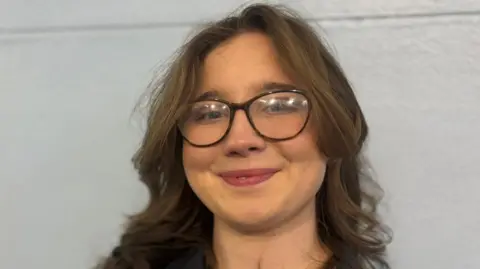
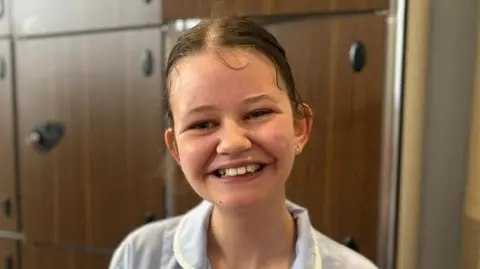
Eighteen-year-old Lily Shirley said she was probably not typical of people her age because "I don't have TikTok or Instagram or social media".
She said her news sources were "multiple articles from different perspectives", but again she said this might not be typical.
Rachael said her father "always has the news on TV, so I've always watched that from a young age".
She added: "I do think the majority of people our age do mostly just get their news source from social media, which can be quite dangerous because a lot of misinformation is spread."
 Claire Hamilton/BBC
Rex said he felt "guilty" for "taking my information from social media and understand that there are risks involved".
He said there needed to be more discussion about where information on social media was coming from and where it could be fact-checked. He agreed this was a lot more challenging in a local election campaign.
Roman said he found the whole business of voting "arduous" and said that while he thought it was important, he said "I just don't have the motivation to do it half the time".
"It's not exactly taught, you maybe get taught by your parents or by a random relative, you don't really get taught the meaning or the importance of why voting would matter," he continued.
Health and social care student Rose Bibby, 20, said the most important local issue to her was support for young people with special educational needs.
 Claire Hamilton/BBC
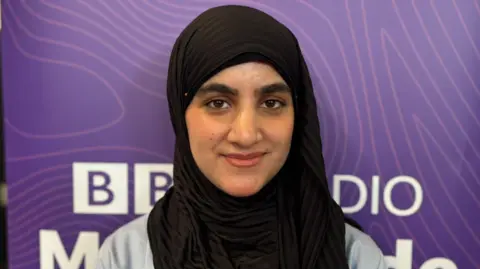
Her fellow student Hadia Kohestani said: "We need to involve young people in big decisions such as youth councils, community projects and local planning."
Roman said the biggest local issue for him was housing.
He said: "I really would like to afford a house in the future. I would like to be independent on my own just living my own life.
"But honestly with the amounts of how high rent is, how high mortgages are, I don't really seeing myself buying a house in the near future. I'll probably at least almost maybe be retired by the time I get one."
Rose added that affordable housing was also important to her.
"There are so many barriers in the way to financial security in terms of housing," she said.
Hadia, who is originally from Afghanistan, said she appreciated the importance of any type of election.
"When I was a little girl it was my dream to become a politician.
"I come from a country where girls can't study and it's my dream to be a politician to protect human rights and to help refugees."
Listen to the best of BBC Radio Merseyside on Sounds and follow BBC Merseyside on Facebook, X, and Instagram. You can also send story ideas via Whatsapp to 0808 100 2230.
