New therapy brings hope to blood cancer patients

 BBC
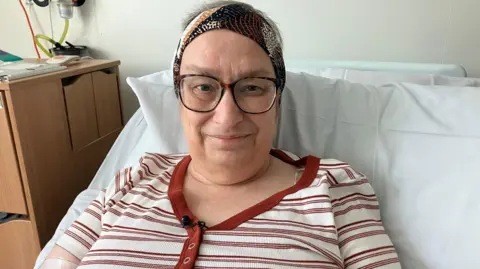
BBCPatients at a Birmingham hospital are among the first in the country to be given an innovative treatment for an aggressive type of blood cancer.
The city's Queen Elizabeth Hospital (QEH) is among several centres where NHS England is funding CAR-T cell therapy for patients diagnosed with B-cell acute lymphoblastic leukaemia (B-cell ALL).
Lesley Newton, 64, who underwent four rounds of chemotherapy that did not work, said it offered hope and she felt "excited and relieved" to start the new therapy.
Medics said the "living cancer treatment", which costs about £500,000 per patient, uses a person's own cells to help fight the disease.
BBC News was present when Lesley received the first part of her treatment.
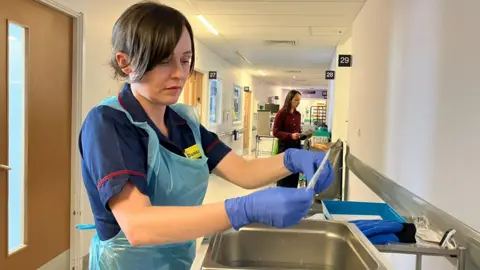
The CAR-T cell treatment had been delivered to the hospital in a specialist frozen container to keep it at a controlled temperature.
Medics then follow a strict protocol, which includes patient checks involving two specialist nurses and a pharmacist.
The cells have to be thawed before the patient takes the first dose, which takes six minutes.
'Gives people hope'
Donna Walsh, cellular therapies lead nurse, said: "It's like a living cancer treatment, so we've taken Lesley's immune, T-cells and it's gone off to a manufacturing laboratory and they're sort of re-engineered to recognise Lesley's specific cancer.
"So it's very very clever."
Lesley was diagnosed with B-cell ALL last October. She is among about 800 people in the UK diagnosed with the disease each year.
She said she was grateful to have qualified for the specialist therapy.
"I'm quite relieved and excited about it, to finally get it started," she said.
"I think it's amazing really how they do it. Obviously it gives people more hope that maybe they can qualify for it."
The QEH was one of 30 centres involved in the Felix Trial, which found 77% of patients studied achieved remission, with half of those showing no signs of detectable cancer after three and a half years.
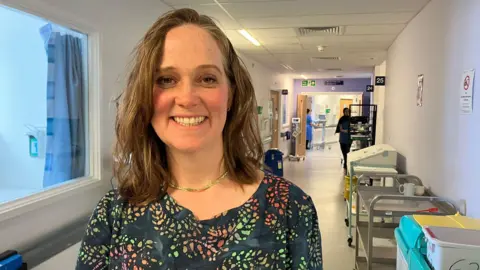
Dr Lindsay George, CAR-T consultant, said: "Previously our treatment options were quite limited and were also very toxic.
"This new treatment is something that is tolerated well and that gives a really good chance of long-term control of the cancer."
Two treatments that are administered several days apart, are being offered all over the country.
Those behind it have huge confidence, saying it is providing evidence to show it's helping keep patients alive.
Follow BBC Birmingham on BBC Sounds, Facebook, X and Instagram.
