Extreme evolution: The animals evolving at super speed to survive

 Getty Images
Humans have become one of the world's greatest evolutionary forces. To survive our cities, animals from urban foxes to glass-climbing lizards are responding with extreme adaptation.
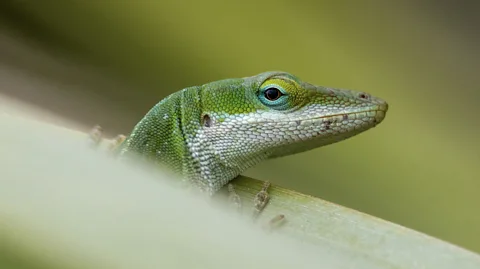
In Puerto Rico, the anole lizards living in cities look rather different to their forest-dwelling counterparts. In order to scale buildings and sprint across hot surfaces, these urban reptiles appear to have evolved longer limbs and more toe lamellae – the fine scales on the bottom of their feet. These traits are believed to help them better cling to smooth human-made surfaces like glass and metal. And the change seems to have happened in a matter of years.
Cities have become the planet's newest ecosystem, and many of the animals residing in them have been forced to adapt to survive.
At the extremes, these changes – either behavioural or genetic – happen over very short timeframes, sometimes just a few generations. These speedy changes are happening either to cope with climate change, or direct human activity. Human choices and behaviour, from the use of antibiotics to the transfer of invasive species, have become one of the world's greatest evolutionary forces, driving wildlife species to dramatically accelerate their pace of change. It's known as "contemporary evolution".
"Some animals in cities are responding well," says Andrew Sih, who studies the evolution of animal behaviour at University of California at Davis.
That response can encompass a range of profound changes – from recognising novel predators, finding new ways to get food or shelter, adjusting to the noise and excess light, and avoiding toxins and pathogens.
 Getty Images
City living
One study found that animals able to adapt to urban settings sometimes benefit from an more food availability and fewer predators – which can lead to more offspring. This means cities – at first glance an unfriendly environment for wildlife – can actually lead some species to flourish.
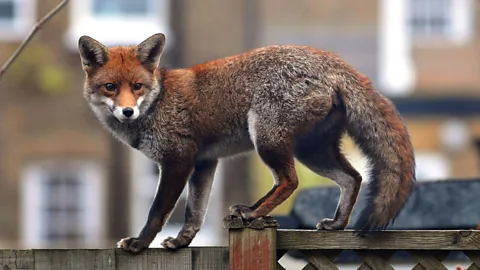
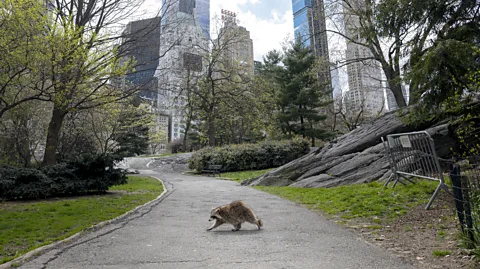
British red foxes are a well-documented example of how urban populations often have higher reproductive rates than their rural counterparts due to food availability in the cities. In the US, city-dwelling raccoons – fondly nicknamed "trash pandas" – are physically changing. A recent study found urban raccoons are showing early signs of domestication, developing snorter snouts and becoming less aggressive around humans.
 Getty Images
Meanwhile in Denmark, the urban hare has been seen making tentative forays into city life. The animal has adapted to human presence by increasing its tolerance towards human disturbance. This could either be due to a change in how it expresses its genes, or a Darwinian selection process of more tolerant individuals.
Research published in 2025 found animals from urban areas, exposed to higher temperatures and greater pollution, demonstrated "significantly higher" resilience to stressful conditions compared with counterparts from protected habitats.
What makes some animals resilient to city life while others never adapt?
An animal's ability to change its behaviour in response to a changing environment can make all the difference, Sih has found in his research. In some animals, this ability to alter their behaviour is the first step to more profound change.
"Step one is that they need to respond well behaviorally," Sih says. "If they do that well enough, they survive well enough to have a chance to later evolve [genetically] to adjust even better."
In Illinois, armadillos have been spotted more frequently near major roads, which researchers concluded may be because the roads help the animals thermoregulate. Asphalt absorbs heat from sunlight and traps thermal energy, and in the region's winters – which can reach -30F (-34C) armadillos may benefit from the warmth the roads emit.
This is the type of behavioural change that could eventually buy an animal like the armadillo time to evolve in response to the roads that now crisscross its environment – though not all behavioural changes will end up influencing a species' evolution.
 Getty Images
Urban birdlife
If you're lucky enough to hear birdsong in a city, it could well be a song shaped by the street you're strolling down. Many birds have altered their songs to be heard above traffic. Numerous studies have shown that birds actively shift their frequency, volume and timing of their songs in response to noise levels.
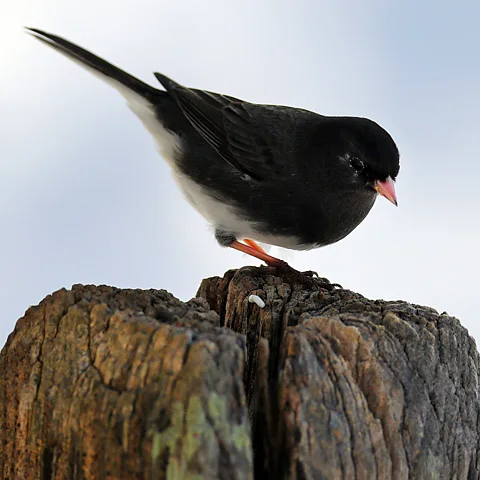
Take a closer look at urban bird life and you might see other changes. Consider the dark-eyed junco, for instance. Noise, human presence, food scarcity and nesting competition make cities a difficult environment for the junco. In the early 1980s, a group of juncos settled year-round on the campus of University of California, San Diego – giving researchers a chance to document the rapid changes in the birds.
They found the juncos became less aggressive – and even developed fewer white feathers on their tails (a trait used in aggressive displays) as a result. The birds also began breeding earlier, reared twice as many young, and altered their migration pattern.
Scientists studied another urban population that settled at University of California, Los Angeles, and found breeding pairs nested in trees and on buildings instead of their usual nests on the ground.
It's not just the juncos' behaviour that's changed. Researchers found urban juncos have smaller wings, an adaptation believed to come from the demands of flying through dense, built-up cities, rather than long-distance flight over open land.
North America has lost 168 million of the birds in the past 50 years. The juncos' ability to rapidly adapt may be the key to securing its future.
 Alamy
AlamyBeyond city limits
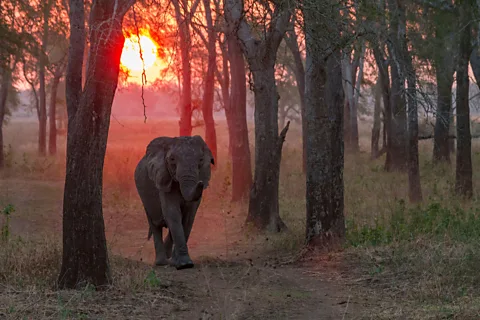
Animals aren't just adapting in urban environments, though. They're physiologically changing to survive living with humans. For example, in some places, there has been a rise in the number of elephants born without tusks. That's because poachers are more likely to kill those with tusks – while tuskless ones survive and pass on their genes, including the "tusklessness" trait. In other words, being tuskless has become an evolutionary advantage in places where poachers are a major threat.
Some fish are getting smaller as humans catch the big ones and thereby select them out of the gene pool, leaving the smaller ones free to survive and reproduce. Again, smallness – which may have been an evolutionary disadvantage when faced with non-human predators – can be an evolutionary advantage when faced with humans.
Other changes involve protective qualities. Atlantic killifish are rapidly evolving to become resistant to toxins and industrial chemicals. Through genetic alterations in the biochemical pathways that specifically respond to these chemicals, the fish are becoming less sensitive to them.
The animal kingdom is changing rapidly to keep up with a rapidly changing planet.
But what happens to the animals who can't adapt quickly enough?
"Other animals – often in the same species – simply 'don't get it', and do not respond well behaviourally to these new challenges," says Sih. "If anything, I note that for many animals, they don't really have time to evolve, as things have changed too much too quickly."
Those animals who do adapt to survive amid humans, buildings, climate change and pollution, may still have a long road ahead, says Sih. "In the next decades, they may have time to evolve to adjust even better."
--
Correction: This article was updated on 7 August to state that the adaptations in the Atlantic killifish are to the biochemical pathways that respond to toxins, not in the thickness of its skin, as the article originally stated.
--
For essential climate news and hopeful developments to your inbox, sign up to the Future Earth newsletter, while The Essential List delivers a handpicked selection of features and insights twice a week.
