The last man to walk on the Moon


In an exclusive interview, Apollo 17 commander Gene Cernan – the last man on the lunar surface – discusses what it is like to be part of history and why he became unhappy about the American space programme.
Captain Gene Cernan was the third man to walk in space, one of only three people to go to the Moon twice and the last man to leave a footprint on the lunar surface.
The final words he spoke on the Moon in December 1972 represented everything the Apollo missions stood for. “We leave as we came and, God willing, as we shall return,” he said, “with peace and hope for all mankind.”
More than 40 years on, you might imagine Cernan has had enough of talking about the Moon. But it seems Apollo astronauts never retire and, at 80, he is still passionate about America’s past space glories and the future of human space exploration.

His latest venture is a documentary film about his life (watch the trailer here), although Cernan insists it is not a movie about him but the story of how an ordinary working class child can grow up to do extraordinary things. Having seen an early cut, it is clear that this is no ego trip.
The movie is poignant, funny and reveals more about the men who went to the Moon than most other Apollo documentaries. It includes Cernan’s ex-wife who coined the telling phrase: “If you think going to the Moon is hard, you should try staying at home.”
In person, Capt Cernan is utterly charming and we chat for more than an hour over coffee about that final step, mortality, returning to the Moon and inspiring a new generation of space explorers. However, it becomes apparent that the “last man on the Moon” is not happy about the way the American space programme has played out.
For the film you visited the abandoned Saturn V launch pad at Cape Canaveral – where you launched to go the Moon. What were you thinking when you walked around the rusting structure?
It was very nostalgic, disappointing, somewhat heart-breaking. It was if someone took Columbus’ Santa Maria and said: “It’s history – you guys discovered America, let’s take it out and scuttle it. It’s over, you’re not going to go anywhere.”
We launched off that pad in a big Saturn V rocket that took us to the Moon. People had dreamed of leaving the cradle of civilisation – this Earth of ours – and we did it. Fortunately, I was one of the guys to go out there, to look back at the Earth and try to comprehend the meaning of it all.
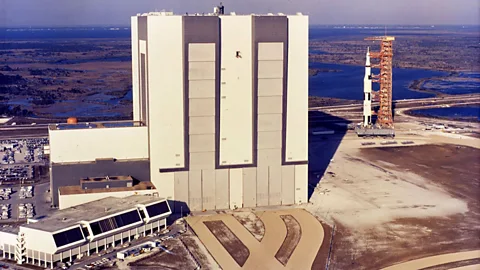
To think of what we were capable of doing and now we’ve been told [in a tweet by Russia’s Deputy Prime Minister Dmitry Rogozin] that if we want to go to our own space station, we’d better get a trampoline – that statement hurt. It hurt me personally.
Considering where we were half a century ago when Americans were walking on the Moon – people still come up to me today and say it’s incredible – we’ve obliterated that piece of history. I do not want to remember those launch pads that sent us to the Moon the way they are today. It’s not the way it’s supposed to be.
What would be the point of returning to the Moon?
All we’ve proved is we can work and survive up there. Now we’ve got to take advantage of the resources the Moon has to offer us here on this planet. It’s a stepping stone to go to Mars. Is there water? Was there water? Could life exist? Maybe we’re going to go simply because it’s there. Simply because we can and that’s why we will.
You’ve been to the Moon twice. You tested the lunar lander during Apollo 10, getting within 15km of the surface, and then in December 1972 you walked on the Moon. Did you feel the weight of responsibility during that last ever Apollo mission?I was a representative of probably one of the greatest challenges that mankind has had in modern history and I was proud to be part of that. Everybody who put a nut or bolt on our spacecraft went with us on that flight. They were responsible for the success or failure of that mission. Every human being in the world went with us.
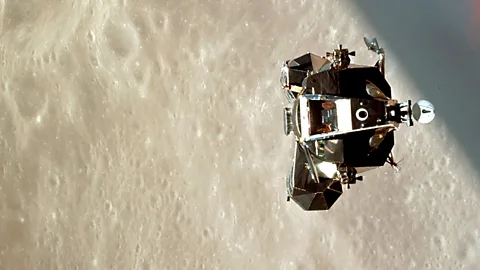
The questions they had back then are the same questions that young people, who weren’t even thought of then, have today. What does it feel like? What does it look like? Only 12 people have walked on the Moon and there are nine of us left. Some day there won’t be any of us left and while we are here I feel it’s my responsibility to be some kind of inspiration and stir the passions of young kids to literally follow in our footsteps.
When you were leaving the Moon did you think about the significance of those last footsteps?
When I left the Moon and started up the ladder, I was really at a loss. I didn’t want to leave and I looked down at my last footsteps and realised I wasn’t coming this way again. Looking back over my shoulder at the Earth had a particular significance to me – it was alive, it was moving, with purpose and beauty through space and time. In those short few minutes I wanted to figure out what was the meaning of us – everyone alive in the world today – leaving the cradle of civilisation and calling the Moon our home for a few days.
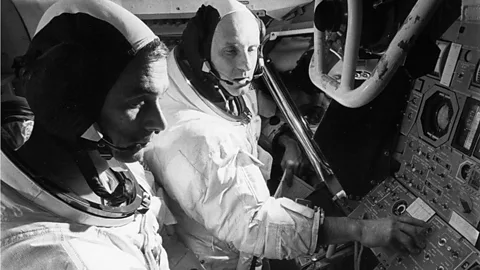
I searched for that answer, I needed more time. I wanted to press the freeze button, stop time to give myself a chance to think about it. I had an opportunity to sit on God’s front porch looking at the small part of the civilisation of this universe that he created.
Does it worry you that all the Moon walkers are now old people and that in a few years time there won’t be any of you left?
I’m sitting here with new knees, one new hip, I’m getting another one – I feel like the Six Million Dollar Man. You get to a point when you realise you’re not going to be around in 20 years. I made a vow to myself, when the time comes no-one’s going to carry me out, I’m going to walk out on my own terms. That’s what I want.
That time’s not too far in the future and that’s why it’s so important to try to motivate, to inspire, to take the adventure of Apollo and give it to the next generation and then it’s their deal. My ego’s never risen to the point where I’ve got to be remembered for something. If I’ve done anything worth remembering then now is the time to share it. The dreamers of today are the doers of tomorrow, so if we don’t inspire those dreamers there are not going to be any doers.
Do you sense there is more interest in returning to the Moon or visiting Mars, particularly with the rise of space tourism and private space companies such as SpaceX?I want to believe that this younger generation of schoolchildren is far more excited and interested in space than their big brothers or sisters were. There was a tremendous amount of complacency here [in the US] around half a generation ago with young people saying “what’s in it for me,” and afraid to take a risk. I’ve always told kids that if you’re afraid to fail, you’ll never know what success really means.
But their younger brothers are starting to ask the questions that need to be asked. While the kettle is boiling, we’ve got to keep the fire lit.
The producers of the Last Man on the Moon are working towards a worldwide release in the coming months. You can hear a longer interview with Captain Cernan in the latest Space Boffins podcast, available from 10 August 2014.
If you would like to comment on this, or anything else you have seen on Future, head over to our Facebook or Google+ page, or message us on Twitter.
