Video
Justina: Genetic variation and inheritance is what makes each of us unique and determines our characteristics.
Georgina: And it’s also why we each look similar, but not identical, to our parents and other family members.
Justina: It starts in the very first formation of the very first cell that we developed from.Shall we take a closer look?
Georgina: There are two ways that organisms can reproduce: asexual and sexual reproduction.Asexual reproduction requires a single parent.This process does not occur in humans.It uses the process of mitosis to create identical clones of the parent cell.Sexual reproduction, requiring two parents (a male and a female) involves the fusion of two gametes or reproductive cells into a zygote.In humans, the two gametes are the sperm cell from the male parent and the ovum, or egg, from the female parent.Their fusion or fertilisation, produces variation in the offspring.
Justina: Our genetic material is stored in our cells.The nucleus of each cell contains 46 chromosomes arranged in Georgina:3 pairs.Chromosomes are polymer strands made of DNA.This DNA provides the code for sequences of amino acids that produce a specific protein.These genetic codes are the units of heredity that may be copied and passed on to the next generation of offspring.
Georgina: Gametes (the sperm cell and the ovum) are known as haploid cells.They each contain Georgina:3 DNA chromosomes.When they fuse during fertilisation, the zygote that is formed now has the Georgina:3 chromosomes from each gamete; a full set of 46 chromosomes required in the new cell.
Justina: The chromosomes from the male parent and the chromosomes from the female parent each carry the same genes, within each strand of DNA.For example, the gene that defines eye colour or the sex of the offspring.
Georgina: When the two chromosomes join into pairs, the new cell has pairs of the same type of genes within the DNA.
Justina: Alleles are different versions of the same gene.For example, the eye colour genes have alleles for different eye colour: blue, brown, green.
Georgina: In the newly formed chromosome pairs, one of the alleles may be dominant and one may be recessive.
Justina: The combination of alleles determines one of our characteristics.
Georgina: We may inherit a blue-eyed allele from one parent and a brown-eyed allele from the other.As the brown-eyed genes are dominant and the blue-eyed genes are recessive, the offspring would have brown eyes.However, most characteristics are a result of multiple genes interacting, rather than a single gene.
Justina: We inherit alleles for all of our characteristics.Sometimes, the alleles we inherit from each parent will be identical.These are known as homozygous alleles, but when they are different, they are known as heterozygous.
Georgina: The characteristic expressed by each allele is called a phenotype.For example, blue eyes is a phenotype.
Justina: The combination of alleles we inherit from our parents is known as our genotype.By studying genotypes, we can predict the probably of inheritance using genetic cross diagrams.These diagrams show the probability of different combinations of alleles being inherited and which are recessive and dominant.
Georgina: This can be used to predict the likelihood of inherited genetic diseases that may be more likely due to particular alleles.
Justina: DNA and the genes within really are the building blocks of life on a microscopic level.
Georgina: And our parents do provide us with every single gene, but the endless combinations of alleles is what makes each and every one of us truly unique.
This video explores a range of ideas from developmental genetics to Mendelian genetics. It can be viewed as a whole to support a broad overview of inheritance, or broken into sections to visually reinforce individual concepts across the topic.
The video begins by illustrating the processes of asexual and sexual reproduction, highlighting the key differences between them and explaining why different organisms adopt different reproductive strategies. It then visualises chromosomes before and after fertilisation, helping to define fundamental terms such as allele, homozygous, and heterozygous.
Finally, the video demonstrates how alleles randomly assort during the formation of gametes, modelling the principles of genetic variation.
This short film is from the series Human biology.
Suggested activities
Before watching
Make sure students are familiar with the concepts of cell division, sexual reproduction, and gamete fertilisation. You might start the lesson by recapping.
During the video
You might, as the video progresses, pause at key moments to support students in defining these new ideas:
- DNA
- Alleles
- Homozygous alleles
- Heterozygous alleles
- Phenotype
- Genotype
- Genetic cross diagram
When the video models how genetic characteristics are crossed (2:18), pause the video and work through the example with the students. You might also model how eye colour and hair colour are inherited following Mendelian inheritance.
After the video
You could provide students with a series of punnet square questions. Model to the students how to interpret Mendelian genetics problems, then ask students to practice drawing them, completing them, and predicting the genotypes and phenotypes of their offspring.
Curriculum notes
Suitable for teaching biology at Key Stage 4 and GCSE in England and Northern Ireland, Progression Step 5 and GCSE in Wales and at National 4 and 5 in Scotland.
More videos from this series
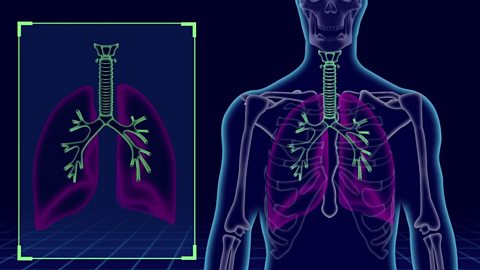
Breathing and gas exchange. video
A description of the process of ventilation and gas exchange and the bodily adaptations that support these processes.
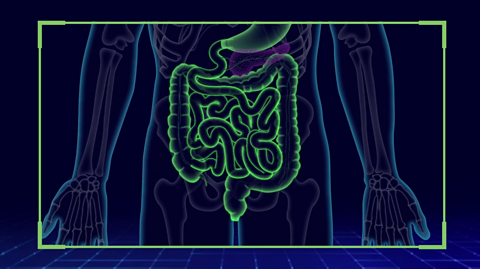
Food and digestion. video
Exploration of the concepts of mechanical digestion, chemical digestion and the adaptations of the digestive system that speed up the process of molecule break down and absorption into the bloodstream in the small intestines.
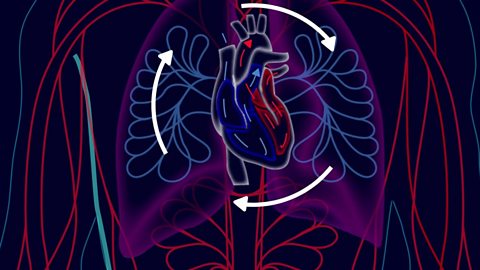
Heart, blood and circulation. video
A detailed look at how each component of the cardiovascular system functions to support the movement of nutrients around the body.
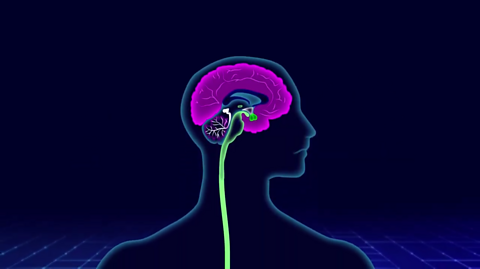
Nervous coordination. video
A description of the role of the nervous system, how it functions, voluntary and involuntary reflexes and the function of specific organs in the nervous system, such as the brain and the eye.
Hormonal coordination and homeostasis. video
A detailed look at the role of hormones in maintaining a constant internal environment in the body by regulating body temperature, metabolism and blood glucose levels.
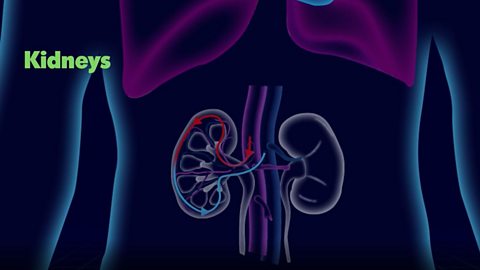
Excretion. video
A detailed look at the function of the kidneys and the control of water levels in the blood.
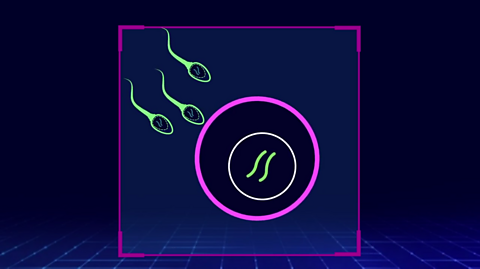
Reproduction. video
This animation focuses on sexual reproduction, providing details on the specialised cells, organs and tissues involved in the fertilisation and maturation of an egg.
Cell division. video
This animation focuses on the different types of cell division, sexual and asexual reproduction.
Immunity and disease. video
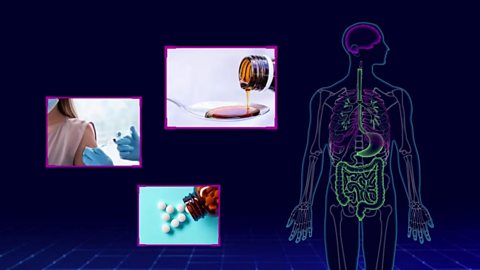
This animation explores how viruses and bacteria cause certain communicable diseases to occur, how our bodies protect themselves and how we use modern medicines to treat them.
Bitesize revision links for students
- England and NI: GCSE Biology (Single Science)
- Scotland: National 5 Biology
- Cymraeg: TGAU Bioleg
