Video
Justina: You may have heard of hormones in relation to the way people behave.
Georgina: They are the chemical messengers created in glands throughout the body, that travel in your blood to a variety of tissues and organs.
Justina: They then create chemical reactions in the target organs, to create a physiological response.This could be to make your heart beat faster or to regulate the water levels in your body.
Georgina: Let’s start by taking a closer look at adrenaline as an example.
Justina: Adrenaline is released by the adrenal glands in response to stressful, exciting, dangerous or threatening situations and stimuli.
Georgina: It has several effects that prepare the body to deal with those sorts of situation.
Justina: it increases the heartrate, which in turn, increases cardiac output, so more oxygen reaches respiring cells.
Georgina: it increases blood pressure by constricting blood vessels so the blood moves around your body even faster.
Justina: it increases your breathing rate, which raises the volume of oxygen entering the respiratory system, that then diffuses into the bloodstream.
Georgina: And the liver converts glycogen into glucose, providing more glucose for respiration so more energy is released.
Justina: All of this primes the body for action….Whether that be to face the situation…
Georgina: Or run away from it.Fight or flight.
Justina: The adrenal glands are part of a much larger system of glands located throughout the body.The endocrine system.
Georgina: Each gland is responsible for producing different hormones that have different roles to play in the body.The pituitary gland is known as the master gland, as it controls several other glands in the body.
Justina: Another hormone you may have heard of is insulin.Insulin is released by the pancreas when blood sugar levels are too high.Insulin helps promote the conversion of glucose in the blood, into glycogen by enzymes, which is then stored in the liver.If blood sugar levels are too low, glucagon is released by the pancreas, which enables the glycogen stored in the liver to be changed back into glucose.
Georgina: This is an example of homeostasis.Homeostasis is the self-regulating process that maintains stability in biological systems by responding to internal and external conditions.
Justina: For humans to live, we need a balance in our bodies.Water levels, temperature or blood sugar levels must all be kept constant.The endocrine system and the nervous system are the control systems our bodies use.
Georgina: And these control systems are examples of homeostasis.They work through what is known as a negative feedback mechanism.Let’s take a look at body temperature to illustrate tis.
Justina: Body temperature is controlled by the hypothalamus in the brain.If it detects that the body is too hot, one response is that the body begins to produce more sweat.Sweat is warm – 37 Degrees Celsius – and as it evaporates, it takes heat energy away from the body, cooling the body.Once the body’s temperature gets back to the correct level, less sweat is produced.If the body is too cold, one of the responses is that the body begins to shiver, to raise the temperature back to the correct level.
Georgina: The endocrine system works in a similar way to this.The thyroid gland produces hormones such as thyroxine, which controls our metabolism.Too much thyroxine in the bloodstream can lead to symptoms including weight loss, tiredness and irritability.Too little can lead to weight gain, reduced appetite and fatigue, amongst other things.
Justina: The hypothalamus, the pituitary gland and the thyroid gland work to maintain a constant thyroxine level in the blood through a negative feedback mechanism as well.Another example of homeostasis in effect.
Georgina: Hormones are so important for keeping your bodies in balance.
Justina: And going back to adrenaline, it’s not just used for the fight or flight mechanism.It’s also very important for maintaining cardiovascular homeostasis, as it diverts blood to areas of the body that are under stress.
Georgina: For example, if someone has a heart attack, adrenaline helps maximise the volume of blood flowing through the coronary artery.
Justina: Our bodies are pretty amazing.
This video explores how hormones help maintain homeostasis – a constant internal environment – by regulating body temperature, metabolism, and blood glucose levels.
The animation begins with the adrenal glands, showing how adrenaline affects different organs throughout the body. It then explains how the pancreas regulates blood glucose levels through the release of insulin and glucagon into the bloodstream.
Finally, the concept of negative feedback is illustrated using two key examples: the control of body temperature and the regulation of thyroxine levels.
This short video is from the series Human biology.
Suggested activities
Before watching
It can be broken into fragments to support modelling the process of negative feedback, support students in visualising the effect of adrenaline on the body, or for students to see the relationship between certain hormones and blood glucose levels.
Before the lesson begins, you might recap the effect of temperature on enzymes and water potential on cells. You could also ask students to describe the effects of changes in temperature and water levels on the body.
During the video
You may want to stop the film at various points to check for understanding and provide further explanation.
You could have an image of the body that contains all the different endocrine glands that will be covered during the video available, making sure the image contains the correct keywords to support labelling. As the video progresses, pause it at key moments and encourage students to label their diagram.
You might, for the section of the video linked to negative feedback (3:05–4:30), pause the video at key moments and ask students to make a prediction about what physical response the body will make if the body temperature falls. Encourage student reasoning by asking them why the body needs to increase its temperature, and get them to link their answers to enzyme activity and cellular respiration.
After the video
You might get students to practise their reasoning by judging what will happen in the body if internal temperature, blood glucose, or metabolic rate drops. For each example, ask students to describe how the body responds to a change in the environment.
You might give the students the following questions:
What is the name of the gland that releases thyroxine?
a. Adrenal
b. Pancreas
c. Liver
d. Thyroid
e. HypothalamusWhen glucagon is released into the bloodstream by the pancreas, what is its target organ?
a. Hypothalamus
b. Liver
c. Pancreas
d. ThyroidIf the blood glucose level in the blood drops, what hormone will be released into the blood?
a. Glycogen
b. Insulin
c. Glucagon
d. ThyroxineIf the metabolic rate reduces, what will happen to the amount of thyroxine in the blood? (Justify your answer)
a. Increase
b. Decrease
Stretch question
If core body temperature rises, what will happen to the rate of reaction in cells? (Justify your answer)
a. There is more kinetic energy so the rate will continue to increase
b. The enzymes will denature as they are no longer at their optimumA person had a mutation growing in their thyroid, making it underactive. As a result, metabolic rates in different cells will? (Justify your answer)
a. Increase
b. Decrease
Curriculum notes
Suitable for teaching biology at Key Stage 4 and GCSE in England and Northern Ireland, Progression Step 5 and GCSE in Wales and at National 4 and 5 in Scotland.
More videos from this series
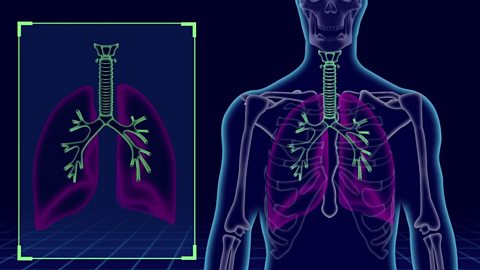
Breathing and gas exchange. video
A description of the process of ventilation and gas exchange and the bodily adaptations that support these processes.
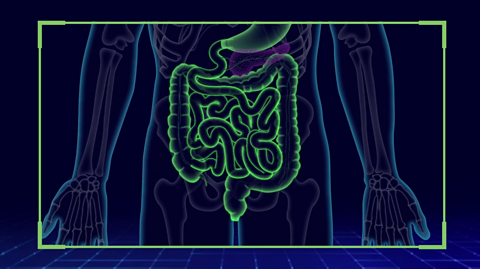
Food and digestion. video
Exploration of the concepts of mechanical digestion, chemical digestion and the adaptations of the digestive system that speed up the process of molecule break down and absorption into the bloodstream in the small intestines.
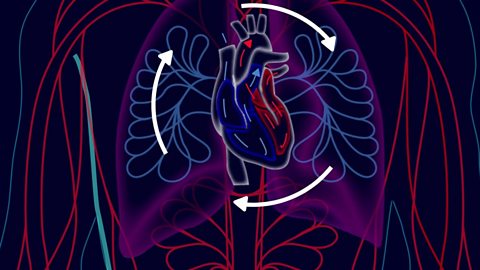
Heart, blood and circulation. video
A detailed look at how each component of the cardiovascular system functions to support the movement of nutrients around the body.
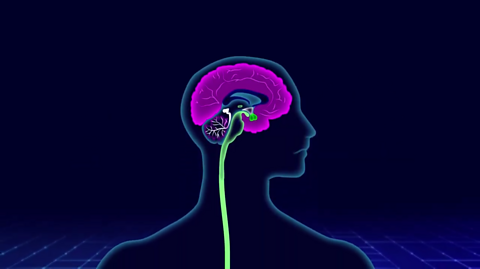
Nervous coordination. video
A description of the role of the nervous system, how it functions, voluntary and involuntary reflexes and the function of specific organs in the nervous system, such as the brain and the eye.
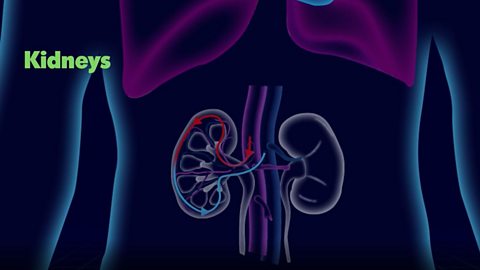
Excretion. video
A detailed look at the function of the kidneys and the control of water levels in the blood.
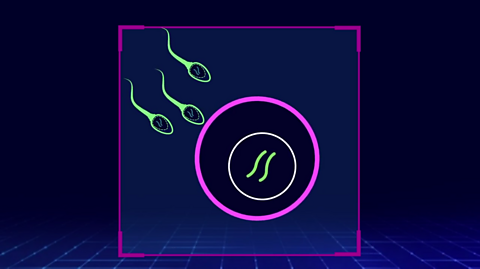
Reproduction. video
This animation focuses on sexual reproduction, providing details on the specialised cells, organs and tissues involved in the fertilisation and maturation of an egg.
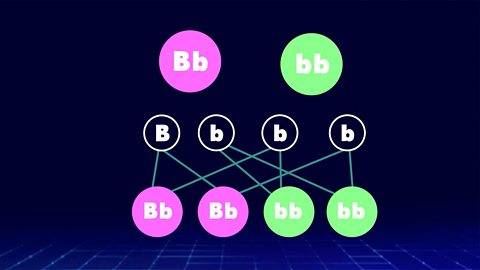
Inheritance. video
This animation covers a range of topics including developmental genetics and Mendelian inheritance.
Cell division. video
This animation focuses on the different types of cell division, sexual and asexual reproduction.
Immunity and disease. video
This animation explores how viruses and bacteria cause certain communicable diseases to occur, how our bodies protect themselves and how we use modern medicines to treat them.
Bitesize revision links for students
- England and NI: GCSE Biology (Single Science)
- Scotland: National 5 Biology
- Cymraeg: TGAU Bioleg
