Video
Justina: The average person will spend between four and six years of their life eating food.
Georgina: So today, we’re going to be looking at food and digestion.Food is a vital source of nutrients and vitamins, fibre, water and much more, that our bodies need.
Justina: There are three main types of nutrients we’re going to look at: carbohydrates, proteins and lipids.The digestive system allows for these nutrients to be absorbed into the body.
Georgina: Let’s take a closer look.When we eat, the food we chew consists of large insoluble molecules.For the body to be able to absorb the nutrients contained in the food into our bloodstream, they need to be broken down into smaller soluble molecules.This happens in the digestive system through the process of digestion.
Justina: Carbohydrates need to be broken down into simple sugars, such as glucose, which is used to release energy through respiration.Proteins are broken down into amino acids, which are used to make new proteins that carry out essential roles in our bodies, such as enzymes and antibodies.And lipids are broken down into fatty acids and glycerol, which are used for energy sources and the development of cell membranes.
Georgina: Once the food has been chewed and mixed with saliva in the mouth, the pharynx (part of the throat), propels the food down to the oesophagus where the wave-like contractions of the muscles push the food onward into the stomach.
Justina: The stomach is where the partly digested food is mixed and churned with acidic gastric juices and protein-digesting enzymes to form chyme.
Georgina: This chyme then enters the small intestine, where most of the chemical digestion and absorption of nutrients occurs.And this final stage of digestion is enabled by enzymes secreted primarily by the pancreas, liver and in the small intestine.
Justina: An enzyme is a protein that acts as a biological catalyst.They speed up chemical reactions without being consumed or changed in the process.They act on specific molecules called substrates.In the digestive system, this substrate would be either a carbohydrate, a protein or a lipid.
Georgina: The shape of an enzyme’s active site and the shape of the shape of the substrate molecule are complementary.In other words, each type of enzyme is specific to one type of substrate.This is called the ‘lock and key model’.
Justina: In the first part of the small intestine, the duodenum, enzymes and substrates collide to form enzyme substrate complexes.And this is where the enzyme gets to work, speeding up the breakdown of the substrate into smaller molecules before releasing them.The enzyme is now free to act again on another substrate molecule.
Georgina: For example, protease enzymes break down proteins into simple amino acids.These are then absorbed more quickly into the bloodstream, through the wall of the small intestine.
Justina: The small intestine is about five and a half metres long and it’s folded many times to be able to fit into the abdomen.
Georgina: Not particularly small then!And it looks bigger than the large intestine.
Justina: Yes.It is much longer than the large intestine but is called ‘small’ due to its narrower diameter.
Georgina: Aha! And the length means there’s a large surface area for absorption to occur on.
Justina: And the small width means molecules don’t have to travel very far to reach the permeable walls.These walls are covered in small finger-like projections called villi, which are covered in even smaller hairs, called micro villi.
Georgina: All of which further increases the surface area.The majority of the absorption of molecules occurs in the latter part of the small intestine, the ileum.There is a large network of capillaries throughout the small intestine, which maintain a good blood supply.For example, once the blood has been loaded up with absorbed amino acids, it is immediately transported away, to be replaced by blood with a lower concentration of amino acids.Maintaining a concentration gradient between the small intestine and the bloodstream allows diffusion and absorption to occur.
Justina: The whole process is incredible!Those little enzymes.
Georgina: Enzymes are known to catalyse more than 5,000 biochemical reactions and it’s not just in our bodies.They are also used in the manufacture of cheeses, paper, medicines and so much more.
Justina: Handy little biochemical assistants.
Georgina: Something like that.
This video explores the processes of mechanical digestion, chemical digestion, and the adaptations of the digestive system that speed up the breakdown of food molecules and their absorption into the bloodstream in the small intestine.
It begins by examining how the major organs of the digestive system contribute to food breakdown through mechanical digestion – including churning, slicing, and grinding actions that reduce large pieces of food into smaller, more manageable fragments.
The focus then shifts to enzymes and the role they play in chemical digestion, breaking down large, insoluble molecules into smaller, soluble ones. The lock‑and‑key model is used to explain how specific enzymes act on specific substrates.
Finally, the video visualises how these small, soluble molecules pass into the bloodstream and highlights the adaptations of the small intestine, such as villi and microvilli, which greatly increase surface area to maximise absorption.
This short video is from the collection Human biology.
Suggested activities
Before watching
Students should have some familiarity with the different macromolecules (carbohydrates, fats, and glucose), a knowledge of diffusion and an awareness of the different parts of the digestive system.
During the video
Depending on the focus of your lesson, you may wish to use only the beginning, the middle, or the end of the video. Stop the episode in appropriate places to check for understanding, or to ask students to repeat or explain key facts or sentences. You could also get the students complete the following activities:
Define the following terms:
- Chyme
- Mechanical digestion
- Chemical digestion
- Enzyme
- Substrate
Have a 2D diagram of the digestive system printed, make sure it includes a zoomed in image of the villi, a list of keywords available and each key organ or tissue is labelled with a blank box. As the video progresses, ask students at their own speed to label the diagram. If you deem it necessary pause the video to support students in labelling the diagrams.
Pause the video when the enzymes form an enzyme substrate complex (3:00) or when the small soluble molecules are outside of the small intestine (3:20) and ask the students to use their knowledge to predict what will happen.
After the video:
You could get students to build their own models of the lock and key model to demonstrate the principle of complementarity. Once built, ask the students to label and justify why certain enzymes will only bind to specific substrates.
You might want to focus on the difference between mechanical digestion and chemical digestion. Subsequently, you could model to the students what mechanical is referring to, the physical process of chomping, churning and slicing. In comparison to the chemical digestion, the processes of enzyme actions that breaks down bonds.
Get the students to engage with the following questions:
Place the following keywords in order through which food passes through the digestive system:
a. Large intestine
b. Small intestine
c. Oesophagus
d. Mouth
e. StomachWhat is the role of the pancreas?
a. To churn food up
b. The neutralise food
c. To release enzymesWhat is the specific site on an enzyme where a substrate binds to it called?
a. Complementary
b. Active site
c. 3D structureWill an enzyme specific to lipids be able to break down a protein? (Justify your answer)
a. Yes
b. No
c. In some instancesIf the broken-down molecules are not digested by enzymes will they pass through the small intestine wall? (Justify your answer)
a. Yes
b. No
c. Some will, some will not
Stretch question
If the gall bladder doesn’t release bile, will the acid entering the small intestines from the stomach be neutralised? (Justify your answer)
a. Yes
b. NoIf the concentration of enzymes in the small intestine increase what will happen to the rate that molecules, such as protein and carbohydrates, are broken down? (Justify your answer by using your knowledge rates of reaction to support).
a. Increase
b. Decrease
Curriculum notes
Suitable for teaching biology at Key Stage 4 and GCSE in England and Northern Ireland, Progression Step 5 and GCSE in Wales and at National 4 and 5 in Scotland.
More videos from this series
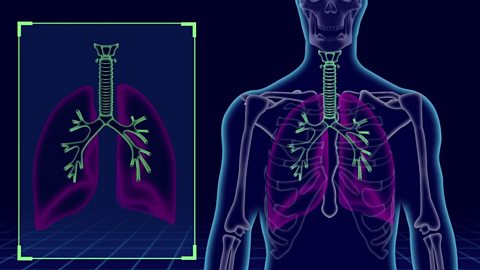
Breathing and gas exchange. video
A description of the process of ventilation and gas exchange and the bodily adaptations that support these processes.
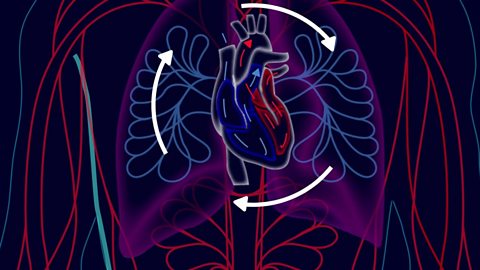
Heart, blood and circulation. video
A detailed look at how each component of the cardiovascular system functions to support the movement of nutrients around the body.
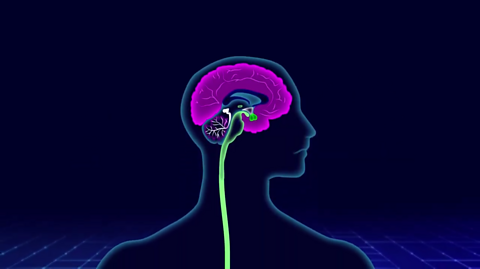
Nervous coordination. video
A description of the role of the nervous system, how it functions, voluntary and involuntary reflexes and the function of specific organs in the nervous system, such as the brain and the eye.
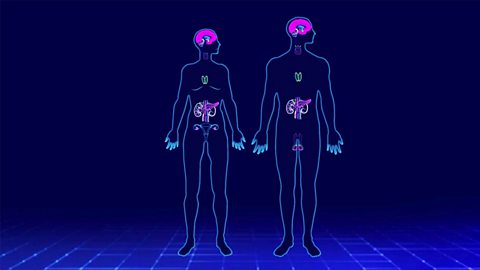
Hormonal coordination and homeostasis. video
A detailed look at the role of hormones in maintaining a constant internal environment in the body by regulating body temperature, metabolism and blood glucose levels.
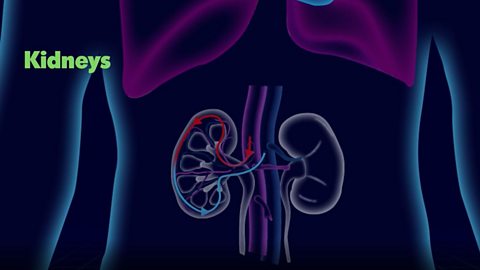
Excretion. video
A detailed look at the function of the kidneys and the control of water levels in the blood.
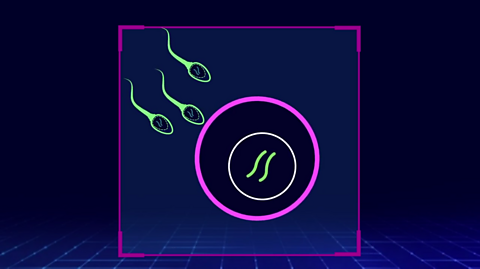
Reproduction. video
This animation focuses on sexual reproduction, providing details on the specialised cells, organs and tissues involved in the fertilisation and maturation of an egg.
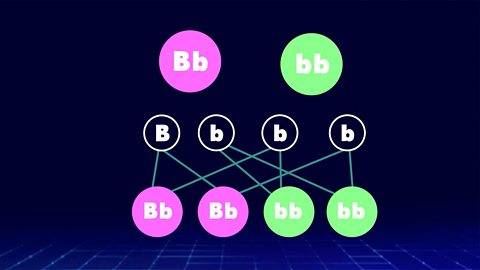
Inheritance. video
This animation covers a range of topics including developmental genetics and Mendelian inheritance.
Cell division. video
This animation focuses on the different types of cell division, sexual and asexual reproduction.
Immunity and disease. video
This animation explores how viruses and bacteria cause certain communicable diseases to occur, how our bodies protect themselves and how we use modern medicines to treat them.
Bitesize revision links for students
- England and NI: GCSE Biology (Single Science)
- Scotland: National 5 Biology
- Cymraeg: TGAU Bioleg
