Video
Justina: Your body contains billions and billions of nerve cells, or neurons.
Georgina: There are around 100 billion in your brain and over 13.5 billion in your spinal cord alone.
Justina: Your brain is the control centre for your whole body.It communicates with the rest of your body through a network of nerve cells, known as the nervous system.
Georgina: Shall we take a closer look?
Justina: Your brain is connected to the spinal cord, which is made up of nervous tissue that runs down your spine.Thirty one pairs of spinal nerves branch off into a wider network of nerves that spread throughout your body.
Georgina: The brain and spinal cord form the central nervous system.The nerves that go to other parts of your body are called the peripheral nervous system, because they go to the periphery, or edges.
Justina: You’ve got a lot of nerves.
Georgina: True!If you laid all your nerves end to end, they’d be nearly a thousand kilometres!Inside each nerve are nerve cells, called neurons.There are billions of neurons; most of them inside your brain.
Justina: Neurons generate electrical impulses that travel along the axon; a thin fibre on a neuron, to communicate with the brain.
Different parts of the brain do different things and scientists have discovered what some parts do by using scanning methods, like magnetic resonance imaging, or by studying the brains of people who have died.Broca’s area was discovered when a patient who had lost the power of speech, died.One examining his brain, Paul Broca found the left frontal lobe was damaged through disease, suggesting this part was responsible for language.
Georgina: The cerebrum (the largest part of the brain) is divided into two halves called hemispheres.It controls things like personality, thought, language, memory and more.Its’ folded outer layer is called the cerebral cortex and contains over 15 billion neurons.
Justina: The cerebellum controls balance, coordination of movement and muscular activity.
Georgina: And the hypothalamus links the brain with the endocrine system, which regulates hormones that control body temperature, water levels, hunger and sleep.
Justina: The brain stem connects the brain to the spinal cord.An important part of the brain stem is the medulla oblongata.It coordinates and controls unconscious activities and involuntary movements like breathing, swallowing and sneezing.For a voluntary action, there are three main stages in the nervous system.Firstly, your sensory receptors, located in your sense organs: your eyes, ears, nose, tongue or skin, respond to a stimulus such as light, sound or touch.
Georgina: The sensory receptor generates and sends an electrical impulse along your sensory neurons to relay neurons in your brain.
Justina: Secondly, the brain interprets the signal, depending on where it’s come from.
Georgina: For example, sight if it’s come from the eyes or sound if it’s come from the ears.
Justina: Then thirdly, the brain sends electrical impulses via a motor neuron, telling your muscles to contract or your glands to release hormones.This all happens very fast.Nerve impulses travel at up to 100 metres per second.
Georgina: If your body is in danger of being hurt, you can respond even more quickly and can bypass the brain with a reflex action.Instead of sending the electrical impulse to the brain, it is sent along the sensory neuron to a relay neuron in the spinal cord.The impulse passes straight to a motor neuron, to get your muscles to contract quickly.That’s how you snatched your hand away so fast if you touched something hot or sharp.
Justina: It’s amazing to think that there’s so much going on in the nervous system right now.
Georgina: Yeah, the brain and the nervous system work all the time, even when you’re asleep.
Justina: Our neurons are always kept busy.
This video explores the role of the nervous system, how it functions, and the differences between voluntary and involuntary reflexes, alongside the functions of key organs such as the brain and the eye. The film could be broken into shorter sections to help students visualise the different structures of the nervous system and the tissues of the brain, as well as to model how voluntary and involuntary responses occur.
The video begins by identifying the major structures of the nervous system and the specialised cells that connect it together: neurones. It then provides a detailed explanation of the different tissues found in the brain and the specific function of each.
Finally, the video concludes with visualisations of both a voluntary response and an involuntary reflex, showing how signals travel through the nervous system in each case.
This short video is from the series Human biology.
Suggested activities
Before watching
At the start of the lesson, you could recap the structure of a neuron by having a diagram available in the classroom for students to label as a start, with an extension that asks the students to explain why it has the organelles and structures it does.
Ask students to define the terms voluntary and involuntary and share how they think these processes might occur.
During the video
You might have a 2D diagram of the brain printed, a list of the keywords available and each tissue in the brain should be labelled with a blank box.
As the video progresses, ask students, at their own speed, to label the diagram. If you deem it necessary, pause the video to support students in labelling the diagrams.
You could pause the video during the visualisation of the brain (1:30 - 2:55) to support students in completing the following table.
| Component | Description | Function |
|---|---|---|
| Cerebellum | Small structure at the back of the brain | Responsible for co-ordinating bodily control |
| Cerebrum | ||
| Medulla oblongata | ||
| Hypothalamus |
After the lesson
To get students to consolidate their learning you might provide them with more examples of voluntary and involuntary responses and ask them to organise the examples into voluntary and involuntary. They could do this by completing the table below:
| Example | Voluntary/Involuntary | How do you know? |
|---|---|---|
| Hand on a hot cooking hob | Involuntary | A hand moves before the action is processed by the brain |
You could give the students the following questions:
A person places their hand on a hot kitchen hob, producing an involuntary response. Place the following statements in the correct order:
a. Arm is moved away
b. Electrical impulse sent along the sensory neurone
c. Stimulus detected
d. Electrical impulse sent along the motor neurone
e. Arm muscle stimulated to contract
f. Electrical impulse passes across the relay neuroneWhich of the following are specialised cell structures that belong to a neuron?
a. Axon
b. Cilia
c. Flagella
d. Fatty layer
e. Nerve endings
f. GobletsA person damages their medulla oblongata. How will they be affected? (Justify your answer)
a. Unable to co-ordinate their body
b. Unable to control their own breathing
c. Get confused, tired, unable to form spoken sentence
d. Difficulty controlling the metabolic rate of their body
Stretch question
You could ask students to make their own examples of voluntary and involuntary responses. Ask students to describe how the reflex or conscious response occurs. Emphasise to the students that there are specific key words they should be using.
Curriculum notes
Suitable for teaching biology at Key Stage 4 and GCSE in England and Northern Ireland, Progression Step 5 and GCSE in Wales and at National 4 and 5 in Scotland.
More videos from this series
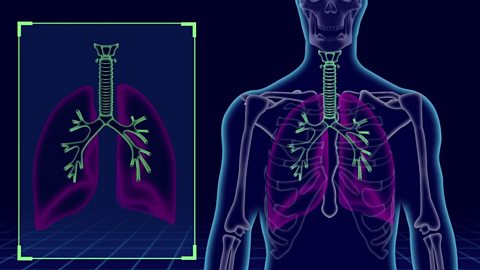
Breathing and gas exchange. video
A description of the process of ventilation and gas exchange and the bodily adaptations that support these processes.
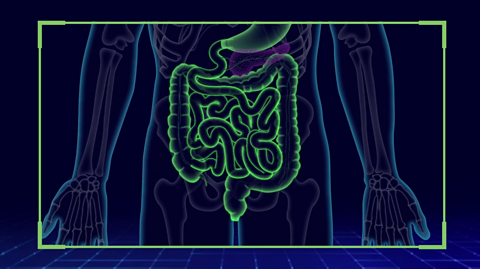
Food and digestion. video
Exploration of the concepts of mechanical digestion, chemical digestion and the adaptations of the digestive system that speed up the process of molecule break down and absorption into the bloodstream in the small intestines.
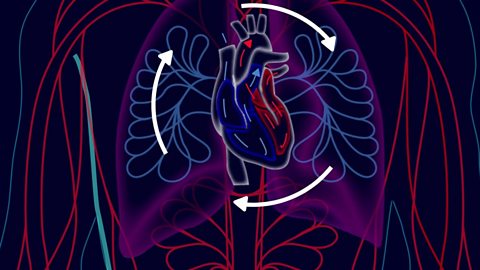
Heart, blood and circulation. video
A detailed look at how each component of the cardiovascular system functions to support the movement of nutrients around the body.
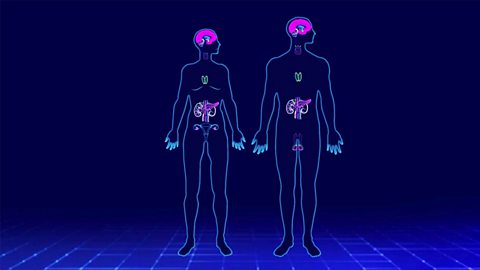
Hormonal coordination and homeostasis. video
A detailed look at the role of hormones in maintaining a constant internal environment in the body by regulating body temperature, metabolism and blood glucose levels.
Excretion. video
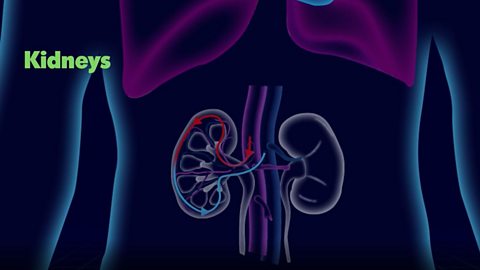
A detailed look at the function of the kidneys and the control of water levels in the blood.
Reproduction. video
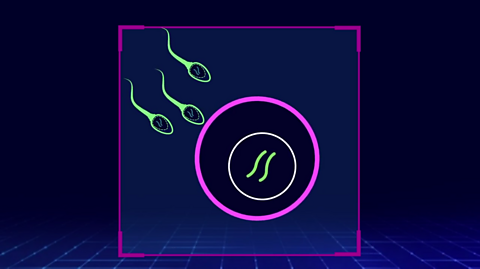
This animation focuses on sexual reproduction, providing details on the specialised cells, organs and tissues involved in the fertilisation and maturation of an egg.
Inheritance. video
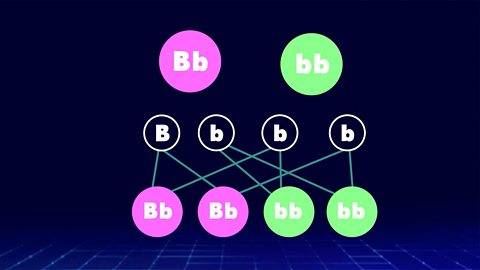
This animation covers a range of topics including developmental genetics and Mendelian inheritance.
Cell division. video
This animation focuses on the different types of cell division, sexual and asexual reproduction.
Immunity and disease. video
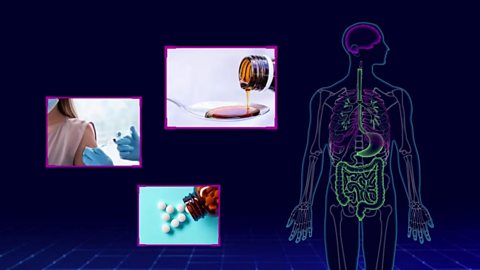
This animation explores how viruses and bacteria cause certain communicable diseases to occur, how our bodies protect themselves and how we use modern medicines to treat them.
Bitesize revision links for students
- England and NI: GCSE Biology (Single Science)
- Scotland: National 5 Biology
- Cymraeg: TGAU Bioleg
