Video
Justina:The average human will take between 17,000 and 30,000 breaths per day, depending on how active you are.
Georgina: Wow! That is a lot.Breathing, or ventilation, to use the more scientific term, is the physical movement of air between the outside environment and the lungs.
Justina: This process of ventilation allows air to pass into and out of the body, enabling gas exchange and respiration.
Georgina: Let’s take a closer look at how ventilation and gas exchange works inside the body.First up, is ventilation.This occurs in the thorax.When we inhale, air is taken in through the nasal cavity or mouth, before moving down the trachea, through the bronchi and into the lungs.
Justina: And then, when we exhale, air moves from the lungs, back through the bronchi, up through the trachea and out through the nasal cavity or mouth.The process of ventilation occurs because air moves from a higher pressure area to a lower pressure area, down a pressure gradient.
Georgina: When you inhale, the intercostal muscles contract and pull the ribcage up and out.The diaphragm contracts at the same time, pulling downwards.
Justina: The volume of the thorax increases and the air pressure inside the lungs decreases, which means air is drawn into the lungs, down the pressure gradient.
Georgina: And when we exhale, the opposite happens.The intercostal muscles relax, pulling the ribcage down and inwards and the diaphragm relaxes, creating an upwards dome shape.The volume of the thorax decreases, increasing the pressure inside the lungs and the air is pushed out.
Justina: Interesting fact; our left lung is slightly smaller than the right lung as it has to share space in the body with the heart.The trachea is really fascinating too.The trachea walls are lined with goblet cells and cilia.The goblet cells produce mucus that traps dirt, dust, pollen and bacteria, and the cilia are small hairs that beat and push the mucus back up the trachea so it can be swallowed and destroyed by hydrochloric acid in the stomach.
Georgina: This cleans the air before it flows through the two bronchi and into the lungs.
Justina: Now, let’s take a look at gas exchange that happens inside the lungs and beyond.
Georgina: One of the most important gases we breathe in is oxygen.Oxygen is used along with glucose, throughout the body, for aerobic respiration; a process that releases energy for us to use.
Justina: Oxygen molecules are inhaled with a mixture of other gases: down the trachea, through the bronchi to the bronchioles, and into the alveoli, which are tiny air sacs in the lungs.There are hundreds of millions of alveoli in the lungs, which if spread out next to each other, would cover the surface of a tennis court.
Georgina: Oxygen molecules diffuse out of the alveoli through its thin walls, and into the red blood cells in the surrounding capillaries.
Justina: The alveoli are just one cell thick, which reduces the diffusion distance.The spherical shape of the alveoli increases the surface area to volume ratio, increasing the rate of gas exchange to and from the blood, within the capillaries.
Georgina: The many capillaries provide a rich supply of blood, transporting deoxygenated blood into the alveoli and the newly oxygenated blood away from the alveoli.
Justina: The opposite happens with carbon dioxide.It travels through the capillaries to the alveoli walls, where it diffuses into the alveoli and then it is removed as air is exhaled.
Georgina: The diffusion process of oxygen in and carbon dioxide out works due to a steep concentration gradient.There is a far higher concentration of oxygen in the alveoli than in the arriving deoxygenated blood, which ensures the oxygen molecules diffuse into the blood at a rapid rate.
Justina: I’m out of breath just thinking about all the work going on with every breath we take.
Georgina: It’s amazing really.And it’s oxygen that’s absorbed through the lungs and into the blood that enables aerobic respiration to happen in cells throughout the body.
Justina: I’m feeling energised just thinking about it.
This video explores the processes of ventilation, respiration, and gas exchange, along with the bodily adaptations that make these processes efficient. The animation begins with ventilation, showing how the intercostal muscles and diaphragm create pressure changes that draw air into and push air out of the lungs.
It then traces the journey of air through the trachea, bronchi, and bronchioles before reaching the alveoli. At the alveoli, the video models how oxygen diffuses into surrounding capillaries while carbon dioxide diffuses out, emphasising the thin exchange surface and large surface area that support efficient gas exchange.
Throughout, the video highlights key scientific terminology and connects concepts from physics, chemistry, and immunology to deepen understanding of the cellular processes occurring inside the body.
This short film is from the series Human biology.
Suggested activities
Before watching
Students should have a knowledge of diffusion and factors influencing the speed it occurs by, an understanding of the principles of organisation and cell specialisation.
If approaching this video as an addition to a physics lesson, students will need to have explored Boyle’s law.
During the video
Depending on the focus of your lesson, you may want to stop the film at certain points to check for understanding, give pupils a chance to answer questions, or develop learning further.
Pause the video to support students defining the following key terms:
- Ventilation (0:39)
- Respiration – write down the word equation (2:47)
- Gas exchange (3:40)
Have a 2D diagram of the ventilation system printed, make sure it includes a zoomed in image of the alveoli, a list of keywords available and each key organ or tissue is labelled with a blank box.
As the video progresses, ask students at their own speed to label the diagram. If you deem it necessary, pause the video to support students in labelling the diagrams.
After the video
Get students to engage with the following questions, with the option to replay parts of the video where they might have got lost.
Place the following keywords in order through which oxygen passes when it moves from the surrounding atmosphere to a red blood cell:
a. Alveoli
b. Trachea
c. Bronchi
d. Blood capillaries
e. Bronchioles
f. Red blood cellDuring inhalation, which of the following is true?
a. The diaphragm relaxes and the intercostal muscles contract
b. The diaphragm contracts and the intercostal muscles contract
c. The diaphragm contracts and the intercostal muscles relaxIf the pressure in the lungs is higher than the pressure outside of the lungs, what direction will air travel? (Justify your answer)
a. Out of the lungs
b. Into the lungs
c. No overall directionIf there was no pressure difference inside and outside of the lungs, what direction will air travel? (Justify your answer)
a. Out of the lungs
b. Into the lungs
c. No overall directionAt the alveoli, there is a high concentration of oxygen in the air space and a low concentration in the red blood cells in the bloodstream. Which direction will diffusion occur? (Justify your answer)
a. Into the bloodstream from the alveoli
b. Out of the bloodstream into the alveoli
c. There will not be an overall movement
Moving the students to think about what is causing the amount of oxygen in the blood to decrease and the amount of carbon dioxide in the blood to increase.
In the body, cellular respiration is occurring in every cell. Which of the following gases in the blood will be reducing? (Justify your answer)
a. Oxygen
b. Carbon dioxide
c. WaterIf the rate of cellular respiration increased, what would happen to the amount of carbon dioxide being released into the alveoli? (Justify your answer)
a. Increase
b. Decrease
Curriculum notes
Suitable for teaching biology at Key Stage 4 and GCSE in England and Northern Ireland, Progression Step 5 and GCSE in Wales and at National 4 and 5 in Scotland.
More videos from this series
Food and digestion. video
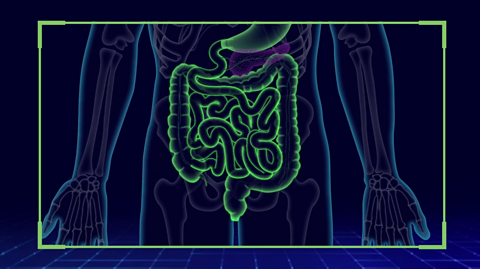
Exploration of the concepts of mechanical digestion, chemical digestion and the adaptations of the digestive system that speed up the process of molecule break down and absorption into the bloodstream in the small intestines.
Heart, blood and circulation. video
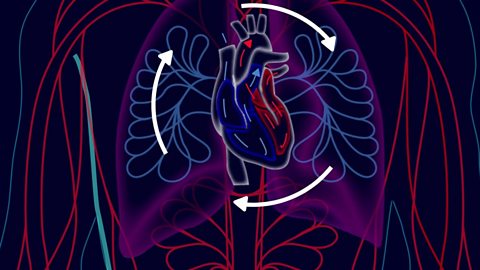
A detailed look at how each component of the cardiovascular system functions to support the movement of nutrients around the body.
Nervous coordination. video
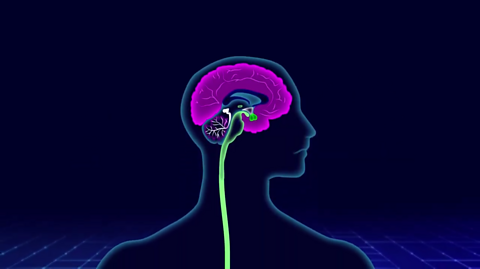
A description of the role of the nervous system, how it functions, voluntary and involuntary reflexes and the function of specific organs in the nervous system, such as the brain and the eye.
Hormonal coordination and homeostasis. video
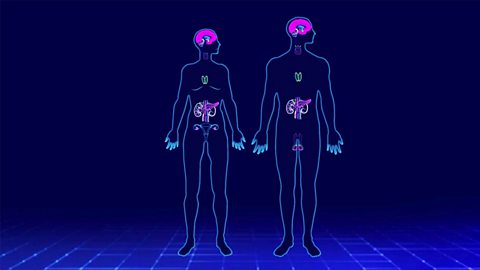
A detailed look at the role of hormones in maintaining a constant internal environment in the body by regulating body temperature, metabolism and blood glucose levels.
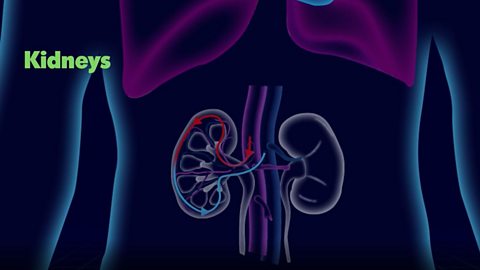
Excretion. video
A detailed look at the function of the kidneys and the control of water levels in the blood.
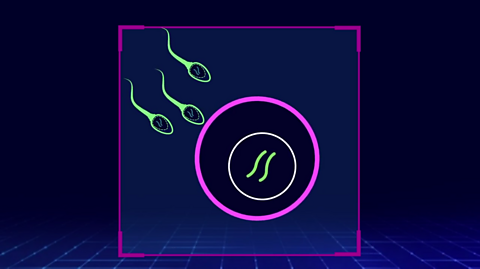
Reproduction. video
This animation focuses on sexual reproduction, providing details on the specialised cells, organs and tissues involved in the fertilisation and maturation of an egg.
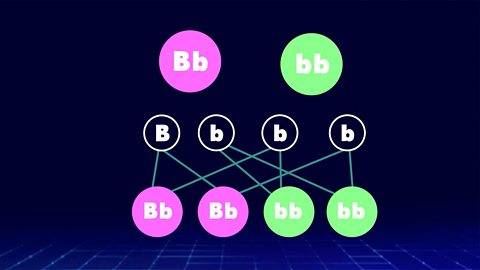
Inheritance. video
This animation covers a range of topics including developmental genetics and Mendelian inheritance.
Cell division. video
This animation focuses on the different types of cell division, sexual and asexual reproduction.
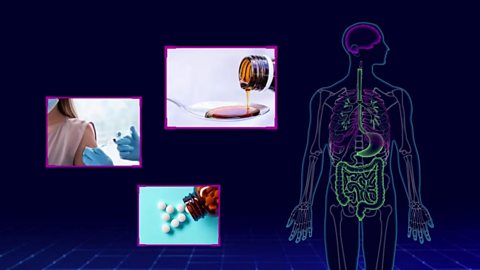
Immunity and disease. video
This animation explores how viruses and bacteria cause certain communicable diseases to occur, how our bodies protect themselves and how we use modern medicines to treat them.
Bitesize revision links for students
- England and NI: GCSE Biology (Single Science)
- Scotland: National 5 Biology
- Cymraeg: TGAU Bioleg
