Video
Justina: There are several thousand diseases that affect human beings.
Georgina: And these diseases can be classified into two distinct types: communicable diseases that are usually transferred from one organism to another; and non-communicable diseases, which are not.
Justina: Examples of non-communicable diseases are cancer, diabetes and genetic diseases.
Georgina: But we’re going to take a closer look at communicable diseases which are spread through microorganisms that can cause disease, commonly called pathogens.
Justina: In most cases, a pathogen will infect a host, reproduce or replicate and then spread from their host to other organisms.They can spread through a variety of ways:direct contact, water, air or on food.Many of these pathogens are bacteria.
Georgina: Bacteria are single-celled organisms that don’t have a nucleus.Their DNA floats around in the cell cytoplasm in a long loop or in smaller loops called plasmids.Bacteria often have pili to help them attach to surfaces, or tails called flagella, to help them move.
Justina: Bacteria will infect a host and then begin to rapidly reproduce using a form of asexual reproduction, called binary fission, which is a similar process to mitosis.
Binary fission creates identical genetic daughter cells form the parent cell.
Georgina: The bacteria can then be transferred to other organisms from the host.Bacterial infections are often treated with antibiotics.Antibiotics are chemicals produced by various fungi, that kill types of bacteria by breaking down the cell wall and inhibiting their cellular process, preventing bacteria reproduction.Alexander Fleming discovered the first antibiotic, Penicillin, in the early twentieth century.Many others have been discovered since.
Justina: Other diseases are caused and spread by viruses.Viruses, unlike bacteria, are not considered to be alive.They are made up of a relatively short length of genetic material which is surrounding by a protein coat.Georgina: Most virus particles invade suitable host cells, then replicate themselves within the cell thousands of times, which destroys the host cell.The virus then invades other nearby cells.Some virus particles join their DNA to the DNA in the host cell, creating infected cells that then create clones of themselves.
Justina: Unlike bacterial infections, viruses cannot be treated with antibiotics.Viruses have a protective protein coat and no cell wall.Therefore, antibiotics cannot get inside.
Georgina: The human body has adapted defence mechanisms that help protect it against infection by microorganisms.The first of these is the non-specific defence system.This is the body’s first line of defence and includes the skin, tears, the nose and stomach acid; all of which prevent pathogens from going further into the body and the bloodstream.
Justina: The specific immune system comes into play when pathogens get into the bloodstream.Two types of white blood cells play a very important role.Lymphocytes and phagocytes.
Georgina: Any invading pathogen will have antigens on their surface that the lymphocytes recognise as being from outside the body.
Justina: The lymphocytes recognise the antigens and produce specific antibodies that bind to the antigens on pathogens, causing them to clump together.This makes it easier for phagocytes to do their work.
Georgina: Phagocytes engulf the pathogen.Enzymes released by the phagocyte then break down and destroy the pathogen.
Justina: While the immune system is our body’s natural defence mechanism, we have also developed other medicines and treatments that support the immune system.
Georgina: Vaccines, for example, introduce a dead or inactive form of a pathogen into the body.The lymphocytes then produce specific antibodies and become memory lymphocytes that can create the same antibodies more quickly and in greater number if the antigen is detected on a pathogen in the future.
Justina: It’s amazing what medicine can do.
Georgina: It is, but a strong immune system is vital in fighting pathogens, and medical treatments are there to support and enhance the body’s natural defences.
Justina: Teamwork!
Georgina: Exactly.
This video explores how viruses and bacteria cause communicable diseases, how the body defends itself, and how modern medicines are used to treat infections. The video begins by explaining how diseases spread between organisms before focusing on how bacteria enter a host and grow and reproduce inside the body.
It then describes the role of antibiotics in killing bacteria, followed by an explanation of how viruses replicate inside host cells and spread throughout the organism.
Finally, the video concludes by visualising the non‑specific and specific immune responses, showing how white blood cells and antibodies work to identify, target, and immobilise invading pathogens.
This short film is from the series Human biology.
Suggested activities
Before watching
You might ask students to recall the differences between prokaryotes and eukaryotic cells by getting them to label a diagram of the two organisms. You could ask students to describe the physical barriers that prevent pathogens from entering their body.
During the video
You could give the students the following list of keywords and pause the video at the relevant moments to define them.
Keywords:
- Communicable
- Non-communicable diseases
- Binary fission
- Antibiotics
- Lymphocytes
- Phagocytes
- Antibody binding
- Vaccines
You could pause the video just before the antibiotics are being released from the capsule (1:50), on the screen that contains the capsule and a viral particle, and ask the students to predict what they think will happen to a viral particle if an antibiotic is taken.
After the video
You could provide students with an image of binary fission and mitosis and ask them to compare the processes and determine whether they are asexual or sexual.
You might provide students with a diagram of a white blood cell immobilising a pathogen and ask students to label the diagram using the key terms.
You could get students to answer the following questions:
What is released from a white blood cell to immobilise a pathogen?
a. Antibody
b. Antigen
c. AntifixHow does a virus replicate in the body?
a. Mitosis
b. Meiosis
c. Binary fission
d. Host cell organellesWhich of the following are non-specific bodily defences?
a. Sneezing
b. Mucus
c. Tears
d. Snoring
e. Stomach acid
f. Skin sweat
Stretch question
- If white blood cells specific to antigen A and antigen B enter the body, one with a different shape, will the white blood cell be able to break it down? (Justify your answer)
a. Yes
b. No
c. Maybe
You might ask students to create their own storyboard recreating how viruses replicate.
Curriculum notes
Suitable for teaching biology at Key Stage 4 and GCSE in England and Northern Ireland, Progression Step 5 and GCSE in Wales and at National 4 and 5 in Scotland.
More videos from this series
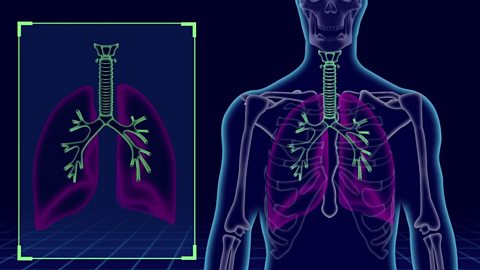
Breathing and gas exchange. video
A description of the process of ventilation and gas exchange and the bodily adaptations that support these processes.
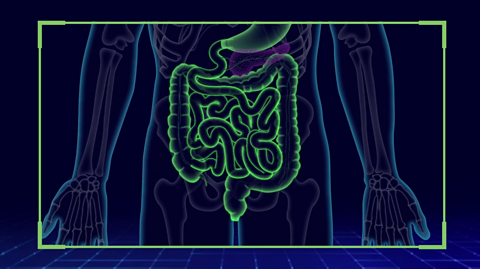
Food and digestion. video
Exploration of the concepts of mechanical digestion, chemical digestion and the adaptations of the digestive system that speed up the process of molecule break down and absorption into the bloodstream in the small intestines.
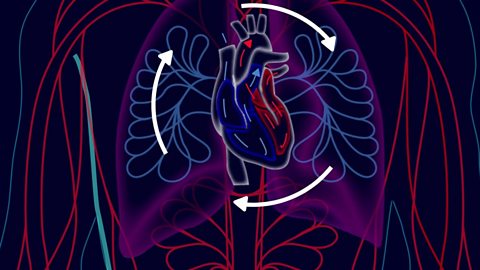
Heart, blood and circulation. video
A detailed look at how each component of the cardiovascular system functions to support the movement of nutrients around the body.
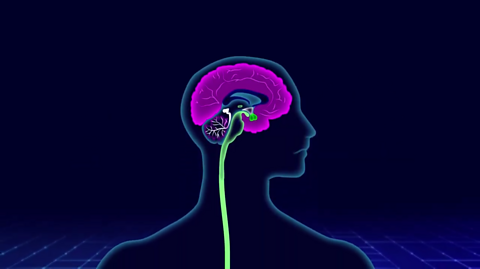
Nervous coordination. video
A description of the role of the nervous system, how it functions, voluntary and involuntary reflexes and the function of specific organs in the nervous system, such as the brain and the eye.
Hormonal coordination and homeostasis. video
A detailed look at the role of hormones in maintaining a constant internal environment in the body by regulating body temperature, metabolism and blood glucose levels.
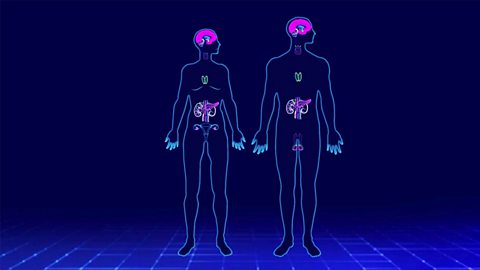
Excretion. video
A detailed look at the function of the kidneys and the control of water levels in the blood.
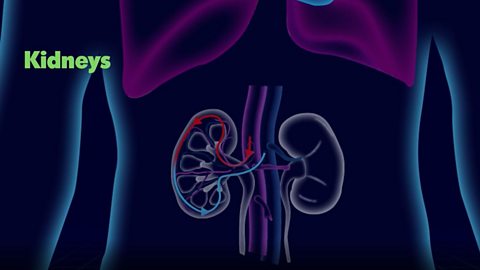
Reproduction. video
This animation focuses on sexual reproduction, providing details on the specialised cells, organs and tissues involved in the fertilisation and maturation of an egg.
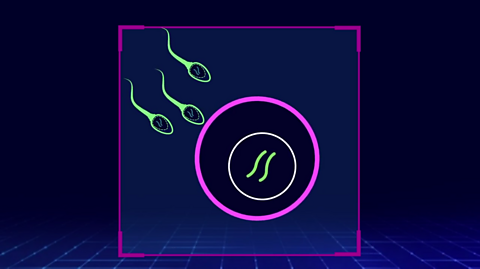
Cell division. video
This animation focuses on the different types of cell division, sexual and asexual reproduction.
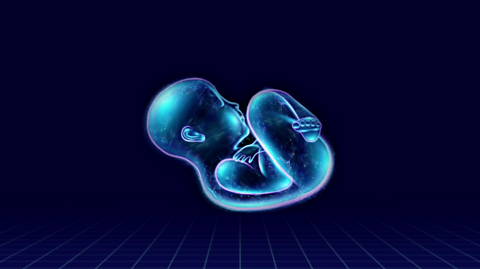
Inheritance. video
This animation covers a range of topics including developmental genetics and Mendelian inheritance.
Bitesize revision links for students
- England and NI: GCSE Biology (Single Science)
- Scotland: National 5 Biology
- Cymraeg: TGAU Bioleg
