Video
Georgina: It’s estimated that your body has somewhere between 50 and 100 trillion cells in it, and there are hundreds of different types of cells n the human body.
Justina: Blood cells, bone cells, fat cells, skin cells, stem cells and many, many more.
Georgina: Cells are the fundamental units of life and one of their crucial activities is cell division.And there are two types of cell division that occur in our bodies: mitosis and meiosis.Let’s take a closer look.
Justina: The first method of cell division is mitosis.When the body needs to grow, replace worn-out cells or repair tissue, it’s essential that any new cells produced are genetically identical to the parent cells.
Georgina: Mitosis ensures this happens.As a cell gets ready to replicate, the chromosomes duplicate and a copy of each of the 46 chromosomes are formed as connected sister chromatids.The first phase of mitosis is called prophase.The membrane surrounding the nucleus of the cell breaks down and the chromosomes become clearly visible.
Justina: In the metaphase, the 46 chromosomes and their copies line up in the middle of the cell, at the equator.
Georgina: The anaphase sees the two sister chromatids separate and be pulled to opposite ends of the cell by spindle fibres of the cell structure.
Justina: Then, during the telophase, the final stage of mitosis, new membranes form around each set of 46 chromosomes, forming two new nuclei.
Georgina: Now that mitosis has happened, the cell membrane pinches in and divide the cytoplasm containing the two nuclei.This final step is called cytokinesis.The parent cell has now become two genetically identical daughter cells.
Justina: Mitosis occurs in most diploid cells in the body.It’s responsible for things like hair growth, fixing broken bones, healing wounds and skin regeneration.
Georgina: The other form of cell division is meiosis.meiosis only occurs in the testes and ovaries, and it produces reproductive cells known as gametes.In humans, these gametes are sperm cells in males and ova, or egg cells, in females.
Justina: A diploid cell will initially split into two, in a similar process to mitosis.But these two daughter cells will then divide again to form four haploid gametes.
Georgina: The second division starts by dividing each pair of chromosomes in the daughter cell.When these two daughter cells divide, each of the four new gametes contains Georgina:3 chromosomes; half the number in a normal diploid cell.This is why they are called haploid cells.
Justina: The four gametes produced in meiosis are all genetically different with a mix of chromosomes from the original parent cell.
Georgina: This is important in the reproductive cells (the gametes), as it leads to variation in offspring when these gametes are fertilised during sexual reproduction.Unique genetic material from one gamete is fused with unique genetic material from the other gamete, creating even greater variation in the new cells that form the embryo.
Justina: This enables every single offspring created through human sexual reproduction to be genetically unique with distinctive characteristics.
Georgina: Pretty incredible stuff!
Justina: And every second, your body produces about 15 million new cells, mostly through mitosis, for growth or to repair tissues and replace damaged cells.
Georgina: Every second?How many is that per day?
Justina: A lot. You can work it out, I’m not sure I have enough brain cells today.
This video explores the different forms of cell division and how they relate to sexual and asexual reproduction. The animation begins by visualising and describing the stages of mitosis – prophase, metaphase, anaphase, and telophase – showing how genetically identical daughter cells are produced.
The video then contrasts mitosis with meiosis, using humans as the key example. It traces the full process of meiosis, highlighting the steps that create genetic variation and emphasising the terms haploid and diploid to clarify their differences.
Finally, the animation concludes by modelling how gametes fuse during fertilisation to form a zygote.
This short film is from the series Human biology.
Suggested activities
Before watching
Recap the reproductive organs, of both males and females. Recap the concept of fertilisation by asking students a series of questions linked to the reproduction and specialised cells that enable it to happen.
During the video
For the section of the video that looks at the different phases (0:40) of mitosis in detail, provide the students with a sheet that contains an image of 5 cells without any internal cellular organelles inside.
As the video presents a specific phase of mitosis, stop the video and ask the students to draw what the chromosomes look like and provide a brief description of what has changed in the cell.
| Phase | Diagram | Description |
|---|---|---|
| Prophase | Nucleus membrane breaks down and DNA condenses | |
| Metaphase | ||
| Anaphase | ||
| Telophase | ||
| Daughter cells |
When the episode gets to the section that focuses on meiosis (2:13), pause the video at key moments where the following keywords are referred to:
- Haploid
- Diploid
- Crossing over
- Variation
Provide students with an image of the process of meiosis, excluding the chromosomes. When the episode gets to the section where meiosis is visualised, get students to copy the chromosomes into the cells and ask them why the number of cells at the end of meiosis is different to the number at the start.
After the video
Get students to practise using technical key language from meiosis by producing a labelled 3D model, completing an extended piece of writing using the key terminology, or carrying out a structured discussion where students are expected to use a range of keywords from the video.
Curriculum notes
Suitable for teaching biology at Key Stage 4 and GCSE in England and Northern Ireland, Progression Step 5 and GCSE in Wales and at National 4 and 5 in Scotland.
More videos from this series
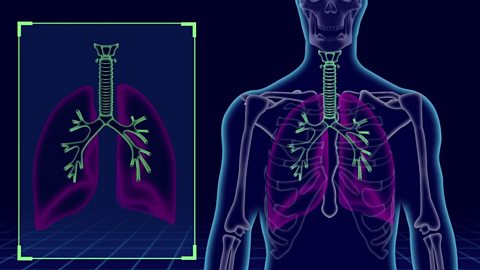
Breathing and gas exchange. video
A description of the process of ventilation and gas exchange and the bodily adaptations that support these processes.
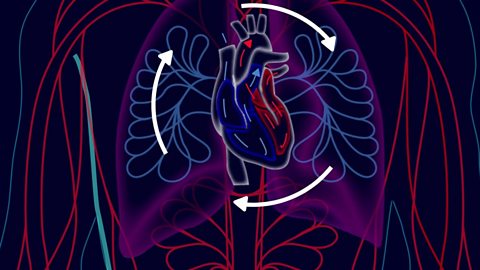
Heart, blood and circulation. video
A detailed look at how each component of the cardiovascular system functions to support the movement of nutrients around the body.
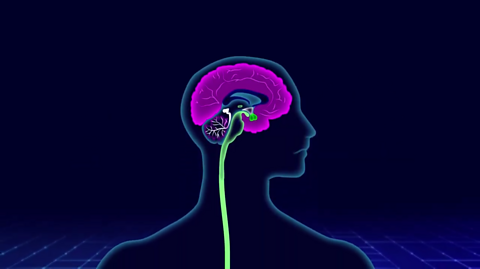
Nervous coordination. video
A description of the role of the nervous system, how it functions, voluntary and involuntary reflexes and the function of specific organs in the nervous system, such as the brain and the eye.
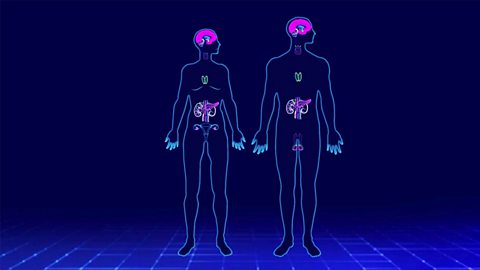
Hormonal coordination and homeostasis. video
A detailed look at the role of hormones in maintaining a constant internal environment in the body by regulating body temperature, metabolism and blood glucose levels.
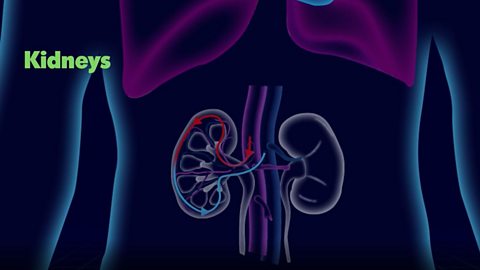
Excretion. video
A detailed look at the function of the kidneys and the control of water levels in the blood.
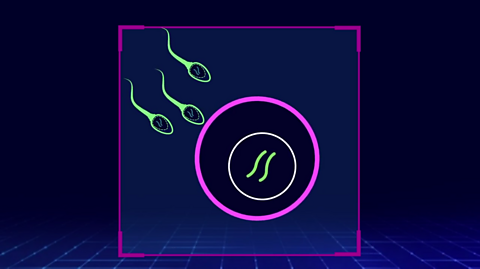
Reproduction. video
This animation focuses on sexual reproduction, providing details on the specialised cells, organs and tissues involved in the fertilisation and maturation of an egg.
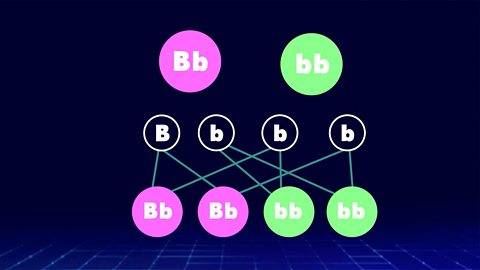
Inheritance. video
This animation covers a range of topics including developmental genetics and Mendelian inheritance.
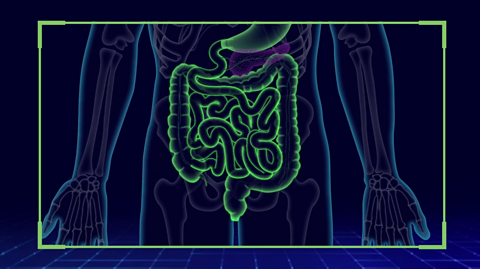
Food and digestion. video
Exploration of the concepts of mechanical digestion, chemical digestion and the adaptations of the digestive system that speed up the process of molecule break down and absorption into the bloodstream in the small intestines.
Immunity and disease. video
This animation explores how viruses and bacteria cause certain communicable diseases to occur, how our bodies protect themselves and how we use modern medicines to treat them.
Bitesize revision links for students
- England and NI: GCSE Biology (Single Science)
- Scotland: National 5 Biology
- Cymraeg: TGAU Bioleg
