Video
Justina: Excretion is the removal of metabolic waste substances, such as carbon dioxide and water, which are waste products creating during aerobic respiration, toxins and other excess substances from the body.
Georgina: If waste products are allowed to build up, they can have a range of negative effects on the body.Let’s take a closer look at how we get rid of them.
Justina: Our bodies have organs that are specialised in the removal of certain excretory products.The lungs excrete carbon dioxide and water.The skin excretes excess water and mineral ions, such as sodium, through sweating.And the kidneys excrete water, mineral ions and a substance called urea.Most people have two kidneys, and their main function is to regulate the water content of the blood and filter waste substances, including urea, from the blood.
Georgina: The digestion of proteins results in an excess of amino acids being taken to the liver, where they are converted into ammonia, which is highly toxic.Ammonia reacts with carbon dioxide and forms urea, which is less toxic, enabling it to be safely removed by the kidneys.
Justina: Blood enters the kidneys via the renal artery.Each kidney contains over one million nephrons, which are microscopic filtering units that are responsible for filtering the blood.
Georgina: The blood enters these nephrons at very high pressure.Two main processes occur in the kidneys.The first process is filtration.Due to high pressure, small molecules such as urea, water and minerals are filtered out of the blood and pass into the nephron tubules in the cortex of the kidney.However, large molecules such as blood proteins are too big to be filtered and remain in the blood.The second process is selective reabsorption.Some vital molecules such as water and glucose, are small enough to be filtered out of the blood by the nephrons.But our bodies still need them.
Justina: So, some water, minerals and/or glucose are reabsorbed back into the blood in the medulla, in a controlled way.
Georgina: This ensures the correct concentrations of these substances are in the blood.
Justina: the excess water, excess minerals and urea are then passed into the ureter and stored in the bladder, ready for a trip to the toilet.
Georgina: Let’s look a little more closely at the water balance in the body, also known as osmoregulation; an example of homeostasis.If your body has too much water in the blood, more will move into the cells via osmosis.The cells will expand and swell, which can be deadly.If the opposite happens and you have too little water in the blood, water leaves the cells via osmosis and they may not have enough water to function properly.
Justina: When the hypothalamus in the brain detects lower than normal water levels in the blood, the pituitary gland releases more of a hormone called ADH.ADH travels in the blood to the kidneys, where it causes more water to be reabsorbed by the nephrons,by making the connecting ducts with the nephron tubules more permeable to water.Due to more water being reabsorbed back into the body, the urine in the bladder is more concentrated and of a lower volume.
Georgina: When water levels return to an ideal level, ADH levels also return to normal.And the reverse happens if water levels are high in the blood.Less ADH is produced, meaning less water is reabsorbed back into the body by the nephrons.There is then a higher volume of more dilute urine that passes to the bladder, ready to be excreted.
Justina: Kidneys are pretty important things.
Georgina: They are.
Justina: But you can actually live with one kidney.
Georgina: But if both are damaged, medical care is needed.Kidney dialysis uses a machine that recreates the job of the kidneys by filtering your blood outside of your body.
Justina: So there we go.Excretion is a pretty complex and amazing process.
This video explores the function of the kidneys and how the body controls water levels in the blood. The animation begins by describing the structure of the kidneys and the role of the specialised filtering unit, the nephron, explaining the processes of filtration and reabsorption that occur within it.
The video then examines how changes in blood water potential affect the size of red blood cells, and how the hypothalamus regulates this through the release of ADH, altering the permeability of the nephron to control water reabsorption in the process of osmoregulation.
Finally, the video concludes by showing how a dialysis machine replicates kidney function when the kidneys are unable to work effectively.
This short film is from the series Human biology.
Suggested activities
Before watching
You could provide students with a recap activity that is linked to describing what osmosis is and encourages students to make predictions about the direction that osmosis occurs in different scenarios. You might also get students to share why they think that urine colour changes and what organ they think is involved in producing urine. Check the specification you’re following to ensure that you add any key terms that are missing from the video.
During the video
Pause the video at strategic places and get students to define the key terms below:
- Filtration
- Reabsorption
- Osmoregulation
- ADH
You could provide students with a 2D drawing of the urinary system, kidney, a separate picture of the nephron and a detailed list of keywords for each individual tissue. As the video progresses, pause the video at appropriate points and ask students to label their diagram with the correct key term. Depending on the specification you’re studying you might want to provide more keywords that are not included in the episode.
In the section of the video where the effect of water on red blood cells is modelled (2:50–4:10), pause the video when the water concentration drops or rises and ask students to predict what they think will happen to the physical appearance of the red blood cells. Ask students to justify their answer using the idea of osmosis.
After the lesson
You might ask students to re-describe the journey that a water molecule takes from entering the nephron all the way through to the bladder. Provide students with a list of key terms and ask them to either produce a piece of writing or a verbal response.
You could model to students how a dialysis machine functions. Draw attention to the similarities in features between a dialysis machine and the kidney, focusing specifically on the idea that the dialysis machine filters and selectively reabsorbs certain small nutrients before returning them to the patient’s blood.
You could give students the following questions:
What is the name of the process where small molecules pass through into the nephron tubules, but large molecules cannot?
a. Osmoregulation
b. Filtration
c. ReabsorptionIf the pressure in the blood in the nephron is low, will filtration occur? (Justify your answer)
a. Yes
b. No
c. A little bitIf blood water levels drop, what happens to the concentration of ADH in the blood? (Justify your answer)
a. Increase
b. Decrease
Stretch question
- If blood water levels are high, what will happen to the surface area of red blood cells? (Hint: think about the biconcave structure)
a. Increase
b. Decrease
c. Remain the same
Curriculum notes
Suitable for teaching biology at Key Stage 4 and GCSE in England and Northern Ireland, Progression Step 5 and GCSE in Wales and at National 4 and 5 in Scotland.
More videos from this series
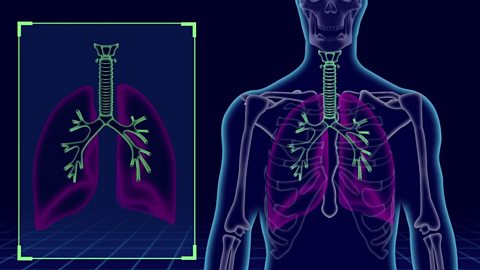
Breathing and gas exchange. video
A description of the process of ventilation and gas exchange and the bodily adaptations that support these processes.
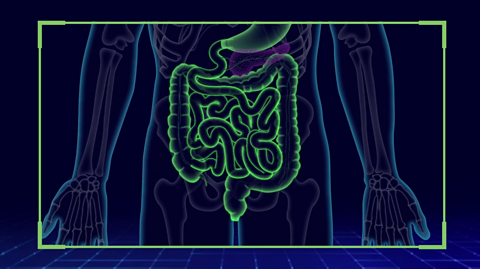
Food and digestion. video
Exploration of the concepts of mechanical digestion, chemical digestion and the adaptations of the digestive system that speed up the process of molecule break down and absorption into the bloodstream in the small intestines.
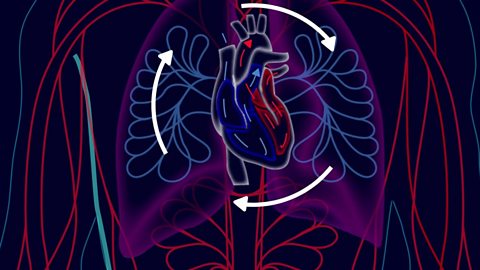
Heart, blood and circulation. video
A detailed look at how each component of the cardiovascular system functions to support the movement of nutrients around the body.
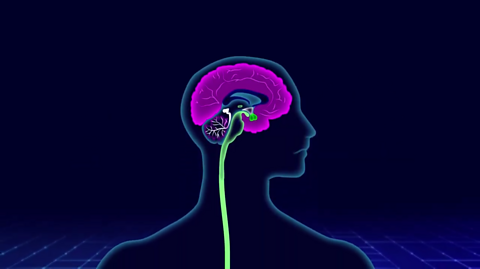
Nervous coordination. video
A description of the role of the nervous system, how it functions, voluntary and involuntary reflexes and the function of specific organs in the nervous system, such as the brain and the eye.
Hormonal coordination and homeostasis. video
A detailed look at the role of hormones in maintaining a constant internal environment in the body by regulating body temperature, metabolism and blood glucose levels.
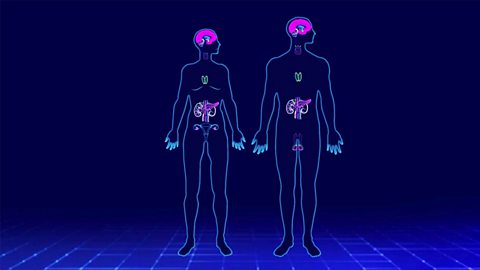
Reproduction. video
This animation focuses on sexual reproduction, providing details on the specialised cells, organs and tissues involved in the fertilisation and maturation of an egg.
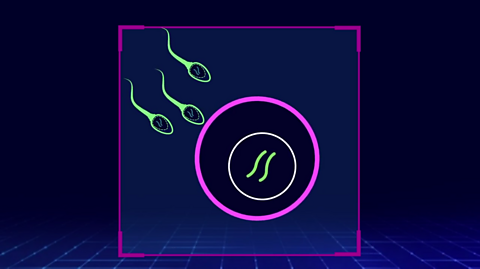
Inheritance. video
This animation covers a range of topics including developmental genetics and Mendelian inheritance.
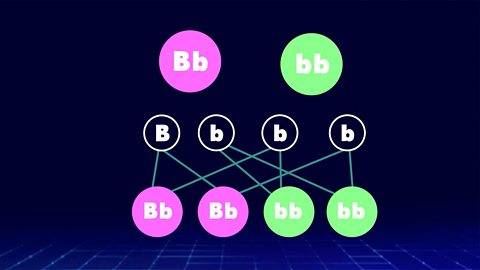
Cell division. video
This animation focuses on the different types of cell division, sexual and asexual reproduction.
Immunity and disease. video
This animation explores how viruses and bacteria cause certain communicable diseases to occur, how our bodies protect themselves and how we use modern medicines to treat them.
Bitesize revision links for students
- England and NI: GCSE Biology (Single Science)
- Scotland: National 5 Biology
- Cymraeg: TGAU Bioleg
