Video
Justina: There are about 250 babies born every minute around the world.
Georgina: And every single one of them is genetically unique.
Justina: Formed through an incredible process that starts at the cellular level.
Georgina: And that’s what we’re going to be looking at today: reproduction.
Justina: There are two main forms of reproduction: asexual and sexual.Asexual reproduction is generally quicker as only one parent is needed.It uses the process of mitosis to create identical copies of the parent cell.Bacteria, most fungi and some plants use asexual reproduction to create offspring.
Georgina: But humans and many other animals go through a process called sexual reproduction.Sexual reproduction is a slower process, requiring two parents, that usually involves the joining of two reproductive cells, or gametes, to create genetically unique offspring.In humans, the two gametes are the sperm cell from the male parent and the ovum, or egg, from the female parent.
Both the male and female reproductive systems produce hormones which play an important role in sexual reproduction.The testes release testosterone, which causes male secondary sexual characteristics to develop at puberty, such as the enlarging of the testes so they can produce sperm cells.The ovaries release oestrogen, which causes female secondary sexual characteristics to develop at puberty, such as the start of the menstrual cycle, which controls the release of eggs by the ovary into the oviduct, ready for fertilisation.But how does the human reproductive system actually work?The male gamete, the sperm cells, are produced in the testes.They travel past the prostate gland, which secretes fluid to carry the sperm down the urethra, where it can be delivered via the penis, into the female reproductive system during sexual intercourse.Sperm cells are highly adapted.They have a tail called a flagellum, that helps them swim through the female reproductive system.They also have many mitochondria that release energy for swimming, and they contain a haploid nucleus which contains half the number of chromosomes required to develop a human embryo:
Georgina: The sperm is delivered through the vagina into the uterus, where it swims up into the oviduct.The female reproductive system produces eggs, or ova, in the ovaries.The ovum then travels to the oviduct.It’s in the oviducts that a sperm cell meets and joins with an ovum in a process called fertilisation.Each egg, or ovum, like the sperm cell, contains a haploid nucleus with Georgina:3 chromosomes.the sperm and ovum join in the oviduct to form a diploid zygote, which now contains the 46 chromosomes required for a human embryo to develop.This zygote is the very first cell of a new embryo.As the zygote travels towards the uterus, it divides by mitosis to form a ball of cells, known as an embryo.It’s implanted in the uterus wall, where it begins to receive nutrients and grow into a foetus.There are a variety of ways to prevent fertilisation from occurring and this is known as contraception.Barrier methods such as condoms, prevent sperm from entering the vagina.Hormonal contraceptives, such as contraceptive pills, prevent eggs from being matured and released by the ovaries.And there are surgical contraceptives such as a vasectomy, that cuts the sperm tubes to prevent sperm from entering the penis.
Georgina: But if fertilisation has happened, after a 40 week gestation period in the uterus, the fully formed foetus passes through the cervix and vagina, and out into the world.
Justina: And a baby is born.
Georgina: Exactly.
This video explores sexual reproduction, focusing on the specialised cells, organs, and tissues involved in fertilisation and the maturation of an egg. The animation begins by comparing asexual and sexual reproduction, introducing the roles of mitosis and the process of fertilisation between a sperm cell and an egg cell. It then visualises the main features of the male and female reproductive systems, labelling key structures and terminology.
The video illustrates the journey of sperm, travelling from the testes through the sperm ducts and urethra, and into the female reproductive system where it may fuse with an egg in the oviduct. It also shows the maturation of an egg as it prepares for release into the oviduct.
The video concludes with an explanation of physical and hormonal contraceptives, describing how each method prevents fertilisation or pregnancy.
This short film is from the series Human biology.
Suggested activities
Before watching
You might provide students with an image of a sperm cell, a set of key terms and definitions and ask the students to label the cell with the correct term. The start of the lesson is also an opportunity to break down the two terms sexual and asexual and ask students to explore the etymology of the two terms and what they think they could be referring to.
You could provide students with a diagram of the male and female reproductive organ systems, key terms, and definitions. Ask students to label their diagrams based on their knowledge from KS3 or KS2 reproductive biology.
During the video
As the video plays, pause it at strategic moments to encourage students to update the diagrams of the male and female reproductive systems.
Pause the video at strategic moments and ask students to define the following terms:
- Gametes
- Haploid
- Diploid
- Mitosis
- Meiosis
- Fertilisation
- Zygote
- Embryo
You could, when the image of the sperm appears on the screen with no labels (1:36), ask the students to describe to the person next to them how the sperm is adapted to its functions. Stretch the students by asking them how it will power its marathon journey from the testes to the oviducts.
You might, when the video gets to the section where 23 chromosomes are present in the sperm and another 23 in the egg fuse (3:00), ask the students why this is important.
After the video
You could ask students to write a story that recounts the journey of the sperm from the testes to the egg. The story must account for all the different structures that the sperm passes through.
You might provide students with a series of problems that get them to predict the haploid number and diploid numbers based on different combination information. For example:
- If a sperm cell had 15 chromosomes what will:
a. Its haploid number be?
b. How many chromosomes will the egg have?
c. In a fused zygote, how many chromosomes will there be all together?
You might ask students to separate out the following list of characteristics between asexual and sexual reproduction:
- Offspring are identical
- Requires sperm and egg to fuse
- Offspring show variation from parents
- Occurs in bacteria, fungi and some plants
- Occurs by mitosis
- Occurs in mammals and some plants
- Occurs quickly
Curriculum notes
Suitable for teaching biology at Key Stage 4 and GCSE in England and Northern Ireland, Progression Step 5 and GCSE in Wales and at National 4 and 5 in Scotland.
More videos from this series
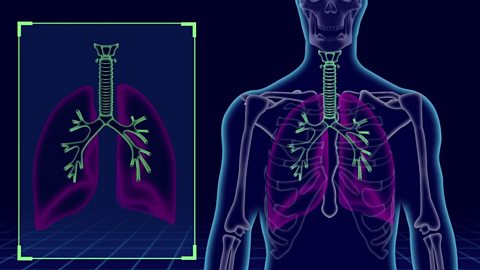
Breathing and gas exchange. video
A description of the process of ventilation and gas exchange and the bodily adaptations that support these processes.
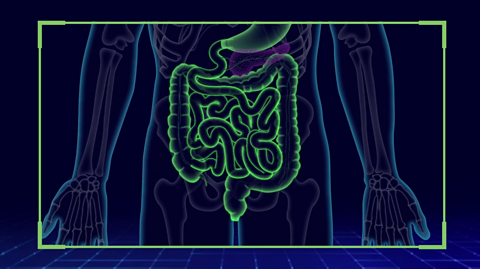
Food and digestion. video
Exploration of the concepts of mechanical digestion, chemical digestion and the adaptations of the digestive system that speed up the process of molecule break down and absorption into the bloodstream in the small intestines.
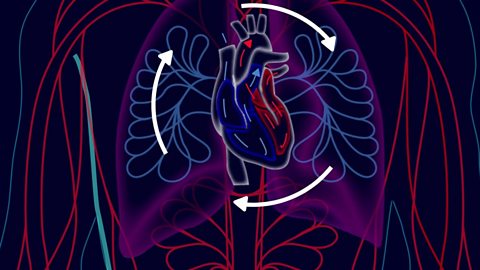
Heart, blood and circulation. video
A detailed look at how each component of the cardiovascular system functions to support the movement of nutrients around the body.
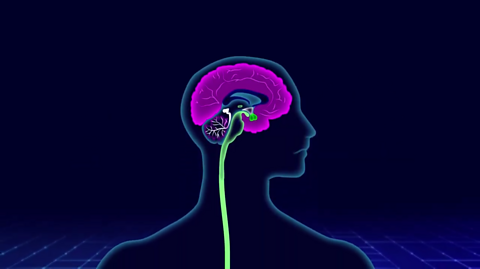
Nervous coordination. video
A description of the role of the nervous system, how it functions, voluntary and involuntary reflexes and the function of specific organs in the nervous system, such as the brain and the eye.
Hormonal coordination and homeostasis. video
A detailed look at the role of hormones in maintaining a constant internal environment in the body by regulating body temperature, metabolism and blood glucose levels.
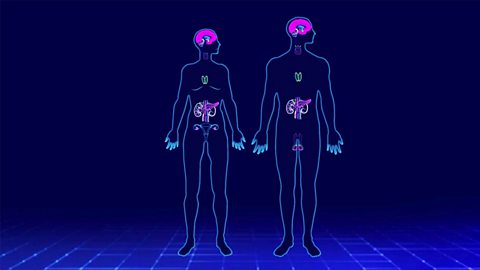
Excretion. video
A detailed look at the function of the kidneys and the control of water levels in the blood.
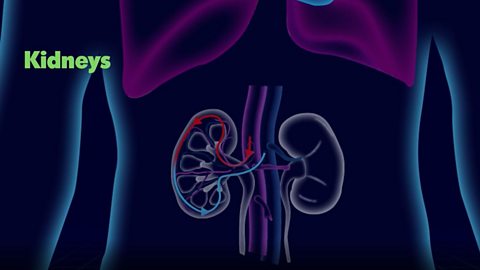
Inheritance. video
This animation covers a range of topics including developmental genetics and Mendelian inheritance.
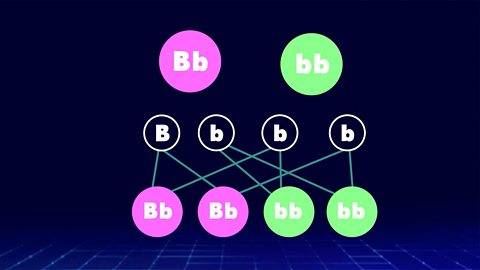
Cell division. video
This animation focuses on the different types of cell division, sexual and asexual reproduction.
Immunity and disease. video
This animation explores how viruses and bacteria cause certain communicable diseases to occur, how our bodies protect themselves and how we use modern medicines to treat them.
Bitesize revision links for students
- England and NI: GCSE Biology (Single Science)
- Scotland: National 5 Biology
- Cymraeg: TGAU Bioleg
