Why Nigerians continue to dey see increase in fuel prices

- Author, Abubakar Maccido
- Published
- Read am in 5 mins
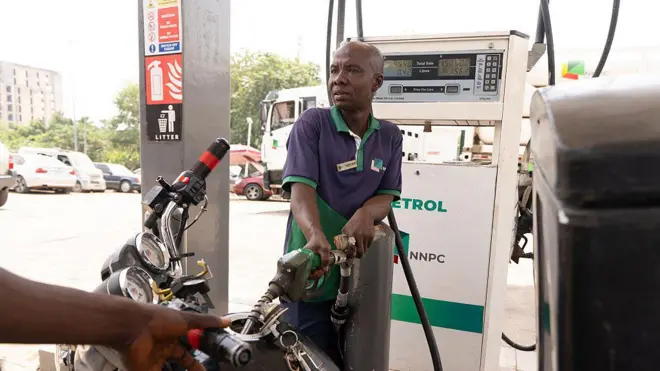
Petrol price currently dey around 1,430 naira per litre for di Federal Capital Territory and oda states, as some marketers dey attribute di increase in price to di crisis for Middle East, particularly di situation for Strait of Hormuz.
Nigeria na one of di kontris wey get plenty oil. But for some states, reports say price of one litre of petrol don pass 1,500 naira.
So why small change dey suddenly make citizens see change for fuel price wen somtin happun?
Why fuel prices keep dey increase?
For one interview wit BBC News Pidgin, economic and political commentator Sani Sulaiman say Nigerians fit continue to experience increase for petrol price as long as di kontri downstream petroleum market remain connected to global oil prices and oda international economic factors.
Sulaiman wey base for Plateau State add say removal of fuel subsidy and di move towards fully deregulated downstream petroleum sector mean say petrol prices no longer dey fixed by govment.
E say di price for pump now dey reflect di cost of buying, refining and transporting crude oil, as well as developments for international oil market.
“Di primary reason Nigerians continue to face rising petrol prices na di transition to fully deregulated downstream petroleum sector,” Sulaiman tok.
E add: “For decades, govment use subsidy system to keep petrol prices artificially low, absorbing a massive part of di actual market cost.
“But afta di complete removal of di full subsidy, petrol now dey priced as fully commercial commodity. Dis mean say govment no longer dey fix di pump price.”

E say Nigeria exposure to global oil market movements mean say international developments fit quickly affect di price Nigerians dey pay for filling stations.
“Bicos our local market now dey directly connected to international pricing variables, any change for global oil dynamics, any major development around di world wey affect changes for global oil markets or currency valuation instantly affect di evriday citizen price for filling station,” e tok.
Sulaiman identify global crude oil volatility, geopolitical tensions and distribution and supply costs among di factors wey dey contribute to recent increases for petrol prices.
“Crude oil na commodity wey dey traded internationally, and recent geopolitical conflicts around di world wit di US, Iran, Israel and oda places, get some kain direct impact on di prices,” e tok.
E add say Nigeria deregulated market mean say global developments fit continue to influence local petrol prices.
Wetin govment gatz do?
Di economic expert say increasing domestic crude production suppose be one of govment priorities.
E call for stronger efforts to tackle oil tiff-tiff and secure pipelines, say dis go help Nigeria increase im domestic crude output.
“Di federal govment gatz aggressively cope wit oil tiff-tiff and secure pipelines by boosting our domestic crude output,” e tok.
E also call for continued govment support for local refineries and investment in domestic oil sector.
“Govment gatz continue to support pipo like Dangote and oda business pipo wey dey make effort to invest for di oil sector,” e tok.
Sulaiman also suggest say Nigeria suppose develop big strategic petroleum reserves.
E say national storage infrastructure go allow di kontri store fuel wen prices dey lower and release am during periods of global crisis to help stabilise domestic pump prices.
“Building national storage infrastructure go allow di kontri stockpile fuel wen prices dey lower and den release am during global crises to artificially stabilise domestic pump prices,” e tok.
E also recommend greater investment for Compressed Natural Gas (CNG) infrastructure as long-term alternative to petrol.
According to Sulaiman, expanding CNG availability across di kontri fit provide Nigerians wit anoda transportation fuel option and help reduce pressure on petrol prices and transport costs.
“Govment gatz continue to invest, and invest heavily, for CNG infrastructure for public and commercial transport, providing cleaner, locally abundant alternative,” e tok.
“Di only way di Nigerian govment fit address dis, since e dey difficult for di govment to completely return to di subsidy regime, na for di govment to pay attention to some of dis kain solutions wey I suggest,” e tok.
E say such measures fit get sustainable impact on petrol prices and di transport sector for Nigeria.
Nigerians reactions
Abdullahi Adamu, one Kano resident wey speak to BBC News Pidgin about di increase of petrol prices - e say e dey disappointed.
“Wen I see di increase for petrol prices yesterday, I really vex bicos now we dey expected to buy one litre for N1,460. Dis one too much for us.”
“Right now, I even dey tink of stopping to use my car for some time bicos all di money pesin dey earn go end for buying fuel.”
E call on stakeholders to find solution for poor Nigerians wey dey face di high cost of petrol for di kontri.
Anoda Nigerian, Muhammadu Abubakar, also express concern about di increase for petrol prices - e say e dey worried say prices of goods fit increase.
“Wetin I dey most afraid of now na how, veri soon, dis one go affect di prices of evritin, including food.”
“Dis situation go further push poor Nigerians into hardship and difficult cost of living. We hope say God go bring us relief,” Abubakar tok.